I am pleased to announce that my June Author Newsletter is available and can be found here. It is over a year since my last newsletter, and I promise to be much better in the future.
Tag Archives: reading
Accessibility Equals More Readers
A good article on the importance of making content (particularly books) available in accessible formats, https://writingtoberead.com/2023/05/01/writers-corner-accessibility-more-readers/.
As someone who is registered blind and unable to read print, I use Job Access with Speech (JAWS) software that converts text into speech and braille allowing me to use a Windows computer or laptop. In addition, I use the text to speech facility on my Kindle to have text read to me.
A Review of my poetry collection, More Poetic Meanderings
I was pleased to receive the below review of my recently released collection of poetry, More Poetic Meanderings:
“I always find collections of poems by this author to be an interesting and thought-provoking selection of musings, and this collection was no exception. I also always inevitably have my favourites, which in this case were “My Coffee Grows Cold” and “Poetry In Rain” with “My Dog (Still Young)” being another I really enjoyed. I also thought it was fun seeing the versions of some of the poems as continued by Chat GPT.”
(To read the original review on Goodreads please visit https://www.goodreads.com/review/show/5451435688).
Revolution and Evolution, the History of the Book
“In around 1440 AD, a goldsmith called Johannes Gutenberg began assembling the apparatus that would eventually become known as the first Western printing press. Thirty years later, this invention had transformed Europe, spiritually, economically and politically. In this episode of Worldview Adam Boulton is joined by Professor Alexander Lee and Professor Emma Smith to chart the history of the book, from its revolutionary beginnings to the present day.”
This is a fascinating podcast. Apart from the interesting historical background, I was struck by Professor Smith’s comment that a dictator could easily remove e-books from electronic devices whilst it is virtually impossible for a totalitarian regime to track down and destroy all copies of physical books they dislike.
I do see advantages to e-books. Indeed, as a visually impaired person who is not able to read print I take advantage of the text to speech facility on the Kindle app in my iPhone to have books read aloud. In addition, all of my titles are available as e-books. However, I also love the physicality of books and most of my titles are also available in paperback format.
Free Book Promotion
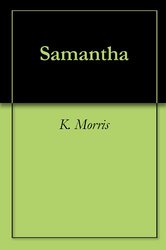
My book ‘Samantha’ will be available for free on Kindle from Friday 14th – Tuesday 18th October 2022 here for the UK and here for the US.
Samantha tells a story of a young girl forced into prostitution in the city of Liverpool. Can Sam’s love for Peter, a man she meets in a nightclub, save her? Or will Sam end her life in the murky waters of Liverpool’s Albert Dock?
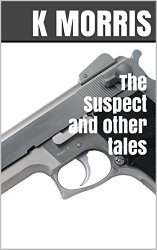
My book ‘The Suspect and Other Tales’ will be available for free on Kindle from Friday 21st- Tuesday 25th October 2022 here for the UK and here for the US.
Tales of the unexpected, ranging from stories of crime and vengeance through to ghostly happenings in an ancient mansion.
Larkin Revisited
I am currently listening to Larkin Revisited on BBC Radio 4. The BBC’s website describes the 10 part series as follows:
“Across ten programmes and ten Philip Larkin poems, Simon Armitage, the poet laureate, finds out what happens when he revisits and unpicks Larkin’s work”.
I am a fan of Larkin’s poetry and I’m enjoying listening to Armitage discuss the poet’s work.
In the latest episode, which was broadcast on Wednesday 10 August, the Poet Laureate Simon Armitage discusses Larkin’s poem Talking in Bed. As with much of Larkin’s poetry Talking in Bed offers a world weary view of love. Anyone looking for a poem about ever lasting romance, flowers and chocolates will be sadly disappointed!
In the latest programme Armitage discusses Talking in Bed with a famous group of performing poets, one of whom expresses admiration for Larkin’s work but states that the group would probably not give a platform to the poet (where he still living) due to his views on race and the working class. (Larkin in his private letters wrote disparagingly of both).
I have always been of the view that one should (so far as is possible) separate the poet from his or her work. I am, therefore not a supporter of no platforming poets or other writers. No platforming leads to an illiberal and intolerant situation in which only those who hold “acceptable” or “correct” views are allowed to perform. Furthermore it has the potential to stifle creativity.
Interestingly the advocate of no platforming admitted that where Talking in Bed to have been written by a poet other than Philip Larkin she would have no problem in allowing the poet to perform. This smacks of Alice in Wonderland logic to me.
You can listen to Larkin Revisited on the BBC’s website here https://www.bbc.co.uk/programmes/m0019yy2, or on BBC Radio 4. In order to listen to previous episodes you will need to have an account with the BBC’s Iplayer.
Cultural Vandalism
The Irish Times reports that the Oxford, Cambridge and the Royal Society of Arts (RSA) exam board has removed the Irish poet Seamus Heaney from it’s exam syllabus along with other writers from Ireland. In addition, the English poet Wilfred Owen’s Anthem for Doomed Youth and Philip Larkin’s An Arundel Tomb have been removed, as have works by other English poets including William Blake.
The OCR’s Chief Executive Jill Duffy states the reason for the changes is to “reflect diversity and inclusivity not just in our qualifications, but in the material we produce to support their delivery, as well as in the assessment of our qualifications”.
I have for years laboured under the misapprehension that the purpose of the subject of English literature is to teach students about the best of our literary cannon. It never crossed my mind that it’s purpose is to enhance “diversity and inclusivity”. Henceforth I shall read books with these aims in mind, rather than with the aim of furthering my appreciation of the richness of English literature.
Of course, works of literature do engage with social issues. For example Harper Lee’s To Kill a Mocking Bird addresses the iniquity of racism in the southern United States. However, Lee’s work has been studied because it is a great work of literature that deals with racism, not because it promotes “inclusivity and diversity”, although, of course a side effect of reading To Kill a Mocking Bird may well be to kindle in it’s readers a feeling for the deep injustice of the racial prejudice in the American south.
Larkin’s An Arundel Tomb and Owen’s Anthem for Doomed Youth are both fine poems. I remember studying the latter whilst at school and coming across the former some years later. To drop Larkin, Heaney and Owen seems perverse and retrograde. Larkin and Owen are, in particular integral to the cultural fabric of the British aisles and I have sympathy for the Education Secretary’s description of the dropping of these poets as “cultural vandalism”.
You can read the article in the Irish Times Here https://www.irishtimes.com/culture/books/2022/07/02/irish-writers-dropped-from-uk-school-curriculum-in-move-to-increase-diversity/. Larkin’s An Arundel Tomb is available on the Poetry Foundation’s website here https://www.poetryfoundation.org/poems/47594/an-arundel-tomb. Wilfred Owen’s Anthem for Doomed Youth is also available on the Poetry Foundation’s website and can be found here https://www.poetryfoundation.org/poems/47393/anthem-for-doomed-youth. For information on Seamus Heaney please see the Poetry Foundation’s website here https://www.poetryfoundation.org/poets/seamus-heaney.
As always I would be interested in the views of my readers.
Revising my Selected Poems
In 2019 I published my Selected Poems, https://www.amazon.com/dp/B07WW8WXPP/. Since 2019 I have composed many other poems, some of which are included in book form, whilst others exist solely on this blog.
I have been thinking for some time about producing a revised and expanded second edition of my Selected Poems. I intend to begin work on this project in the near future.
As part of producing a second edition of my Selected Poems, I would be interested to hear from any of my readers. If you have a poem of mine that you believe should be included do please get in touch either by commenting below, or via email to kmorrispoet@gmail.com.
I can not guarantee to take on board all suggestions, but all comments received will be read, acknowledged and considered.
After the Ball
When I visited you
In your parent’s house
I doubt you knew
How I wanted you.
I remember your spouse
(To be).
Did he
Know
I wanted you
So?
After the ball
An owl called
And you said
How the owl’s cry
In the dark park
Was “sexy”, and I
Thought of bed
And went home
To tea, alone.
My Shadow
My shadow
Does pass
Along the sunlit path.
My shadow will go
Into the woods
I so love.