A drowsy summer’s hum.
A bee does come
And settles
Into pettles
Soft and moist.
He has no choice
Other than to sweet nectar drink
And into bliss, sink.
Tag Archives: poetry
There Was A Young Man Called Bill
There was a young man called Bill
Who took the wrong kind of pill.
He saw a mouse
As big as a house.
It made him extremely ill!
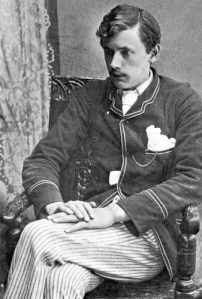
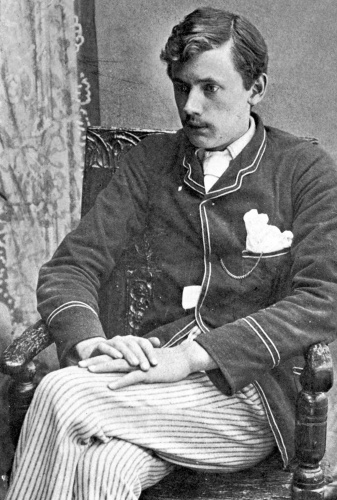
“Autumnal” by Ernest Christopher Dowson
Yesterday evening, I sat in my living room leafing through “The New Oxford Book of English Verse”. Pausing at Keats, I read several of his poems, the last one among them being “Autumn”. “Autumn” is one of those poems which refreshes the jaded soul and causes the reader to gasp in wonder at the sheer beauty of the poet’s creation.
Having read Keats, I was minded to reproduce “Autumn” on this site. However “Autumn” is well known and rather than quote a much loved and well known poem, I have chosen instead to share Ernest Christopher Dowson’s poem, “Autumnal”:
“PALE amber sunlight falls across
The reddening October trees,
That hardly sway before a breeze
As soft as summer: summer’s loss
Seems little, dear! on days like these!
Let misty autumn be our part!
The twilight of the year is sweet:
Where shadow and the darkness meet
Our love, a twilight of the heart
Eludes a little time’s deceit.
Are we not better and at home
In dreamful Autumn, we who deem
No harvest joy is worth a dream?
A little while and night shall come,
A little while, then, let us dream.
Beyond the pearled horizons lie
Winter and night: awaiting these
We garner this poor hour of ease,
Until love turn from us and die
Beneath the drear November trees”.
Nostalgia
In a recent article in The Daily Mail, entitled “Forget the Age of Plenty, We Were Happier in the 1700’s” (http://www.dailymail.co.uk/news/article-3756368/Forget-age-plenty-happier-1700s-Briton-s-content-life-era-slums-gin-mothers-workhouses-today.html), it is reported that research shows the 18th century was the period in which people were happiest, despite the grinding poverty in which much of the population lived.
The above article reminded me of a comment made by a reviewer of my collection of poetry “Lost in the Labyrinth of My Mind” that “ There is a feeling of nostalgia in some poems, e.g. “Modernity”, (https://emmalee1.wordpress.com/2016/05/11/lost-in-the-labyrinth-of-my-mind-k-morris/). The poem is reproduced below in order that my readers may judge for themselves:
“Give me something real
Not this plastic I feel.
Give me books in cloth boards
That I may not be bored.
Give me a chime
To measure time.
Give me solid wood
To caress and love.
Give me objects that last
A link to the past.
The world moves fast
Vast
Nothingness beccons.
Enumerable seconds
engaged
In rage
Against the gleam
Of the machine
That haunts my dream”.
(For “Modernity” and the other poems in “Lost in The Labyrinth of My Mind” please visit http://moyhill.com/lost/.
There Was A Young Lady From France
There was a young lady from France
Who went out clubbing in order to dance.
She met a man named Bill
Who said, “I wonder will?”
She replied, “I will only dance”!
A Tired Smile
A tired smile
Hides a guilty denial,
While a sheepish grin
Conceals sin,
Though not very well
For the wise can tell
What lies within
There Was A Young Lady Called Lin
There was a young lady called Lin
Who lived in a very large bin,
Until one day
The dustmen took it away,
Which was much to her chagrin!
Velvet
An old man reading Mill
Looks out over the still
Land
Where oaks as ancient institutions stand,
And hears a sound drear,
That of velvet jackboots, approaching near.
Fate
Some say
In a place far away
The gods play dice
And we humans pay the price.
How easy to blame some external force,
“Matters will take their course.
We must to fate submit
And our teeth in the face of adversity grit”.
Macbeth his dagger drew
And ran king Duncan through.
It was his own shame.
No witches where to blame.
We make our own fate,
Though oft we hate
The fact however true,
It was we alone, who ran King Duncan through.
Make Up
Skin, once perfect as plastic,
Now stretches like an elastic
Band.
Once men would rush to obey her every command.
Now at the mirror she does stand
Make up in hand
Expertly hiding
The lines dividing
Youth
From the truth
Of middle-age.
