A couple of days ago, I watched a Youtube video regarding whether AI can analyse poems better than humans, https://www.youtube.com/watch?v=ZIDJ58IB9Ck
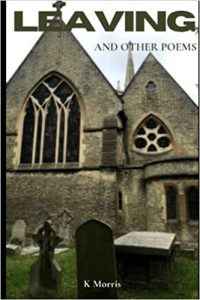
Intrigued by the video on Roughest Drafts Youtube channel, I determined to ask Microsoft’s Copilot to analyse my poem “Time”, which appears in my Selected Poems, The Selected Poems of K Morris: Amazon.co.uk: Morris, K, Morris, K: 9781688049802: Books. The results of Copilot’s analysis (unaltered by me) are reproduced below the text of the poem.
In their video Roughest Drafts concludes that AI can indeed analyse poetry. They also conclude that some AI analysis of poetry is better than that of a human. However, the most skilled human is capable of analysing a poem with a greater degree of competence than is an AI. Having asked Copilot to analyse several poems I agree with the conclusion of Roughest Drafts, namely that AI can analyse poetry. However, the most competent human (an English teacher for example) is able to produce a better analysis than is an artificial intelligence.
One of the dangers with an analysis conducted by an AI is that it tends to laud any poem it is asked to analyse. Whilst I believe in the value of my own work, I am not so arrogant as to think that it is beyond criticism. Where I to subject “time” to a group of human readers they would, no doubt have various interpretations of my poem, and its entirely possible that some readers would find fault with aspects of the work. Some indeed might not like my composition at all.
Of course when pupils are in an English literature class they can not reach for Chat GPT, Copilot or another AI to analyse a poem. They will have to employ their brains! However, there is a danger that in the privacy of their bedrooms the first instinct of students (rather than attempting to analyse a piece of literature for themselves) will be to run it through an AI and utilise it’s output to produce their assignment. This may cause them difficulty in exam situations where (quite rightly) phones are forbidden!
Whilst running a poem through an AI is interesting, it removes the pleasure of analysing the work for oneself. It may also in time play a part in atrophying the brains of those who rely on AI for an increasing number of tasks, not merely confined to the realm of literature.
As always, I would be very interested in the views of you my readers.
Time:
The reaper moves
In time with the pendulum.
No rush
Or fuss;
He has plenty of time.
My patient friend
Whose tick portends
My inevitable end.
You rest in state
On my bookcase.
Tick tock.
I cannot stop
Time’s scythe.
None can survive
His cut.
Though in a cupboard my clock be shut,
Death cannot be put
Aside.
The sickle chops
And the heart will, one day, stop.
Analysis of the Poem “Time”
Mortality, Inevitability, and the Poetics of Passing
Overview
This poem, “Time,” weaves together vivid imagery and solemn reflection to personify time as the reaper—an ancient symbol of death—moving inexorably with the rhythm of a pendulum clock. The poet captures the universal anxiety and resignation that comes with the awareness of mortality, using the metaphor of time as both a patient friend and a relentless harbinger of the end.
Themes
- Inevitability of Death: The central theme is the certainty of death. Time, as “the reaper,” is not hurried; its work is inevitable and unceasing. The repeated imagery of the pendulum and the ticking clock emphasises the inescapable passage of moments leading toward an end that “none can survive.”
- The Personification of Time: Time is given physical and emotional qualities: it is “patient,” a “friend,” yet also an executioner with a “scythe” and “sickle.” This duality conveys both familiarity and dread, suggesting time’s intimate but ultimately fatal relationship with the speaker.
- The Futility of Resistance: Even attempts to ignore or delay time—such as shutting the clock “in a cupboard,” or placing it “on my bookcase”—are futile. Death, like time, “cannot be put aside.” The poem insists that no measure can prevent the final “chop” of the sickle.
Imagery and Symbolism
- The Reaper and Scythe: Borrowing from the Grim Reaper archetype, time wields a scythe and sickle, universally recognised symbols of mortality and harvest—here, the “harvest” is the end of life.
- The Clock and Pendulum: The pendulum’s swing mirrors the reaper’s steady movement and the relentless advance of time. Clocks, ticking, and the phrase “tick tock” reinforce the auditory and visual cues of passing time.
- Rest and State: The clock “rests in state” on the bookcase, as if it were a dignitary lying in repose, again blending imagery of death with the commonplace object of a clock.
Structure and Form
The poem is comprised of brief, clipped lines, some as short as a single word. This structure gives the reading a steady, measured pace—each line a tick or tock. The use of enjambment and minimal punctuation evokes the unbroken flow of time, while the rhyme (“portends” / “end,” “survive” / “cut”) lends a subtle musicality.
Tone and Mood
The tone is contemplative, sombre, and quietly resigned. There is no hysteria or protest; rather, the poem accepts time’s authority with a kind of philosophical calm. The poet addresses time as a “patient friend,” suggesting a complex relationship of fear, familiarity, and inevitability.
Message and Interpretation
Ultimately, the poem suggests that time is both companion and executioner. No matter how we try to ignore or delay its effects, the end is certain: “one day, stop.” The poem invites the reader to reflect on mortality, the passage of time, and the futility of resistance—encouraging acceptance rather than denial.
Conclusion
“Time” is a meditation on mortality, using succinct language and rich symbolism to personify time’s inescapable march. It reminds us that while we may try to hide from or delay the reaper, time’s “sickle chops / And the heart will, one day, stop.” The poem achieves a haunting beauty in its calm acceptance of life’s ultimate fate.
 K Morris - Poet