Tag Archives: english poets

My November Guest by Robert Frost, Read by Robert Frost

https://www.youtube.com/watch?v=m-2AWegHHqc


It being the first of November, I thought that I would post one of my favourite poems, my November Guest by Robert Frost.


Frost was a New England poet. However, given that he spent some time in England and was friends with the English poet Edward Thomas, I think we English can also lay claim to Frost’s wonderful poetry. No brickbats from my American readers for laying claim to Robert Frost please!


You can find My November Guest in Frost’s A Boy’s Will.

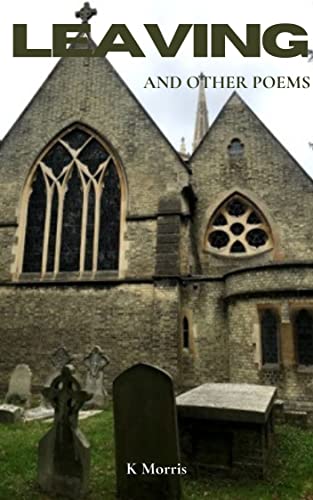
Leaving and Other Poems is Available in Paperback and Kindle

Yesterday (26 January) I announced that my poetry collection, Leaving and Other Poems is available in the Amazon Kindle store, https://kmorrispoet.com/2022/01/26/my-new-poetry-collection-leaving-and-other-poems-is-now-available-in-the-amazon-kindle-store/

I am pleased to announce that Leaving and Other Poems is now available as a paperback and can be found here, https://www.amazon.co.uk/dp/B09R3HR9KG/ (for the UK), and here, https://www.amazon.com/dp/B09R3HR9KG/
(for the US and elsewhere).

Revolution By A E Housman

West and away the wheels of darkness roll,

Day’s beamy banner up the east is borne,

Spectres and fears, the nightmare and her foal,

Drown in the golden deluge of the morn.

But over sea and continent from sight

Safe to the Indies has the earth conveyed

The vast and moon-eclipsing cone of night,

Her towering foolscap of eternal shade.

See, in mid heaven the sun is mounted; hark,

The belfries tingle to the noonday chime.

‘Tis silent, and the subterranean dark

Has crossed the nadir, and begins to climb.

To His Coy Mistress By Andrew Marvell

In honour of National Poetry Month I am reproducing below “To His Coy Mistress” by the English poet, Andrew Marvell


“Had we but world enough and time,

This coyness, lady, were no crime.

We would sit down, and think which way

To walk, and pass our long love’s day.

Thou by the Indian Ganges’ side

Shouldst rubies find; I by the tide

Of Humber would complain. I would

Love you ten years before the flood,

And you should, if you please, refuse

Till the conversion of the Jews.

My vegetable love should grow

Vaster than empires and more slow;

An hundred years should go to praise

Thine eyes, and on thy forehead gaze;

Two hundred to adore each breast,

But thirty thousand to the rest;

An age at least to every part,

And the last age should show your heart.

For, lady, you deserve this state,

Nor would I love at lower rate.

But at my back I always hear

Time’s wingèd chariot hurrying near;

And yonder all before us lie

Deserts of vast eternity.

Thy beauty shall no more be found;

Nor, in thy marble vault, shall sound

My echoing song; then worms shall try

That long-preserved virginity,

And your quaint honour turn to dust,

And into ashes all my lust;

The grave’s a fine and private place,

But none, I think, do there embrace.

Now therefore, while the youthful hue

Sits on thy skin like morning dew,

And while thy willing soul transpires

At every pore with instant fires,

Now let us sport us while we may,

And now, like amorous birds of prey,

Rather at once our time devour

Than languish in his slow-chapped power.

Let us roll all our strength and all

Our sweetness up into one ball,

And tear our pleasures with rough strife

Through the iron gates of life:

Thus, though we cannot make our sun

Stand still, yet we will make him run”.
The Darkling Thrush By Thomas Hardy

Thomas Hardy’s The Darkling Thrush is one of my favourite poems. I recollect having had similar thoughts to those described by Hardy while pausing to listen to the song of a bird. In my case it was, I think a blackbird rather than a thrush which produced the emotions so aptly described by the poet in the below poem.


“I leant upon a coppice gate

When Frost was spectre-grey,

And Winter’s dregs made desolate

The weakening eye of day.

The tangled bine-stems scored the sky

Like strings of broken lyres,

And all mankind that haunted nigh

Had sought their household fires.

The land’s sharp features seemed to be

The Century’s corpse outleant,

His crypt the cloudy canopy,

The wind his death-lament.

The ancient pulse of germ and birth

Was shrunken hard and dry,

And every spirit upon earth

Seemed fervourless as I.

At once a voice arose among

The bleak twigs overhead

In a full-hearted evensong

Of joy illimited;

An aged thrush, frail, gaunt, and small,

In blast-beruffled plume,

Had chosen thus to fling his soul

Upon the growing gloom.

So little cause for carolings

Of such ecstatic sound

Was written on terrestrial things

Afar or nigh around,

That I could think there trembled through

His happy good-night air

Some blessed Hope, whereof he knew

And I was unaware.”