Tag Archives: animals

3 Ways the Kids Can Help Train Your New Dog

Getting a new dog is exciting for everyone in the family (unless you have a cat), and your kids may be eager to help get your new pet acclimated to your home and family. Depending on the age of your children, it might be difficult for you to find a way to make them feel like a big a part of your new pup’s life.

Getting your dog properly trained is step number one for a new dog owner, and to kids, this prospect is very exciting. They want the dog to learn all sorts of crazy tricks with little to no knowledge as to how to properly train this behavior. While including the kids in the training process may be challenging, it is always a possibility. Here are a few ways your kids can help train your new pup.

1. Give Your Kids the Treat Bag

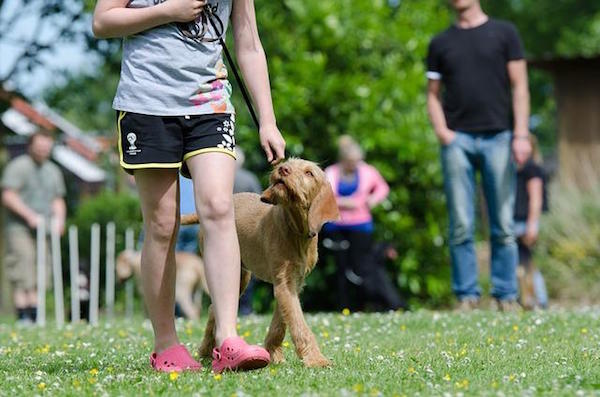
Your kids may not be able to get the new dog to obey them just yet, but your kids can be your helper during training sessions by doling out treats. Have your kids hold the treat bag and offer a treat each time the dog performs the correct action. If you have a new puppy, be sure your kids know to keep their fingers clear of those sharp milk teeth. It may be best to have them drop the treat in front of the pup.
qDcwUe

Image via Pixabay by 825545

2. Let Your Kids Pick the Parlor Tricks

Teaching your dog the basics is crucial. However, which silly tricks you teach him matter a little less. Since it doesn’t matter if your dog learns to shake or high five, let your kids decide which frivolous tricks your new furry friend will learn. If they are old enough, you may let each child take charge of one parlor trick and teach it to the dog themselves. However, if they are young, let them help out by offering treats while you focus on the commands.

3. Have Them Help with Dog-Proofing

Your kids want their new four-legged friend to be safe in your home. To include them in the preparations for a new dog, you might want to have them help you clean and dog-proof the home. Teach them to close the doors to their bedrooms so that their toys don’t become an unintended chew toy, and make sure they know where the pup is and is not allowed to go. This way they can help with minor disciplining and correction if the pup wanders off or is found chewing something he shouldn’t.

Regardless of how you decide to let your kids help with your new family dog, you should always first teach them how to interact with a dog. Never let your kids hit a dog or pull its ears and tail. They should know how to use positive reinforcement and avoid frightening the dog with excessively harsh discipline.

If your dog learns to either ignore or fear your kids, they may never have a successful relationship with him. Once they know the basics of canine interaction, you might find that your kids play an important role in socializing and training their new family member.

Paige Johnson is a self-described fitness “nerd.” She possesses a love for strength training. In addition to weight-lifting, she is a yoga enthusiast, avid cyclist, and loves exploring hiking trails with her dogs. She enjoys writing about health and fitness for LearnFit.org.

 

To my Dog, Trigger

trigger-in-his-bed

My dog yelps in his sleep.
Can a canine weep?
And what thoughts of joy or pain
Pass through his sleeping brain?

In an exstasy of sound and smell
You dwell.
The freshly roasted chicken, just out of reach is sheer hell
To my friend
Who’s end
Is food and play.

Your day
Will not be so long as mine,
Yet we humans whine
While you in the moment live
And give such love
To your god above
Who sits envying you your state of grace.
Would that I could change place
With you
My friend true.

The Wolf and The Forn

To recognise the human and still do.
To see a heart true
And yet go through
With it, for a deal is a deal,
And ‘tis foretold
That an agreement sealed
By gold
Will hold
For what is sold is forever sold.

The heart may command
The hand
To withdraw
From the wolf’s paw.
But the forn
Torn
By circumstance dallies
With the wolf, who yawns
While the fawn tallies
The cost
Of innocence lost.

Werner

Her name was Werner
He just couldn’t spurn her
Advance,
For she did dance
Ever closer.

He said, “I’m a grocer”.
She replied with a sigh, “Oh how I love bananas.
You must see my pyjamas
All covered in llamas.
To tell you the truth
My real name is Ruth,
But it is better to be a girl called Werner
For no one can turn her
Away.
Let us play
With the llamas.
I may lose the pyjamas
For the Bahamas
Are hot
And I have got
A thirst to slake.
Come, let us swim in yonder lake!” …

Rhubarb the Red-Nosed Rabbit – book release by author Victoria (Tori) Zigler

rtrnr

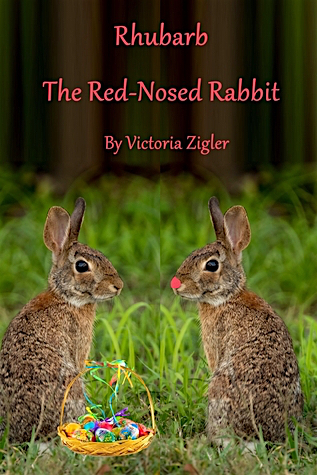
Title: Rhubarb The Red-Nosed Rabbit
Author: Victoria Zigler
Genres: Children’s books – Animals – Rabbits & Children’s books – Holidays
Published: March 26, 2016

Synopsis:
“I’m sure you’ve heard all about the red-nosed reindeer that saved Christmas. But, have you ever heard the story of the red-nosed rabbit that saved Easter?

Everybunny has always teased Rhubarb because of his bright red nose, even though it’s not his fault he was born different. But when a misty night threatens to stop the Easter Bunny from making his yearly delivery of Easter eggs to the children of the world, Rhubarb’s red nose may be the only thing that can save Easter.”

Buy it from Smashwords

Buy it on iBooks

Buy it from Barnes & Noble

Buy it on Kobo

Paperback version coming soon!

Wolves

A lone wolf
At the edge of the pack
Feels no lack
Of comrades true
For through
The clouds his friend,the moon, breaks.
He howls and wwakes
The ancient fear
In those dwelling near.

The hunter his gun aims.
The wolf’s brains
Explode.
There is no need to reload.
Taking up the body of his friend
He glances at the clouds which portend
A storm.
The sky so dark and forlorn.

Alone
At home
He sits
And strips
The carcass bare.
The pack neither know nor care
About the hunter’s prey.
They will commune
With the moon
Another day.

The Hungry Hound

The below poem is dedicated to my guide dog Trigger, and my generous colleagues who, from time to time sacrifice their lunch to a hungry canine.

I am Trigger.
My stomach is bigger
Than you think.
Your lunch will be gone in the blink
Of an Eye.
Then away I fly.
Should you ask “who stole my lunch?” I reply
“Nnot I
But, dear reader, I lie …!..
I have been known to eat plastic.
My reach is elastic.
You think your food Safe?
My friend brace
Yourself for a shock
For I will gobble the lot!
Be it ever so hot!

Working With Guide Dogs

On Wednesday 2 December I gave a talk about my experience of working with guide dogs. Below are extracts from that presentation.

I remember being struck on reading Charles Dickens, “A Christmas Carol” by the reference to guide dogs. Speaking of Scrooge Dickens writes,
“Even the blind men’s dogs appeared to know him; and when they saw him coming on, would tug their owners into doorways and up courts; and then
would wag their tails as though they said, “No eye at all is better than an evil eye, dark master!” (http://www.gutenberg.org/files/46/46-h/46-h.htm).
Researching the history of guide dogs, I have been unable to discover any record of guide dogs being trained in the United Kingdom until the 1930s, when the Guide Dogs For The Blind Association was established (the same charity that trains guide dogs today). However the reference to blind men’s dogs in “A Christmas Carol” indicates that dogs where being used by blind people in Victorian England. I can only surmise that visually impaired people trained the dogs themselves or training took place with the aid of family and friends.
The history of guide dogs does, however go back far beyond the 19th century. A roman sculpture exists of a blind man being lead by a dog, while a plaque from the middle ages shows a blind man being lead on a leash.
In the late 18th century the Paris hospital for the blind trained guide dogs.
It appears that the first (modern) and systematic attempt to train guide dogs took place in Germany. A German Doctor left his dog with a patient while he was called away to business elsewhere. On his return he was so impressed by the way in which the dog had been looking after his patient that he determined to train dogs as guides for the blind. The doctor’s work lead to the establishment of several guide dog schools in Germany and there is evidence of dogs being sent to the UK amongst other countries.
The work of Doctor Stalling inspired the founding of The Seeing Eye in the United States which trained dogs for the blind and (later) the establishment of The Guide Dogs For The Blind Association in the UK. (http://www.guidedogs.org.uk/aboutus/guide-dogs-organisation/history#.VmMIbL-yKSo).

I am now working with my fourth guide dog, a lovely brindle lab/retriever called Trigger. All of my companions have been male with the exception of my third dog, Drew, a lovely yellow lab/retriever who sadly died in March 2011 as a result of a heart attack.
Guide dogs are trained to walk in a straight line and to avoid obstacles. On reaching an obstacle they can not navigate the dog stops and it is then incumbent on the owner to assess the situation and (if in any doubt as to how to proceed) to ask for sighted assistance.
Guide dogs are taught to stop at kerbs and to only go into the road at the command of their owner. Guide dogs lack the capacity to know that vehicles pose a danger (there sitting at kerbs is, therefore purely down to their training). However guide dogs are taught not to go into the road when a vehicle is approaching. However owners are told not to rely on the dog taking evasive action as they have no understanding of road safety (I.E. it is a useful aspect of training but the responsibility for safety remains fairly and squarely on the shoulders of the owner). Having said that, Trigger has, on several occasions pulled me back when I have misjudged the situation and attempted to cross as vehicles approach.
In the UK guide and other assistance dogs are allowed by law to enter food and other premises which pet dogs are prohibited from entering. It is, in fact an offense for a provider of goods or services to refuse entry to a working guide dog. Despite the legislation discrimination does, unfortunately persist and I have myself experienced it on a number of occasions.
In conclusion, guide dogs enhance the independence of visually impaired people and on a much deeper level provide companionship. I and other guide dog owners have built up strong bonds with our dogs who are, to us much more than mere working animals.

Hurricane

I want to come in.
The din
I make.
The trees I shake.
I awake
the old fear
Of nature wild and near.
People quale indoors.
There is no applause
when the gale doth come.
Animals run
for shelter
helter skelter
seeking release
from the hurricane’s teeth.
The morning brings peace
And trees
Lying amongst fallen leaves.