Aaron Barry, a white poet pretended to be black and had poems published which had previously been rejected when submitted under his own name. This story has not surprisingly provoked a good deal of controversy and I’ll leave it to you my readers to make up your own minds on the rightness or otherwise of the situation described in this article How white man became famous as a queer Nigerian poet – Businessday NG, and Elsewhere online.
Tag Archives: publishing
Plans for a National Writing Centre
New Writing North is leading a coalition, which includes Hachette UK, Faber and Simon & Schuster UK, to create a state-of-the-art Centre for Writing in Newcastle worth £14m through government funding and so “reposition the southern and London bias of the writing industries”.
Why are Some Kindle Books More Expensive than their Print Equivalents
Recently I attended a poetry reading during which a poet with whom I am unfamiliar read their work. After the reading I requested that they send me a link to their book, which they duly did.
On clicking on the link I was surprised and somewhat annoyed to see that the Kindle edition retails at £6.2 whilst the paperback costs only £3.2. The book in question is traditionally published so I strongly suspect that the author has had no influence as regards the respective prices, and I in no way wish to criticise the poet, hence I am not naming them or the work in question. I do, however think that the fact that the Kindle is £3.2 more expensive than the paperback edition raises an issue worthy of discussion, namely how can a publisher justify pricing it’s Kindle books at a higher price than their print counterparts?
Many of my own books are available in both Kindle and paperback as I want to give my readers the opportunity to read my work in a format of their choice. On average the Kindle cost of one of my books is £2.99 whilst the print versions retail at between £5 and £5.25 which does, I believe take into account the extra cost of producing the print edition. I, personally would feel it wrong to charge more for the Kindle version of one of my books than it’s print counterpart.
Pricing Kindle titles higher than their print equivalents also has the unintended consequence of meaning that those who are unable to read print and rely on the text to speech facility on their Kindle app or Kindle reader to read books have to pay more for certain books than those who can read print. I am one such reader as I am registered blind and unable to read print.
I’ve come across this short video on Youtube which deals with this issue https://www.youtube.com/watch?v=Vl9elMax1hM.
As always I’d be interested in the views of my readers.
The Writer
Once green leaves
Rot. And are forgot.
But great trees
They live on
When we are gone.
And some trees
Make leaves for books.
And some books
They live on
When we are gone.
But a tree
Has no vanity.
Getting Poems Published
A good short post by Josephine Corcoran, a published poet, on getting poems published, https://josephinecorcoran.org/2022/11/20/on-getting-poems-published/.
Literary Miss Lou
A literary young lady named Miss Lou
Being determined that her book break through
Lobbed it at the window
Of a publisher I know,
And that book it did break through!
Writers and Free Speech
In “A Letter On Justice And Open Debate” https://harpers.org/a-letter-on-justice-and-open-debate/, the authors JK Rowling and Margaret Atwood (amongst many other authors and academics), speak out against what they label as “cancel culture”. They condemn the growing tendency to silence (or attempt to silence) those who express opinions which offend particular groups or individuals. And argue that the best way to deal with views with which one disagrees is by engaging in free and open debate, rather than attempting to silence those expressing such opinions.
The letter has provoked controversy. Take, for example this response from a WordPress blogger:
“there is no such thing as cancel culture. This is fans deciding they do not want to associate with sexist, racist, ableist, bigoted authors/artists/what have you, and deciding to not purchase future works from them.
It is also not censorship because the government is not coming in and forcing these authors to remove their books from store shelves or anything like that. Fans are simply refusing to support these artists anymore. Publishers have that same right. So do booksellers.” (see https://amberskyeforbes.wordpress.com/2020/07/08/cancel-culture/).
Whilst the blogger is correct that the government is not forcing anyone to stop stocking, publishing or buying books and/or expressing certain opinions, the fact that some authors are, for example removing their books from JK Rowling’s publisher is intended to put pressure on said publisher to stop publishing Rowling’s works. The publisher has (quite rightly) not bowed to such pressure. However, where they to do so, this could have the effect of depriving Rowling (or anyone else who expresses a controversial opinion) of their source of income. Sure someone as famous as JK Rowling would, in all probability find another publisher, but what about lesser known writers? In the latter case such people might well be deprived of their source of income. Depriving someone of their (legal) source of income is a big thing to have on one’s conscience is it not?
I do, of course defend the right of people to spend their income as they wish, and withdraw their books from particular publishers, for we live in a free society. However, actively calling for others to boycott the works of particular people (merely because one disagrees with something they have said) can very easily spill over into bullying. Society (or a section of it) does not possess the power to censor and/or ban opinions. It can, however create a climate in which authors (and others) fear opening their mouths in case they offend a particular group or individual. This is a very unhealthy state of affairs.
I have been told by one particular blogger (via a comment on their blog) to “educate myself”, as I expressed an opinion with which they took issue. My readers wont be surprised to learn that my response (had I voiced it, which I did not) would have been unprintable! The blogger in question was, of course perfectly entitled to their opinion (as am I). however telling people to “educate themselves” is not the best way to gain friends and influence people. Such statements come across as arrogant and are not the best way of encouraging free and open debate.
An acquaintence told me that he was thinking of writing a book on HIV/AIDS. The main character in his novel would be gay and HIV positive. However, my acquaintence (not himself being gay) was worried that where he to write his novel he would be castigated for writing about a subject of which he has no (direct) personal experience. Consequently that book will, in all probability never get written.
Of course when one writes or speaks about a subject about which one has no direct experience, one should be sure to do research prior to doing so. However, if someone wants to make a fool of themselves by writing a poorly researched book, or speaking on a subject with little knowledge of said subject, they have the right so to do. Of course we the reader/listner have the perfect right to point out their errors. Indeed it may be our duty to do so. But what neither the state nor society should do is to call for poorly researched books to be banned. Nor should either the state or society prevent people from expressing offensive opinions.
The advocacy of violence to achieve political or other ends is a criminal matter and anyone advocating it’s use should feel the full force of the law. However disagreeing with someone is not violence and its dangerous when people contend that the expression of measured opinion constitutes violence. As someone who is disabled (I am registered blind) I would be offended where someone to say that disabled people have no right to be employed, and that all anti-discrimination legislation should be repealed, leaving it to the discretion of employers whether to employ the disabled. However me finding this view particularly objectionable does not mean that the person expressing it has committed an act of violence. They have not. They have expressed an opinion which, in a democratic society they are perfectly entitled to do, and the best way of me dealing with their perspective is to argue against it. I may feel angry but the person has done no violence to me and I should not hound them on social media, nor should I call for them to be deprived of their source of income.
We live in a liberal society and long may we continue to do so.
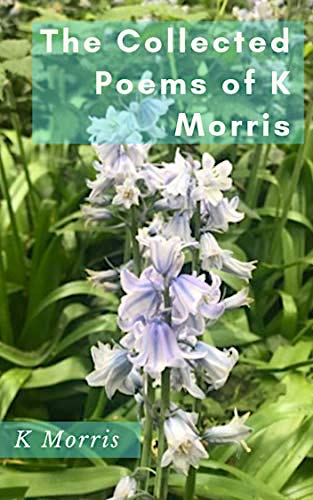
Ebook or paper, you pays your money and you makes your choice
Yesterday (23 August), I announced that my “Selected Poems” is available in the Amazon Kindle store, https://kmorrispoet.com/2019/08/23/my-selected-poems-is-now-available-for-purchase-in-the-kindle-store/
My office is a relaxed place and (within reason) no one objects to the odd non-work-related email. Consequently, I emailed yesterday informing my colleagues that my “Selected Poems” was available in Kindle, and provided a link enabling anyone interested to take a look or purchase my book.
In response to my email, one of my colleagues got in touch asking whether “The Selected Poems of K Morris” is available in paperback. I am pleased to announce that my book is now available in paperback and can be found here https://www.amazon.com/dp/1688049800/ (for the US and elsewhere), and here https://www.amazon.co.uk/dp/1688049800/ (for the UK).
I am keen for my readers to have a choice as regards how they access my books. As Simon Jenkins points out in “The Guardian” https://www.theguardian.com/commentisfree/2016/may/13/books-ebook-publishers-paper, many people appreciate the physicality of a paper book and reports of the demise of the traditional (hard copy) tome have been greatly exaggerated.
As someone who is visually impaired and unable to read print, I am a fan of ebooks insofar as they enable those with visual impairments to access literature via Apple’s Voiceover screen reader and the Kindle’s text to speech facility. I also use my Amazon Echo to listen to Kindle books and audio titles from audible.co.uk. Having said that, I do love sitting with a braille book upon my knee as its an experience not mediated via technology (something very precious in today’s tech obsessed society).
Consequently its not a case of paper bad, ebook good, or the other way around! Its a matter of people finding what works best for them. I like the idea of readers taking down my books from their bookshelves (as I love going through my own bookcases), however, if readers wish to read my (or other authors books) on their iPhones or other similar devices, then that is fine as, in the final analysis its the enjoyment of literature that matters, not how it is consumed.
Approachable Poetry Magazines for Unpublished Poets
A useful list of approachable poetry magazines for unpublished poets on Vita Brevis, most of which have an acceptance rate of 20-30 percent, https://vitabrevisliterature.com/rescources/approachable-poetry-magazines-2/
Should one change one’s writing to enhance the chances of being published?
I recently read this article on Writers Relief, http://writersrelief.com/2010/03/18/poetry-turnoffs-styles-and-formatting-that-make-editors-cringe/. The piece makes a number of points concerning what editors of poetry magazines dislike, and suggests that those making submissions think carefully prior to submitting their work. Amongst the “turn offs” mentioned in the article, is that of rhyming poetry, with the view being expressed that editors do not, in general publish rhyming poetry. Interestingly almost all of the comments following on from the article are strongly in favour of rhyming poetry.
As a poet who does (for most of the time) write in rhyme, I am both saddened and heartened by the article. Or, rather I am saddened by the fact that many editors shy away from rhyming poetry, but heartened by the large number of those who love (and write) in rhyme. Of course one should not shoot the messenger. The authors of the article are only passing on their advice to those who wish to submit to poetry magazines and, of course are not responsible for the editorial likes and dislikes of particular journals. Nonetheless I have an aversion to writing simply to be accepted for publication. For me poetry has to be honest, and composing verse simply to please others is not being true to oneself.
I should, perhaps qualify the above statement. I do, of course hope that my work will give pleasure to my readers. I will, however not write in a manner alien to me simply to gain popularity and/or publication. This is easy for me to say as I have a fulltime job (my writing is not my primary source of income, and I do appreciate that not everyone has the luxury of simply producing work which is entirely to their own liking, for we all have bills to pay etc). But, for me rhyming poetry is my main mode of communication and I will not change my preference in order to enhance my chances of being published.
As always I would be interested in the views of you, my readers.
Kevin
