Her short skirt.
His crisp white shirt.
Her heels
Too high
Fail to reach the sky.
Flowers on a quilt
Can not wilt
But will fade
With age.
Her short skirt.
His crisp white shirt.
Her heels
Too high
Fail to reach the sky.
Flowers on a quilt
Can not wilt
But will fade
With age.
In the future, will robots dress
To impress?
And will men and women sigh
Over a lover’s imperfect thigh?
And choose
To lose
Their very being
In the never seeing
Robot eye?
For therein does lie
Perfection,
For there can be no rejection
For you or I.
And one can not sin
With a thing of tin.
There was a young man named Round
Who owned a lugubrious hound.
Its name was Bill.
They lived on a hill
And this limerick says nothing profound!
Most of my poetry is expressed in rhyme. However a few of my poems (perhaps I should say short prose pieces) are written in a form other than rhyme. One such poem/brief prose piece is Merry-Go-Round. You can find a recording of me reading Merry-Go-Round HERE, or below:
Rising at 6 am
I take up my virtual pen.
Then I see
Staring at me
The sandwich wrapper from yesterday.
Ah the romance of a writer’s life.
Had I a wife
She would clear that away,
Or more likely say
In a manner most sweet
“You throw away what you eat
My dearest love
For you are not above
Taking a trip to yonder bin.
Therein
You will discover abandoned schemes
And broken dreams”.
I am part of an informal network where people meet over coffee to discuss their jobs. The idea behind the network is to enable individuals from diverse professions/disciplines to learn from one another in an unpressured environment. These informal chats also furnish people with the chance to discuss non work related matters, for example hobbies. During a recent meeting (having exhausted work related issues), the conversation turned to outside interests. I mentioned that I write poetry. At this juncture there emanated from my companion what I can only describe as a distinct titter. “So you don’t like poetry?” I said. “I don’t have much time for reading”, replied my newly made acquaintance.
Shortly after the above exchange, we shook hands and went our separate ways.
Looking back on the incident, I am torn between amusement at the fact that the writing of poetry elicited mirth from a grown person, and sadness at the seeming inability of my acquaintance to engage (or at least attempt to engage) with something other than their own narrow profession (that of finance).
There are, of course things with which I find it difficult to engage. For instance I am not a lover of opera. I would not, however dream of dismissing (or laughing at) this art form as to do so would indicate boorishness on my part. If a friend where to invite me to the opera I would go along as I am open minded and prepared to develop my tastes. Where I to attend an operatic performance and not find it to my liking I certainly would not titter but, as is so often said it takes all sorts to make a world.
My encounter with this individual reignited within me a curiosity regarding why some people dismiss poetry out of hand. One possible reason explaining the disinclination of people to engage with poetry is that the art form is often associated in the public’s mind with complex imagery and metaphor. For instance to fully grasp Eliot’s “The Wasteland” demands copious reading of notes with their references to mythology, history etc. I, personally find the effort entailed in following up on often obscure references enhances my understanding of Eliot’s work. I do, however understand that others feel differently.
While much poetry is complex, a good deal is not. For instance Alfred Noyes’s “The Highwayman” is a wonderful balad describing the doomed love affair between a highwayman and an inkeeper’s daughter. No arcane knowledge is required to enjoy the poem. None the less the idea that poetry “is not for me” persists in the minds of many.
Does the reluctance of some to engage with poetry stem from a fear of deep emotion. The best poetry frequently tackles issues with which many are disinclined to engage. To take a concrete example, in “Aubade” Larkin ponders on death and, in particular our fear of dying. It is often said that in Victorian England sex was the taboo subject. Perhaps in today’s consumerist society the great taboo is death, hence the reluctance of many to engage with poems (and other art forms) which tackle this topic. It is easier to flick between TV soap operas than it is to immerse oneself in the profundities of poetry.
However not all poetry is of a serious nature. “The Owl and the Pussycat” by Edward Lear and the many limericks, written by countless individuals prove that verse need not be serious.
In conclusion, poetry is for everyone so why are significant numbers of people not attracted to this art form? As stated above, I believe that part of the answer to this question lies in the mistaken belief that poetry is by its nature intrinsically difficult. While some poetry is difficult to interpret, by no means all poetry falls into this category. Consequently any attempt to tackle the misconception that the art form is difficult needs to ensure that young people (and others) are introduced to as broader range of poetry as is possible (both “difficult” and not “difficult”).
As regards the saturated consumerist society in which we live, one in which beautiful women are used to sell all manner of products, this is a more difficult issue. As a liberal (with a small l), I have no desire to tell others how they should spend their leisure time. One man’s meat is another man’s poison and it is not for me to force a dish of my choosing on others. I can only hope that through a rounded education people will come to appreciate poetry at a young age and that this love will remain with them throughout their lives.
There was a young man named Paul
Who drove his mistress up the wall.
He talked about his dear wife Jane
(Which caused his lover to complain),
So soon he had no mistress at all!
In honour of those who gave their lives for freedom, I am reproducing below my poem “Poppy”, which first appeared here on 4 November 2016. This year I was able to purchase a poppy to remember the dead.

—
To those who died that you and me
Might live free.
To those who gave their sweet breath for King and Countrie.
I regret that yesterday
I had no cash to pay
For a poppy deep red
To remember the dead.
I will not know the stench
Of trench
Nor the wrench
Of fear
And pain as spear
Drains the life away.
What can the poet say
Who has never known
The touch of steel against bone?
We die alone
But most will peaceful go
And will not know
The whoa
Of comrades lost,
Nor count the cost
Of bloody strife.
They will not give their life
That others (you and me)
May live free.
Having only my debit card I regret to say
That I could not buy
A blood red
Poppy to remember the dead
As I wended my way
To my nine to five job yesterday.
There was a young lady named Holly
Who was extremely plump and jolly.
We met at night
And to my delight
She led me into folly …
While on the way to the shops yesterday, I met an acquaintance. As one does in such situations, we passed the time of day. During our conversation my companion thanked me for the print copy of my collection of poetry, “My Old Clock I Wind”, that I had given him. He had he said read it 3 times and intended to read it again. My poetry was, in his view bleak and reminded him of Schopenhauer.
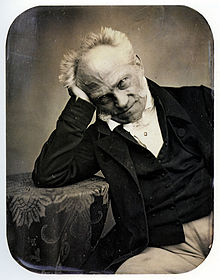
I must confess to never having read Shopenhauer, but the words of my acquaintance kindled in me a desire to read up on the philosopher. For anyone interested in learning more about Arthur Schopenhauer I recommend the above article as a good starting point.
As to whether my poetry does, in any sense chime with the ideas expressed by the German philosopher, I feel unable to comment other than to state unequivocally that I repudiate in the strongest possible terms the anti-Semitic views attributed to Shopenhauer.
Anti-semitism is vile and led to the extermination of approximately 6 million Jews (men, women and children). Sadly there remain those on the far-right of politics who continue to propagate the lie that there was no “Final Solution”. Such denials are dangerous and those who propagate them contribute to the curse of anti-semitism.
Kevin

