I found a girl under my desk
Who was real pretty and most statuesque.
She said, “my name is White
And this space is too tight.
Sir, you must buy a new desk!”.
Statuesque
8 Replies
I found a girl under my desk
Who was real pretty and most statuesque.
She said, “my name is White
And this space is too tight.
Sir, you must buy a new desk!”.
When I saw a young lady dancing
And said, “are you looking for romancing?”.
And I spoke of sin.
She said, “I am lin.
And sir, your luck you are chancing!”
I walk in the wood
Wishing to keep away
From the fray.
The birds up above
Have something meaningful to say.
Whilst angry crowds,
(Elsewhere, in street and square)
Shout to loud
And call
For everything to fall.
It is easy to smash
And trash
That which you do not understand.
Macbeth’s idiot walks the land.
And, in his tale of sound and fury
There is no room for a more nuanced story.
Maybe I should
Stay in the wood
And write poetry.
But those who know
And love
Their country
Can not see
It brought low,
By those who do not know.
I wrote the below poem late one evening, which is unusual for me as most of my writing takes place during the day. Perhaps the late hour of it’s composition goes some way to explaining the somewhat (to my mind at least) sinister nature of the poem.
(If you have not read this post, https://kmorrispoet.com/2020/06/08/thuggery/, you may wish to do so prior to reading the below).
Back in 2016, I composed my poem Rhodes, in response to the demands of Oxford students that the statue of Cecil Rhodes should be removed from Oxford University. A recording of me reading that poem can be found below. My apologies for the less than perfect quality of the recording.
The ongoing demonstrations by Black Lives Matter has led to renewed calls for the statue of Cecil Rhodes to be removed from the campus of Oriel College. And the London Mayor, Sadiq Khan has announced the establishment of a Commission to examine whether landmarks such as statues should be removed from the streets and squares of London. (See https://edition.cnn.com/style/article/uk-statues-protest-movement-scli-intl-gbr/index.html.
As reported by CNN (please see the above link), protesters daubed, “was a racist” on the statue of Winston Churchill, whilst others placed a plaque on the 18th-century Scottish philosopher, David Hume accusing him of racism.
Churchill was a product of his time and (as with many other men and women of all political parties and walks of life) undoubtedly held views which would now be considered racist. He did, however lead Britain through World War II and was an artist and author of some distinction. Consequently to mindlessly brand Churchill as “was a racist” shows the crass stupidity of whoever took it into their tiny head to vandalise the statue of a great war leader and prime minister. Churchill was much more than a “racist” and I’ve nothing but contempt for the person or persons who saw fit to deface his statue.
Turning to David Hume. Hume was one of the greatest thinkers of the Enlightenment. To single out his “racism” whilst disregarding his philosophical achievements beggers belief. As with Churchill, Hume was a product of his age and should be viewed in that light.
I wonder where all this will stop. In the city of my birth, Liverpool there have been calls (I suspect by a tiny minority) to have Penny Lane renamed due to it having gained it’s title from a merchant with interests in the slave trade, James Penny. The University of Liverpool has already bowed to student pressure and renamed Gladstone Hall, due to the association of the 19th-century prime Minister’s family with slavery, (see https://www.liverpoolecho.co.uk/news/liverpool-news/liverpool-mayor-joe-anderson-responds-18391938).
Whatever their origin (ignoble or noble), street names, monuments etc become part of communities, interwoven into the fabric of society and we should be wary of simply removing them merely because a vociferous minority clamour for us to do so. Its often said that “he who shouts loudest gets heard”. This is, unfortunately often the case even when the person (or persons) shouting loudest are not representative of the wider community or of society.
Most inhabitants of these islands rightly admire Churchill and are attached to their locality (including street names and monuments). Unfortunately the vast majority do not tend to get heard, partly owing to the disinclination of many people to become actively involved in politics. Sadly this often means that the loud mouths (such as the person or persons who vandalised Churchill’s statue) get heard, whilst the silent majority do not.
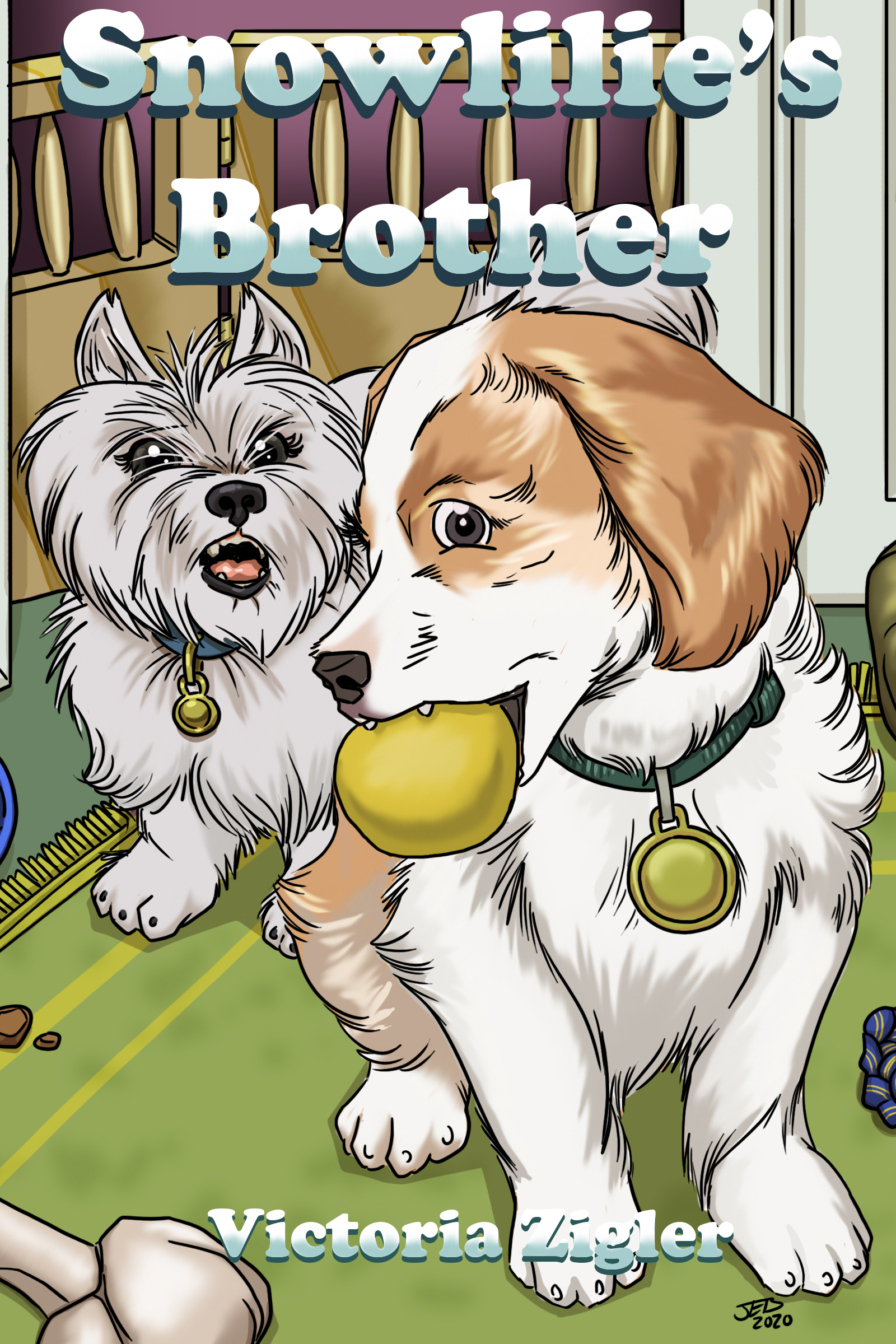
“Getting a little brother is a good thing… Right?
When Snowlilie the West Highland White Terrier first meets her new little brother – a Cavapoo puppy, who tells her the humans call him Rascal – and realizes having a little brother means having a new doggy friend to play with, she’s excited. That is, until she realizes it also means sharing everything with him – including her favourite ball, some of her food, and Mummy and Daddy’s attention.
Will Snowlilie be forced to tolerate a little brother she doesn’t like? Or can she learn to like Rascal, and accept the changes having a little brother means?”
Available now as an eBook from…
I met a pretty young nun
Who offered me lots of fun.
Over our hot breakfast toast
I said, “my kind host,
When did you become a nun?”.
When I said to a girl named Jean,
“My dear, I’m a complete and utter libertine!”.
She said, “oh my sweet honey
If you have lots of money,
You can be the man in forest green!”.
I have long been a lover of the rain. It refreshes hot dirty streets and reinvigorates the seemingly dead vegetation.
The below poem came to me as I lay in bed listening to the rain drumming on my window pane. It can be found in my “Selected Poems”, https://www.amazon.com/dp/B07WW8WXPP/.
At a time of unprecedented restrictions on the liberty of the individual (in the democracies), one can not, I think do better than to turn to J. S. Mill’s 1859 essay “On Liberty”:
“The object of this Essay is to assert one very simple principle, as entitled to govern absolutely the dealings of society with the individual in the way of compulsion and control, whether the means used be physical force in the form of legal penalties, or the moral coercion of public opinion. That principle is, that the sole end for which mankind are warranted, individually or collectively, in interfering with the liberty of action of any of their number, is self-protection. That the only purpose for which power can be rightfully exercised over any member of a civilized community, against his will, is to prevent harm to others. His own good, either physical or moral, is not a sufficient warrant. He cannot rightfully be compelled to do or forbear because it will be better for him to do so, because it will make him happier, because, in the opinions of others, to do so would be wise, or even right. These are good reasons for remonstrating with him, or reasoning with him, or persuading him, or entreating him, but not for compelling him, or visiting him with any evil in case he do otherwise. To justify that, the conduct from which it is desired to deter him, must be calculated to produce evil to some one else. The only part of the conduct of any one, for which he is amenable to society, is that which concerns others. In the part which merely concerns himself, his independence is, of right, absolute. Over himself, over his own body and mind, the individual is sovereign.”
(See https://www.econlib.org/library/Mill/mlLbty.html).
It is, of course dangerous to attempt to precisely determine what a 19th-century theorist would think as regards the problems facing us in the 21st century. However, on the basis of “the harm principle” outlined above, I think that one can hazard an educated guess as to what Mill would have thought about the lockdown measures introduced due to the COVID-19 pandemic.
Mill would, I believe have accepted (albeit reluctantly) the necessity of some kind of social distancing measures on the grounds that an individual has no right to infect another person with a disease. I am, however not convinced that he would have advocated compulsory lockdown measures such as social distancing enforced by law. and, given his defense of individual liberty he would, in my view have rigorously opposed measures aimed at preventing members of different households from mixing indoors – for example the ban on couples who are not living together from becoming intimate due to concerns over the Corona virus.
Mill was a Liberal, but his views have influenced liberals (with a small l) in all the major UK political parties. It is my hope that liberals (of every party) will make their views heard so as to ensure that in the natural desire to combat Corona, the rights of individual human beings do not get forgotten.
Kevin
 K Morris - Poet