Monthly Archives: June 2016

Milk

“He’s dead”
She said.
What to say?
Meaningless words
Of sympathy, by her probably only half heard
While thinking “I must get away,
The shop will soon close
And heaven knows
I am out of milk. Well nearly so.
Poor lady how will she go
On without him?”
A short walk and I am in
The shop where once they together went
And spent notes that crumble into dust.

Minotaur

The Minotaur doth roar
For his stomach is sore,
On account of the plump maiden he ate
Together with cutlery and plate!

“Oh why Did I partake
Of a girl so overweight.
By Zeus my stomach doth ache.
In future I will stick to steak!”
The Minotaur said, with a shake of his head.

The Oldest Handwritten Documents Ever Discovered in England

A fascinating post. Kevin

Nicholas C. Rossis's avatarNicholas C. Rossis

Ancient Roman writing tablet | From the blog of Nicholas C. Rossis, author of science fiction, the Pearseus epic fantasy series and children's books A Roman writing tablet found in the mud. Photo: MOLA / Atlas Obscura

On January 8, 57 AD, Tibullus, a freed slave in London, promised to repay 105 denarii, a hefty sum, to another freed slave named Gratus. Meanwhile, one friend admonished another that he’s lent too much money and is being gossiped about. And a merchant was making a desperate plea for repayment of debts owed to him.

We know all this, thanks to an archeological treasure recently unearthed, as reported by Atlas Obscura: over 400 writing tablets that document financial transactions that are the oldest handwritten documents discovered in England.

Notekeeping, the Roman Way

Ancient Roman writing tablet | From the blog of Nicholas C. Rossis, author of science fiction, the Pearseus epic fantasy series and children's books Image: Erik Kwakkel / British Museum: Wooden shaft with nib excavated at Vindolanda (late Antique)

As befits a business people, Romans founded London around 40 AD in order to facilitate commerce. And commerce means records. When recording something for posterity, the Romans used

View original post 554 more words

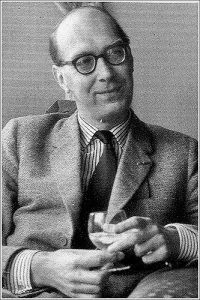
A Short Analysis of Philip Larkin’s ‘This Be The Verse’

InterestingLiterature's avatarInteresting Literature

A summary of a classic Larkin poem

Readers not fond of swearing in poetry are advised to look away now, for Philip Larkin’s opening lines can get pretty sweary. ‘They fuck you up, your mum and dad’: a memorable opening line for one of Philip Larkin’s best-known poems, ‘This Be The Verse’, not exactly a laudatory paean to parenthood. But what is Larkin’s poem actually saying, and why did he feel the need to write it? The following analysis attempts some answers to these questions. You can read ‘This Be the Verse’ here.

View original post 803 more words

Where I

Where I a mouse
That wanders through my neighbour’s house,
I could observe with care
The joys and sorrows of him and her.

Where I a fly
Who all things doth spy
I could grieve
For the love I perceive
Blossom then die.

But I am a man
And have not the art
To gaze into my neighbour’s heart,
And possessing my own cares
Meddle not in other’s affairs.

The competition to win a signed copy of “Lost in the Labyrinth of My Mind” is now closed

Earlier today I offered readers the chance to win a free signed print copy of my latest collection of poetry, “Lost in the Labyrinth of My Mind”, (https://newauthoronline.com/2016/06/25/your-chance-to-win-a-signed-copy-of-my-book-lost-in-the-labyrinth-of-my-mind/). Thank you to everyone who shared my post. I am pleased to announce that a winner has emerged and the competition is now closed.
The answer to the question posed, is Sir Arthur Conan Doyle who was born in Edinburgh in 1859 and died in 1930. The quote comes from “The Speckled Band, which can be found in “The Adventures of Sherlock Holmes”. Holmes is speaking of Doctor Grimesby Roylott. If you haven’t read “The Speckled Band” I strongly recommend doing so, (http://etc.usf.edu/lit2go/32/the-adventures-of-sherlock-holmes/352/adventure-8-the-adventure-of-the-speckled-band/).