Tag Archives: technology

Poet Kevin Morris’s Spoken Word Poetry

In addition to this blog, I also record many of my poems on TikTok. Below are a selection of some of them. While you don’t need to subscribe to TikTok to view videos, in order to comment and like content a TikTok account is necessary. If you enjoy what you hear do please consider subscribing:


Two Voices: A Poetic Journey Through Nature and City | TikTok

My Old Clock: A Poetic Reflection on Time | TikTok

An Acrostic by Poet Kevin Morris #poetryreading #spokenwordpoetry #fy… | TikTok

AI and Society

An interesting and thought provoking post on the impact of artificial intelligence (both positive and negative) on society, including on the creative industries https://rlpastore.com/2024/07/01/ai-the-good-the-bad-and-the-ugly/.

As a blind student in my twenties, I used a machine called a Kurzweil. It was roughly the size of a photocopier and the user would open the lid, place printed material on the scanner, press a button and have the material (book, letter or whatever) read aloud to them.

The above mentioned technology cost thousands of pounds, while today software can be downloaded onto any modern computer/laptop and (with the help of a Twain compatible scanner) printed material can be read aloud at a fraction of the cost of that in my youth.

On my iPhone I have an app called Be My Eyes. As a visually impaired person I can point my phone’s camera at a food packet, tin Etc and have the label read to me which means no longer having to ask sighted people for assistance (well in most instances). In those instances where the app fails, there is the option for the user to connect with a human volunteer who, with the aid of the phone’s camera can assist the visually impaired enquirer.

Turning to the potential negative impacts of AI, from the evidence I’ve seen thus far I am not convinced that the massive job losses predicted by some are coming any time soon (if at all). Ai can, for example, enable lawyers to retrieve information much faster. However, it can not (and I can never see it) replacing a highly trained lawyer in a court of law. Likewise, AI can hoover up vast amounts of data enabling it to create writing, including stories and poetry. However, it does not, in my experience possess the creativity of humans.

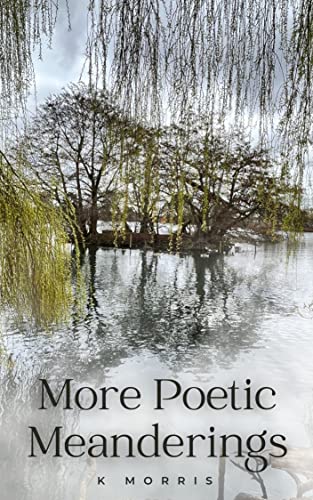
In 2023, I published a collection entitled “More Poetic Meanderings”. The greater part of the book is comprised of poems composed by me. However, a shorter section contains poetry written with the assistance of AI, including a couple of my original poems (published at an earlier date) updated with the aid of artificial intelligence.

You can find “More Poetic Meanderings” on Amazon in paperback and Kindle formats More Poetic Meanderings eBook : Morris, K : Amazon.co.uk: Kindle Store.

As ever I’d be interested in the views of my readers.

The Future of Poetry in the Age of AI

As those of you who follow my blog will know, I have been experimenting with Google Bard. This morning I asked Bard whether AI poetry will replace human generated poetry and received a response which can be accessed here, https://g.co/bard/share/074f2caef001


The final few sentences of the AI generated essay sum up Bard’s response:


“Ultimately, the future of poetry will likely be a collaboration between humans and machines. Human poets will continue to bring their unique creativity and emotional insight to the craft, while AI will provide new tools and techniques to help them express their ideas. Together, humans and AI can create poetry that is even more beautiful and meaningful than anything that has been created before.”


Whilst I am sure that many humans will use AI tools with increasing frequency in their writing (including poetry), I am not convinced that this will lead to the composition of poetry even more beautiful than that hitherto created. As the AI response acknowledges, AI lacks human experience. Consequently, unless AI is able to fully comprehend human experience in the same manner as we humans do, it will never be able to surpass Shakespeare, Tennyson or any other of the poetic greats.


Furthermore, the appreciation of any art form is to some extent a matter of subjective judgement. To take a concrete example, I believe that Dylan Thomas’s “Do Not Go Gentle into that Good Night” is a wonderfully powerful poem, whilst a dear friend of mine (who is also a lover of poetry), is left cold by Thomas’s work. There will therefore no doubt be readers who will praise AI generated poetry and poems created in collaboration with AI tools, but others will be left cold by such creations.


The creation of mass produced pottery has not killed the craftsman who produces beautiful pots using his potter’s wheel. Nor, in my view will AI poetry destroy the poet who continues to write from the heart rather than utilising tools such as Google Bard or Open AI’s Chat GPT.


As always I would welcome your comments.

What Happened When I Asked Google Bard to Write a Poem in the Style of Poet Kevin Morris?

Continuing my experimentation with Google Bard, I asked the AI to “write a poem in the style of poet Kevin Morris”. For any of my readers who are interested, you can read Bard’s poem here, https://g.co/bard/share/44ce659bcef2


I don’t think I need worry about Google Bard plagiarising my work, nor do I believe that any other poets need be concerned, at least for the foreseeable future.

Poetry and Google Bard

Yesterday (18 November), I spent a couple of hours experimenting with Google Bard. During my experimentation, I asked Bard to write a poem about a dissolute old rake. The poem, which had no input from me can be found here, https://g.co/bard/share/b6c44ae0e9c3


Whilst I don’t think Google Bard is going to become the next Poet Laureate, it is nonetheless interesting to observe how the artificial intelligence (AI) “composes” poetry.

Who is Kevin Morris Poet According to Chat GPT?

From time to time I confess to Googling myself in order to ascertain what is being said about me and my poetry.

Having used Open AI’s Chat GPT https://openai.com/, to experiment poetically, I was curious to see what (if anything) the AI would have to say about me. I therefore typed in “who is Kevin Morris poet?” and received the below response:

“Kevin Morris is a British poet who was born in Liverpool in 1969. He is known for his work as a writer of poetry and fiction. Morris is blind, and his writing often reflects this experience, exploring themes of disability, loss, and resilience. Some of his notable collections of poetry include “The Selected Poems of K Morris,” “Light and Shade: Serious (and Not so Serious) Poems,” and “Lost in the Labyrinth of My Mind.” Morris has also written several novels, including “Samantha” and “A New Sunrise.” In addition to his writing, Morris is an advocate for the rights of people with disabilities and has been involved in several campaigns to improve accessibility for blind people.”

Much of the above is correct. I was indeed born in Liverpool on 6 January 1969. Chat GPT is also accurate in saying that I wrote the poetry books in question, and that “Samantha” was written by me.

However, I did not write “A new Sunrise”, and “Samantha” is a short story and not (as stated by the AI) a “novel”. Whilst it is true that I am blind, it is incorrect that many of my poems deal with blindness or with disability more generally. The poems dealing with disability and blindness can be counted on the fingers of one hand. My visual impairment does impact on my life. It does not, however define who I am, nor does it feature in my poetry in a significant manner.

Having said the above, Chat GPT is correct that I have been involved in campaigns to improve the lives of disabled people, particularly the visually impaired.

Having asked Chat GPT “who is Kevin Morris poet?”, I then asked the AI “Does Kevin Morris write poetry?” and received the below answer:

“Yes, there are several poets named Kevin Morris, and some of them have published poetry. One notable Kevin Morris is a blind poet from the UK who has published several collections of poetry, including “The Selected Poems of Kevin Morris” and “My Old Clock I Wind and Other Poems.” Another Kevin Morris is a poet and editor from the United States, who has published works such as “White Man’s Problems” and “Kingdom of Scent.” It’s worth noting that there may be other poets with the name Kevin Morris who have also published poetry.”

The information cited above is accurate as regards me and my poetry. Chat GPT correctly lists 2 of my poetry collections. The AI is also correct when it states that I am blind.

What can we ascertain from my vanity (sorry I mean interest) in asking Chat GPT about myself? In short, anyone wanting to learn about me would ascertain more accurate information by reading this blog, using a search engine such as Google or Bing and, of course reading my poetry!

I am sure that Chat GPT will improve over time but, at present I wouldn’t rely on the AI when researching me and (I strongly suspect) other people.

(My recently published poetry collection, “More Poetic Meanderings” contains a section dedicated to poetic experiments using Chat GPT. You can find “More Poetic Meanderings” on Amazon here, https://www.amazon.co.uk/More-Poetic-Meanderings-K-Morris-ebook/dp/B0BZT9G139).

Poetic Kevin

As those of you who follow my blog will know, I have long maintained an interest in the field of artificial intelligence (AI). My fascination with the subject has caused me to become involved in a project to build a poetic robot.


My own model (simply called Kevin) which is, I am sure you will agree most appropriate, has been programmed with all poems composed by me since I first began to write poetry back in 2013.


Want a poem about time? No problem, just ask Kevin for a poem on that subject and he will regale you with a composition on that topic in my own voice. Feeling in a mood to have your ribs tickled? Just ask Kevin for a composition on naughty young women and he will recite a poem about wicked Miss Hocking who lost more than a stocking whilst attending the vicar’s garden party …!


The developer has done a fantastic job. Not only does the robot sound like me, it also looks remarkably life-like and can even change it’s expression. A humorous poem will cause Kevin to smile whilst reciting his composition, whilst a poem about mortality leads to a mournful and thoughtful expression.


Kevin is retailing at a cost of £1000. However, there is a special offer for my readers. Just contact me by 12 noon today with your order and you can have your very own poetic Kevin for the fantastic cost of only £899.!


Happy listening!


When I Attended a Transhumanist Party

When I attended a Transhumanist party

With the cream of the literati,

Some random old guy

Said, “I’m an AI!”.

And cyborgs danced at that party.

Hybrid Poetry and Chat GPT

I have been playing around with Chat GPT, https://openai.com/blog/chatgpt/. Below is a poem wholly composed by the artificial intelligence (AI), followed by my much shorter poem, which draws on that created by the AI.


The Poem as Composed by Chat GPT:


continue this poem: all love and lust ends in dust

All love and lust, like fleeting gusts, May lift us high, but then they must Descend to earth, to join the rust And crumble into grains of dust.

Though passion’s fire may burn so bright, It’s but a spark in endless night, And soon it fades, like dying light, To leave us empty, void of sight.

For all that’s born will surely die, And all that lives must say goodbye. No matter how we try and try, We’re bound to fall, to fade, to lie.

So let us love with open hearts, And let us cherish every part Of those we hold, before we depart And join the cycle, where we start.

For though all love and lust ends in dust, It’s in the moment, in the trust, That we find joy, that we find lust, That we find life, before we’re thrust Into the endless, timeless gust That leaves us naught but grains of dust.


My Rewrite of the Poem:


Though passion’s fire may burn so bright,

It’s but a spark in endless night,

And soon it fades, like dying light,

To leave us lost, to human sight.


For all that’s born will surely die,

And you and I must say goodbye.

No man can the great leveler deny,

And dust must  take both you and I.
Should Writers Fear AI?

I recently posted about my experience of using Chat GPT to create poetry, https://kmorrispoet.com/2023/02/13/what-happened-when-i-entered-one-of-my-poems-into-chat-gpt/. In that post I discussed the results of entering my poem Midnight into Chat GPT and how the AI continued my poem (which was originally published several years ago).

This morning I came across this article, https://ai.plainenglish.io/writers-dont-fear-chatgpt-81e1128b11c1

, in which the author argues that writers should not fear AI. Whilst I am sure that Chat GPT (and other AIS) will improve over time, I agree with the author’s view of the matter.