A thrumming in the wire.
Rising desire
By commuters to enter
The tube’s centre.
Wrapped in the tunnel’s dark embrace
We race
Towards our destination.
A brief anticipation,
Then we disgorge at our station.
A thrumming in the wire.
Rising desire
By commuters to enter
The tube’s centre.
Wrapped in the tunnel’s dark embrace
We race
Towards our destination.
A brief anticipation,
Then we disgorge at our station.
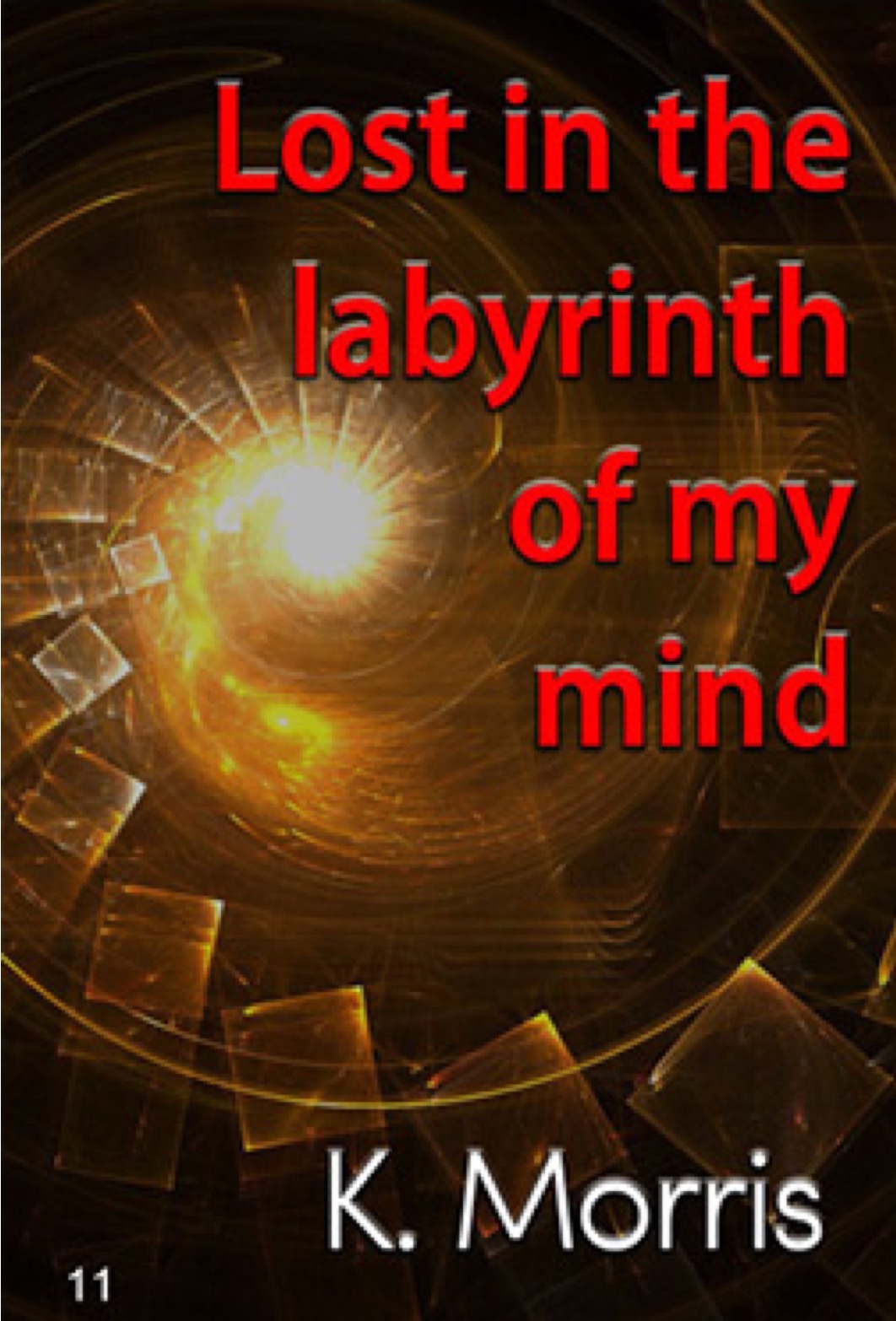
On checking my email this morning, I was delighted to learn that my collection of poetry, “Lost in the Labyrinth of My Mind” (http://moyhill.com/lost/) has received a great review.
To read the review please visit (https://laurenwalsburg.com/2017/03/21/review-lost-in-the-labyrinth-of-my-mind-by-k-morris/).
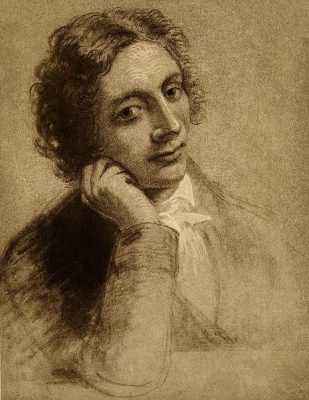
As with Ernest Dowson, Keats died at far to young an age.
The best poems by Keats
John Keats (1795-1821) died when he was just twenty-five years old, but he left behind a substantial body of work, considering he died so young. Nevertheless, a number of his poems immediately suggest themselves as being among the ‘best’ of his work. In this post, we’ve selected what we think are the top ten best Keats poems.
‘Ode to Psyche’. The earliest of Keats’s 1819 odes, ‘Ode to Psyche’ is about the Greek embodiment of the soul and mind, Psyche. Keats declares that he will be Psyche’s ‘priest’ and build a temple to her in his mind. Although this is probably the least-admired of Keats’s classic odes (though ‘Ode on Indolence’ would rival it), it’s a fine paean to poetic creativity and the power of the imagination.
View original post 739 more words
There was a young man called Matt
Who said “poetry is old hat”.
His brother Jim
Disagreed with him.
It ended in a spat!
This is an extremely good cause. I have happy memories of being read to by my grandfather. I particularly remember The Famous 5, The Secret 7 and many fairytales. I wish this project the very best of luck. Kevin
I would like to reach out to kid lit authors and book bloggers to get quality books into the hands of deserving kids.
Throughout the month of March, I am collecting new children’s books to benefit children of incarcerated parents. Authors, I hope you will consider donating signed copies of your books. Book bloggers, please help us by sharing this information with your readers.
I am a children’s author, teacher, and mom who is passionate about children’s literacy and the power of children’s books. When I learned nearly 2/3 of children, living in poverty, DO NOT own books, I was moved to act. I founded the literacy initiative, Picture Book Pass it On, to raise awareness for literacy issues and get books to kids in need.
Three years ago, the Picture Book Pass it On initiative grew to include a month-long book drive called MARCHing Books to Kids.
View original post 424 more words
Would
That I could
Find Chrysanthemums in bud.
For those in bloom
Are gone to soon.
I remember the sweet scent
Of the chrysanthemums that bloomed
In my grandfather’s garden.
Entombed,
They are long since spent.
I expressed a view, contrary to your own.
Now I am alone
Thinking on the old adage that one ought
Not to talk,
About religion, politics and sport.
Ah, daffodils
That do banish all ills,
By performing a spritely dance.
Oh the romance
Of it all,
But then the rain did fall.
The flowers where beaten down
And the earth did drown
In a deluge most foul
Which made the poet scowl!
My dog did howl
For in my haste
To taste
Nature’s beauty
I forgot his towel
And my duty
To keep both him and I
Dry!
Oh blasted daffodils
And rain soaked hills!
I need my pills
For I feel chills
That will lay me low
So to the good doctor I must go!
Hey ho
I will romanticise it all
For I recall
How my public do adore
Poems about nature’s beauteous store!
“The daffodils are out in Saint James’s Park”
My colleague did remark.
Today
The wind blusters
Through Wordsworth’s spritely clusters,
And I wonder how long will the chancers stay.
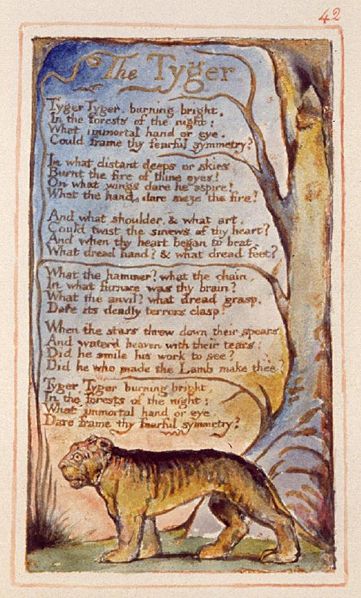
A critical reading of an iconic poem
‘The Tyger’ is arguably the most famous poem written by William Blake (1757-1827); it’s difficult to say which is more well-known, ‘The Tyger’ or the poem commonly known as ‘Jerusalem’. The poem’s opening line, ‘Tyger Tyger, burning bright’ is among the most famous opening lines in English poetry (it’s sometimes modernised as ‘Tiger, Tiger, burning bright’). Below is this iconic poem, followed by a brief analysis of the poem’s language, imagery, and meaning.
Tyger Tyger, burning bright,
In the forests of the night;
What immortal hand or eye,
Could frame thy fearful symmetry?
In what distant deeps or skies.
Burnt the fire of thine eyes?
On what wings dare he aspire?
What the hand, dare seize the fire?
View original post 767 more words


 K Morris - Poet