Tag Archives: local history

Britain’s Participation in the Transatlantic Slave Trade

As those of you who follow this blog will know, I am from the city of Liverpool.


I have long had an interest in the history of Liverpool and am a regular visitor to the city’s museum’s, including the International Slavery Museum, https://www.liverpoolmuseums.org.uk/international-slavery-museum.


Liverpool played a significant role in the transatlantic slave trade and much of the city’s wealth was derived from slavery. For example, the beautiful Speke Hall was partly constructed as a consequence of money made from slavery, https://www.nationaltrust.org.uk/visit/liverpool-lancashire/speke-hall/speke-halls-colonial-connections.


It is sobering to walk around Liverpool’s International Slavery Museum and to learn of Britain’s role in the slave trade. However, Britain can be proud of the fact that it was one of the first countries to outlaw participation in the slave trade in 1807, and ban slavery in the British Empire in 1833.


History Reclaimed has a fascinating video on the Royal Navy’s role in trying to prevent other nations such as Spain and Portugal from continuing to engage in slavery, https://historyreclaimed.co.uk/the-royal-navys-campaign-against-the-slave-trade/.


Am I in favour of the UK paying compensation due to our participation in slavery? The answer is no. Slavery was (and remains abhorrent). People are not property and each individual is uniquely valuable in his or her own right. However, Britain’s participation in the Transatlantic slave trade ended in 1807 and in it’s empire in 1833. I am highly sceptical that countries with large populations originally derived from enslaved people can blame their countries ills on the actions of British people long since dead.


I am also sceptical as to how such compensation would work and the ethics underpinning any proposed scheme. Should the British person living on a deprived estate pay his taxes to the descendants of slaves some of whom will undoubtedly be far wealthier than he is? If the answer is yes, should black British people be compensated by their white friends and fellow citizens?


There is a strong moral argument for helping to alleviate poverty in the developing world, including in Britain’s former colonies. However, to tie such aid to slavery has the potential to raise racial and international tensions and would not, in my view be helpful in fostering good relations between communities.


We should also be wary of putting the sins of our ancestors on the generations living today. British people alive in the 21st century had no role in slavery and it is frankly wrong to expect them to pay compensation for wrongs perpetrated long before they where born.
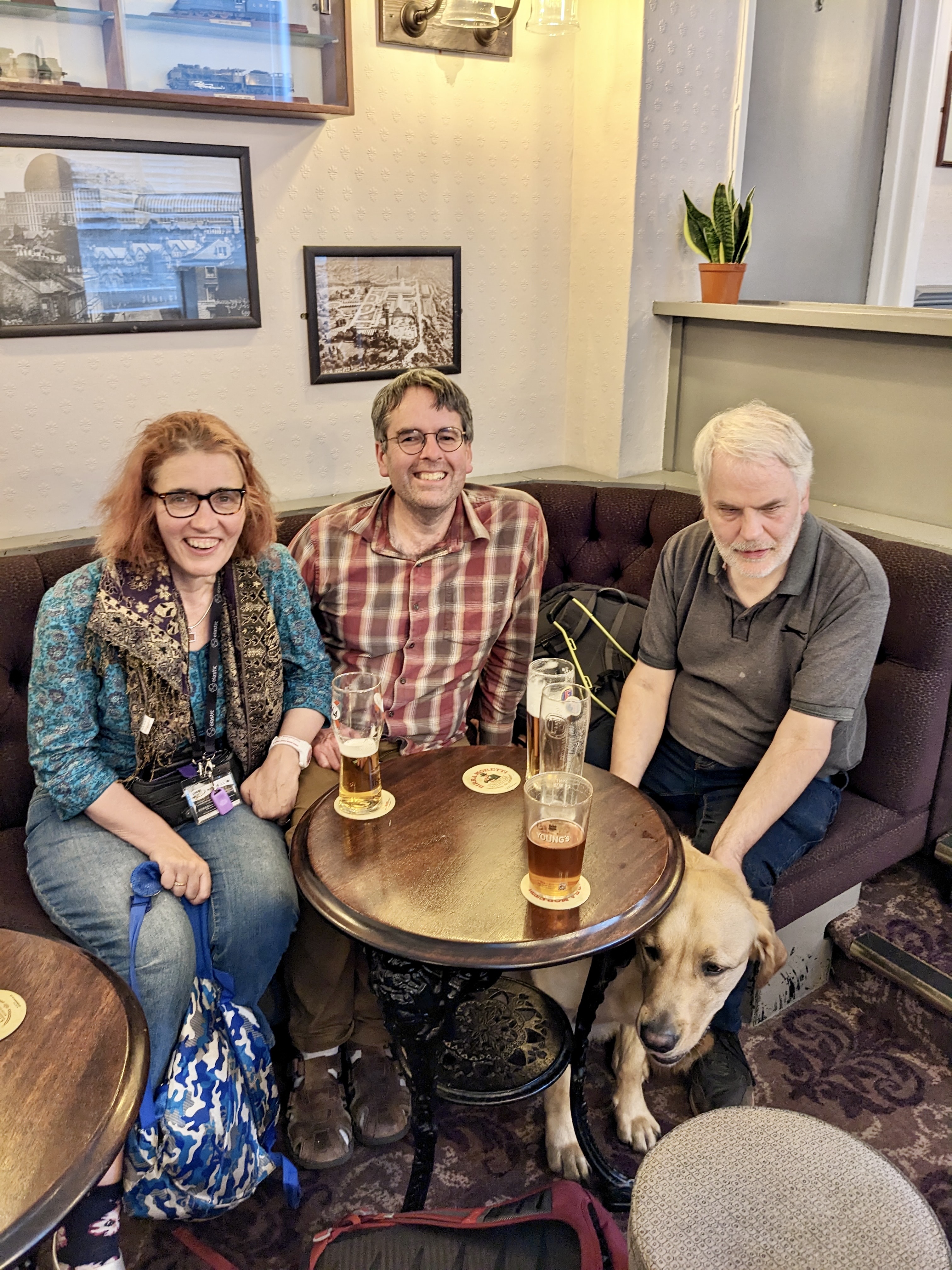
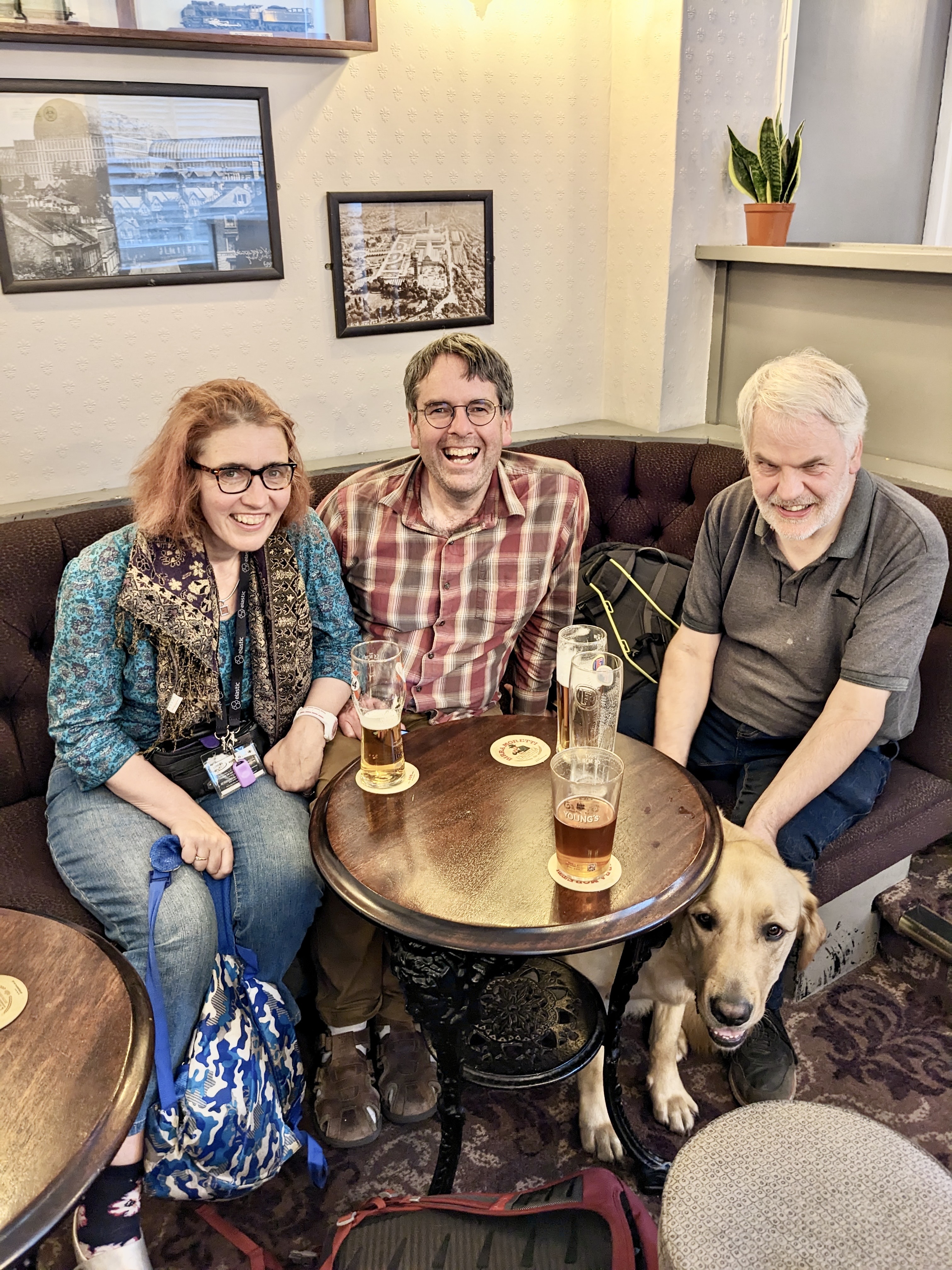
On the Closure of the Railway Bell, 14 Cawnpore Street, Gipsy Hill

I sit at the bar

In the old familiar pub

And touch the wood

Tinged with beers

From bygone years.

Landlords have come and gone

But the pub has continued on.

I recall

With delight

The fire’s warm light.

But it’s a summer evening

And there is no firelight.

To brighten  this leaving.

I say goodbye

To the final table

I am unable

To show my eyes

For men don’t cry

Graves and Poems

A number of my poems reference All Saints Church and, in particular it’s graveyard, although none refer to that place of worship by name. The church was constructed between 1827-29 and you can find out about it’s history here. As regards the graveyard, you can read about it here and here.

As mentioned above, a number of my poems refer to All Saints Church Graveyard, including ‘In the Churchyard today’:

In the Churchyard today,

Through the play,

Of light and shade,

I my shadow made.


When I go away,

Will my shadow stay,

Behind for people to see,

And say,

‘That was he,

And now midst light and shade,

His shadow is forever made’.


This poem can be found in ‘The Writers Pen and other poems’, with the UK and US links following:


With thanks to my friend Shanelle, I have included below several photographs which show All Saints Church and its environs. In the tiled mosaic image below there are photographs of myself and Trigger in the graveyard, as well as the church and some of the graves.

The Dungeon (Liverpool local history)

An interesting piece on the history of the Dungeon, an area of Liverpool close to where my mum lives. I must confess that the name dungeon conjured up for me visions of dank prison cells, however the Dungeon was, in fact a major salt refinery and a place of considerable historical interest, http://www.roydenhistory.co.uk/mrlhp/local/salt/dungeon.htm.

Thoughts Of Norwood Past

It is a quiet new year’s day
A weak sun shows his face
Then hides away.
I awoke to pigeons cooing
Thoughts of a bygone age
And country folk a-wooing.
The pigeons are silent now
No more do sheep or cow
Pass.
No country lass
Gazing in the glass
Will say
“’Tis new year’s day.
I must away
To milk.
No dress of silk
For such as I.
Only the vaulted sky
And my love
For one who is nigh”.

(http://www.british-history.ac.uk/survey-london/vol26/pp167-173).

The Grey Lady Of Allerton Tower

Today I visited the ruins of Allerton Towers, in the company of my mum, her partner and the 2 dogs. On returning to my mum’s home and feeling curious regarding the ruined mansion, I Googled Allerton Towers and came across this ghost story pertaining to “The Grey Lady”, who is reputed to haunt the old house and grounds, (http://www.slemen.com/allertontower.html). I am sorry to say we saw only dogs and their owners during our walk, no “Grey Lady” did we spy. The above story does, none the less make for interesting reading.

Kevin

Norwood’s Literary Heritage

I moved to the Norwood area (Upper Norwood to be exact) in 1997. Norwood possesses the advantage of being high above sea level which means the air is much fresher than certain other areas in the sprawling mass which constitutes greater London. The name Norwood derives from “The Great North Wood”, vestiges of which can still be glimpsed by residents and visitors alike.

Norwood has a fascinating history including a rich literary heritage. Charles Dickens was a frequent visitor and the Queen’s Hotel which stands some 10 minutes walk from my home has a plaque commemorating the French novelist, Zola’s residence, (Zola fled France at the time of the Dreyfus Affair. He advocated for Dreyfus, a Jewish army officer falsely accused of spying for a foreign power).

Sir Arthur Conan Doyle sets one of the Sherlock Holmes adventures, “The Adventure Of The Norwood Builder” in the area, (http://www.eastoftheweb.com/short-stories/UBooks/AdveNorw.shtml). In “The Norwood Builder” the former lover of the mother of a local solicitor fakes his own death and attempts to frame her son. However, in his usual brilliant manner Holmes proves the innocence of the son and the builder is apprehended.

There is a fascinating article on the history of Norwood here, (http://www.norwoodsociety.co.uk/articles/68-on-the-trail-of-norwood.html).

Speke Hall

Standing by the old house listening to the rain. The scents of the garden and the ancient wood beyond delight my senses. The smell of autumn fills the air. The woodland floor strewn with acorns. My grandfather and I walking together, the feel of acorns clutched in a child’s hand. Opening the fruit the kernel exposed to little exploring fingers. Leaves crunching, grandfather close and near.

My aunt standing close, we two sheltering from the rain. Grandfather departed many moons past. My aunt followed several years ago. They are part of something now beyond my comprehension, a small speck in nature’s unfathomable plan.

Great metal birds shriek overhead drowning out the singing of their feathered cousins. Oh how times change. In centuries past the hall dominated the village of Speke. Villagers and hall joined by threads tying one to the other. The domestics toiling to keep the house in good order, it’s owners and their guests maintained in comfort and well fed. Like a well regulated clock the hall ran smoothly, estate workers and domestics knew their place, all was right with the world. Or was it? Where the masters and mistresses of yesteryear tyrants exploiting the local poor? The truth lies no doubt somewhere in the middle. At best the domestics of the past had a sense of pride in maintaining the local squire while he (or she) in turn felt a sense of obligation to their employees. At worst domestic service entailed getting up at an ungodly hour to sweep the grate and light a fresh fire so that the hall would be warm for when the family arose later in the day.


http://www.nationaltrust.org.uk/speke-hall/


Was it a semi-feudal paradise with kindly m