Tag Archives: john keats

Beauty is truth, and truth beauty

From time to time, a line of poetry pops into my head. I can’t shake off the words of the poet and remain a little restless until the author of said lines has been discovered by me.

Recently the following lines kept running around in my mind

“Beauty is truth, truth beauty,—that is all
Ye know on earth, and all ye need to know.”

A quick Google search reveals that the above beautiful words where penned by John Keats and appear in his Ode on a Grecian Urn

The internet is often attacked for “dumbing down” literature in that it fosters a desire for instant gratification (the wish for easily digestable bite-sized entertainment in the form of stories, poems etc).

There is, in my opinion an element of truth in this criticism. However the internet does, at it’s best open up almost instantaneous access to the world of literature and, in the case of the lines sighted above, enabled me to quickly ascertain their origin.

Kevin

“Autumnal” by Ernest Christopher Dowson

Yesterday evening, I sat in my living room leafing through “The New Oxford Book of English Verse”. Pausing at Keats, I read several of his poems, the last one among them being “Autumn”. “Autumn” is one of those poems which refreshes the jaded soul and causes the reader to gasp in wonder at the sheer beauty of the poet’s creation.
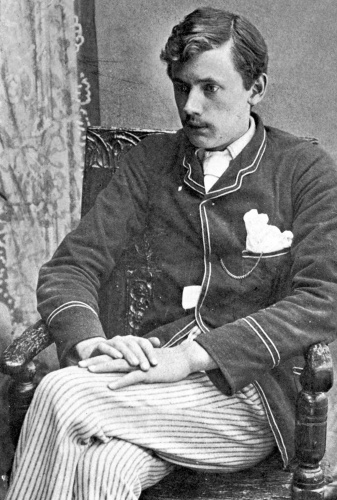
Having read Keats, I was minded to reproduce “Autumn” on this site. However “Autumn” is well known and rather than quote a much loved and well known poem, I have chosen instead to share Ernest Christopher Dowson’s poem, “Autumnal”:

image

“PALE amber sunlight falls across
The reddening October trees,
That hardly sway before a breeze
As soft as summer: summer’s loss
Seems little, dear! on days like these!

Let misty autumn be our part!
The twilight of the year is sweet:
Where shadow and the darkness meet
Our love, a twilight of the heart
Eludes a little time’s deceit.

Are we not better and at home
In dreamful Autumn, we who deem
No harvest joy is worth a dream?
A little while and night shall come,
A little while, then, let us dream.

Beyond the pearled horizons lie
Winter and night: awaiting these
We garner this poor hour of ease,
Until love turn from us and die
Beneath the drear November trees”.

Army Days (Humour)

My old friend, Jeff Grant told me the following story about his time in the army.

… “Reminds me of a story that went around in the army. The army weren’t exactly noted for the depth and rigour of their educational classes. But we had one
once a week in basic training. i can remember nothing whatever about it except this story that went the rounds. A squad of raw recruits were taken by their
NCO to their education class. He told them, as he left – “You’re going to get a lecture on Keats this afternoon. And you’d better take notice, ‘cos when
I come back I’ll want to know what a Keat is.”

(For Jeff’s blog please go to, https://besonian.wordpress.com/).

Kevin

“La Belle Dame sans Merci” by John Keats

I have long been intrigued by John Keat’s poem “La Belle Dame sans Merci” (“The Beautiful Lady Without Mercy”).


“O what can ail thee, knight-at-arms,

Alone and palely loitering?

The sedge has withered from the lake,

And no birds sing.


O what can ail thee, knight-at-arms,

So haggard and so woe-begone?

The squirrel’s granary is full,

And the harvest’s done.


I see a lily on thy brow,

With anguish moist and fever-dew,

And on thy cheeks a fading rose

Fast withereth too.


I met a lady in the meads,

Full beautiful—a faery’s child,

Her hair was long, her foot was light,

And her eyes were wild.


I made a garland for her head,

And bracelets too, and fragrant zone;

She looked at me as she did love,

And made sweet moan


I set her on my pacing steed,

And nothing else saw all day long,

For sidelong would she bend, and sing

A faery’s song.


She found me roots of relish sweet,

And honey wild, and manna-dew,

And sure in language strange she said—

‘I love thee true’.


She took me to her Elfin grot,

And there she wept and sighed full sore,

And there I shut her wild wild eyes

With kisses four.


And there she lullèd me asleep,

And there I dreamed—Ah! woe betide!—

The latest dream I ever dreamt

On the cold hill side.


I saw pale kings and princes too,

Pale warriors, death-pale were they all;

They cried—‘La Belle Dame sans Merci

Hath thee in thrall!’


I saw their starved lips in the gloam,

With horrid warning gapèd wide,

And I awoke and found me here,

On the cold hill’s side.


And this is why I sojourn here,

Alone and palely loitering,

Though the sedge is withered from the lake,

And no birds sing”.


(https://en.wikipedia.org/wiki/La_Belle_Dame_sans_Merci)

Ode On Melancholy By John Keats

No, no, go not to Lethe, neither twist
Wolf’s-bane, tight-rooted, for its poisonous wine;
Nor suffer thy pale forehead to be kiss’d
By nightshade, ruby grape of Proserpine;
Make not your rosary of yew-berries,
Nor let the beetle, nor the death-moth be
Your mournful Psyche, nor the downy owl
A partner in your sorrow’s mysteries;
For shade to shade will come too drowsily,
And drown the wakeful anguish of the soul.
But when the melancholy fit shall fall
Sudden from heaven like a weeping cloud,
That fosters the droop-headed flowers all,
And hides the green hill in an April shroud;
Then glut thy sorrow on a morning rose,
Or on the rainbow of the salt sand-wave,
Or on the wealth of globed peonies;
Or if thy mistress some rich anger shows,
Emprison her soft hand, and let her rave,
And feed deep, deep upon her peerless eyes.
She dwells with Beauty—Beauty that must die;
And Joy, whose hand is ever at his lips
Bidding adieu; and aching Pleasure nigh,
Turning to poison while the bee-mouth sips:
Ay, in the very temple of Delight
Veil’d Melancholy has her sovran shrine,
Though seen of none save him whose strenuous tongue
Can burst Joy’s grape against his palate fine;
His soul shalt taste the sadness of her might,
And be among her cloudy trophies hung.

Hemlock

Hemlock


The girl approached Malcolm and taking his hand in hers intoned in a soft musical voice “Darkling I listen; and for many a time I have been half in love

with easeful death, called him soft names in many a mused rhyme, to take into the air my quiet breath; now more than ever seems it rich to die, to cease

upon the midnight with no pain, while thou art pouring forth thy soul abroad in such an ecstasy! Still wouldst thou sing, and I have ears in vain – to

thy high requiem become a sod”.

The audience, hard bitten venture capitalists all, gaped with wonder at this beautiful girl with her long blonde hair falling in cascades down her back,

at her deep blue eyes and her slender figure.

“OK Professor, the jokes over. Who is this young lady? What is her name?” asked the chairman of the board, Sir Steven Carter.

Professor Steel smiled indulgently and speaking in a manner which he usually reserved for his more obtuse students said “As I explained at the start of

this demonstration the lady you see before you is Becky the first ever truly intelligent robot. Becky is designed for the discerning gentleman, for the

man who wants to be around a beautiful and intelligent lady but who, for whatever reason is not in (or does not wish to be in) a relationship with a flesh

and blood female. Imagine the potential of this invention gentlemen. No more need for the man of means to wine and dine a girl, buy her expensive presents

and (god forbid actually marry her)! If you gentlemen can come up with the finance then your company will be world famous. Imagine being known as the firm

who launched the first ever artificial woman of culture!”

A hand was raised “Yes, the gentleman at the back of the room with the red tie and white shirt”. “Can she er … I mean can Becky do other things”. The Professor

smiled (he smiled a lot but the smile never reached his eyes), “Indeed she can. Becky has a very convincing set of female organs all of which are in perfect

working order. Even gentlemen of culture have their needs and Becky is designed to cater to your, sorry I mean their every whim”.

“I want one” said the chairman. “I’ve often wished to switch off my wife and now this robot has come along it is, at long last possible for me to do just

that”! Miss Mortimer the only female board member looked daggers at the chairman who vissibly shrank in his seat and coloured deeply, “I was only joking,

no offence meant” he mumbled turning as red as the curtains which flanked the stage on which the Professor stood.

Another hand was raised. It was that of Malcolm Fisher the journalist who had been the recipient of Becky’s attentions. “Yes Sir, the gentleman with the

press pass sitting in the front row”. “Isn’t there something sacrilegious about Becky?” “Sacrilegious, what do you mean?” Malcolm thought of Jane, of how

they’d walk for hours in the countryside. One day, as dusk was falling the song of a nightingale had reach their ears. Jane’s eyes had become moist and

turning to Malcolm she said “It’s to beautiful, I want to cry and she quoted those self-same words that that “thing” had just intoned. He’d taken Jane

in his arms and softly kissed away the tears from her gentle brown eyes. With a jolt Malcolm pulled himself back to the present, the Professor was staring

expectantly at him. “I don’t know how to put it accept to say that this invention seems to have crossed some line. Once we have crossed the Rubicon who

knows what will happen”. The Professor suppressed a sigh, “My dear sir man is but a machine. He takes in food to fuel his body and his very mind is but

a highly intricate mechanism for processing thoughts and emotions. Becky is a machine, why should not two machines come together. This invention will enhance

the sum of human happiness by enabling those who can not find (or do not want for whatever reason to find) a human companion and from the perspective of

you gentlemen it will to borrow a phrase mean “loads of money”!

“Well Professor we are certainly very interested in your invention. I’ll discuss it with the board but I’m sure that you will be hearing from us in the

very near future. Many thanks for your informative presentation” said the Chairman.

As he left the building those words of Keat’s popped into Malcolm’s head “As though of hemlock I had drunk”. “I need a drink” he thought turning his steps

in the direction of the nearest pub but perhaps not hemlock.


(The above story can be found in my collection of short stories, The First Time. For this and other stories in this collection please visit http://www.amazon.co.uk/The-First-Time-ebook/dp/B00AIK0DD6 or http://www.amazon.com/The-First-Time-ebook/dp/B00AIK0DD6/ref=sr_1_2?ie=UTF8&qid=1363296273&sr=8-2&keywords=the+first+time+kevin+morris).
 

Quacking ducks and poetry reciting robot women!

What is it to be human? Surely one of the many and highly complex capacities which converge to form the human animal is our ability to create and appreciate art whether in the form of painting or literature. My dog has many admirable qualities but I’ve never seen him take down a book from my shelves and lose himself in it. No the ability to derive pleasure from literature and other high art is confined to we humans, or is it? Some proponents of artificial intelligence (the theory that we can create machines which equal or perhaps surpass us in intellectual capacities) contend that robots and computers will, one day possess the capability to understand and create high culture. Indeed the inventor and technological guru, Ray Kurzweil argues that machines will be able to create and comprehend art in precisely the same manner as we humans do. In the same way in which we can be moved to tears by a profound poem or other expression of artistic prowess so, in years to come will our artificial creations be moved to tears by the self-same cultural expressions.

In “Hemlock”, the final story in my collection of short stories, “The First Time” we are introduced to Becky, a robot who recites Keat’s Ode to a Nightingale with passion. She truly feels the beauty and sadness of Keat’s magnificent poem or does she? Perhaps Becky’s apparently genuine responses to Ode to a Nightingale are mere tricks stemming from clever computer programming. Becky is according to this perspective a mere shell with no thoughts and emotions of her own, she is in the true sense of the word a robot. However others would contend that we are all products of our genetic programming. Becky’s responses are therefore no more or less genuine than those of any other “programmed” creation whether of the biological or the non-biological variety. “If it quacks like a duck and walks like a duck then it is a duck”, or is it? I will leave you, my readers to decide.


(For “Hemlock” and the other stories in “The First Time” by Kevin Morris please visit http://www.amazon.com/The-First-Time-ebook/dp/B00AIK0DD6/ref=sr_1_1?ie=UTF8&qid=1357854695&sr=8-1&keywords=the+first+time+kevin+morris. For John Keat’s Ode to a Nightingale please visit http://www.poetryfoundation.org/poem/173744