Monthly Archives: March 2014

I had an adventure nun-the-less.

I had an adventure nun-the-less

Many thanks to Cupitonians for the following excellent post about her experiences in Tanzania. Like Cupitonians, I also attended a religious school, but that is, as they say, another story.

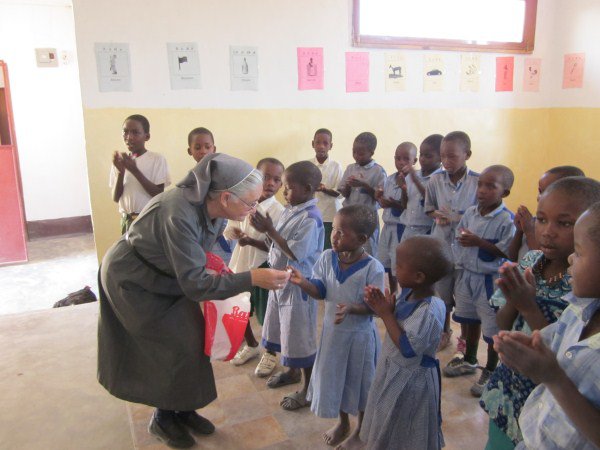
ImageImageImageImage

So I landed in Tanzania, not knowing a soul. I was in touch with a contact of a contact. They had never met each other before but you know what they say about leaps of faith and trust. The only thing I did know was that I was meant to meet a nun from the Ursuline congregation. My dad, being the resourceful guy that he is, googled the habit(uniform) of the nun so that I wouldn’t be confused by the hordes of religious people that would haunt the airport. He had a point, any third world country is jam packed with missionaries (read priests and nuns) who are there to alleviate poverty and other religious phrases I’m too lazy to google.

I landed in a bathroom sized airport, grinned from ear to ear because I was finally in a country I had dreamed of being in since I was 7. I was apprehensive. What if my contact wouldn’t be there? I knew no one, knew nothing, had heard horror stories of tourists being taken for a ride and left for near dead. Dread started to fill me but I put my brave face on as I walked out the airport doors, backpack in tow. My fear quickly faded as I spotted the habit of the contact and I quickly walked to her. She hugged me and I was relieved to hear her speak English to me. Contrary to popular belief, English is NOT the first or official language of Tanzania. It’s Swahili.

Stella, that was her name, had lived in Canada for a while and so knew English and was confident and full of stories and questions that kept my mind off the fact that a few minutes after my arrival, I was shoved into a bus with too small seats and a goat under me that kept nipping at my feet. 4 hours later, we reached a beautiful area with a mountain right outside the window of the room they gave me. I watched the palm and banana trees and the sun set brilliantly behind that mountain and I smiled. I didn’t realize Africa could be so green. I already knew it would blow me away.

My dinner was a plate of spaghetti, another thing that took me by surprise. I had no idea that Tanzanians were into pasta. Later on in my trip though, I found out that the Ursuline congregation is an Italian one and no matter the poverty around, the nuns and priests of any congregation always ate well. This was further proved by my breakfast feast of fresh bread and butter and the most amazing cup of black coffee that was ever brewed.

The next day, Stella and her sister bought me a pair of Tanzanian styled clothes that were commonly worn in that area and we set off on another bus journey, this time a 12 hour one through all sorts of sceneries. We finally reached a deserted place that finally looked like the Africa you would see in documentaries. The land was parched and dry, little malnourished kids roamed the streets, caked in mud but in the middle of this, the nuns had created an oasis. Flowers were blooming and well watered, there were beautiful buildings with stained glass dotting the perimeter. The stained glass shadows on the dry earth made it look like we were walking on rainbow streets.

The nuns were all at the road and welcomed me with a song and dance number. This is one of the most shocking things I found in Tanzania. I studied in a convent school and so my idea of nuns was that they were poker faced and strict and that the idea of “fun” was indoctrinated out of them and yet in front of me, their voices came out together in harmony and they moved like their body was moulded to dance.

I spent a 4 -5 months with different religious communities across Tanzania and learnt a lot of things about the religious life.

  1. There are so many youngsters who join the church because the alternative is rape, hunger and poverty. The church provides you shelter, healthy meals, a job and respect.
  2. On account of them joining such closed communities, the maturity levels of most of the nuns remain the same as when they joined. Because they are sheltered and they grow up with just girls their age, I found that the nuns, no matter their age, acted more like shy preteen girls than anything else.
  3. The priests, on the other hand, get more opportunities to travel, see the world, interact with more people and enjoy more power in the society. Therefore, they have cars, big houses, even better food and a chance to be treated as royalty by the community. They enjoy rich and generous gifts.
  4. On account of this, priests believe they are God’s gift to women kind and so think it their duty to hit on any nun or any foreigner they see. I have been approached by more priests than I can count.
  5. Sex is such a natural instinct among Tanzanians that people struggle to come to terms with the restrictions religion has placed on them. I remember one nun saying in a matter of fact way that the church allows you to have one wife but you can also have one mistress. I’ve also heard many stories of women having hysterectomies so they don’t have to deal with pregnancies.
  6. The nuns are truly charitable. I have seen development and schools where you could never imagine there would be one. They have done more for the nation than the government has.
  7. That being said, they are still very orthodox in their ways of thinking. I was once part of a very interesting debate between a very well educated priest and nun when the nun said that she was the wife of Christ
  8. They are essentially good people,
  9. They care so much about the way they look. I have been on shopping trips across mountains where the nuns buy stockings and black stylish shoes. They are so stylish and well-kept that I often felt out of place during pass and other public events
  10. They pray 5 times a day and since I was lived for free with them, I was obliged to attend all five. Suffice to say, I haven’t seen the inside of a church since 2012.


Being and Being Bought: An interview with Kajsa Ekis Ekman.

An interesting post on Feminist Current entitled Being and Being Bought: An interview with Kajsa Ekis Ekman. The author is a supporter of the Nordic model of prostitution law under which clients are punished. For the interview please visit http://feministcurrent.com/8514/being-and-being-bought-an-interview-with-kajsa-ekis-ekman/.
The views expressed in the above interview are diametrically opposed to those set out in my post of 28 March in which 2 academics argue that the Nordic model of prostitution law reform does not do what it says on the tin (I.E. it fails to protect those engaged in sex work and actually harms prostitutes), http://newauthoronline.com/2014/03/28/the-nordic-model-of-prostitution-law-reform-is-a-myth-a-post-on-the-conversation-argues/).
I haven’t read Ekman’s book (one more weighty tome to add to my ever growing list of “must reads”). I am, however a little concerned regarding the (apparent) comments policy of Feminist Current. The overwhelming majority of the comments on the interview with Ekman endorse her perspective and comments in respect of other posts are, by and large non-critical of the blogger’s message. I usually wouldn’t comment on the comments policy adopted by other bloggers however having attempted to comment several times only to see my comments not appear I have reached the conclusion that Feminist Currentt only (or largely) accepts comments which endorse it’s ideological perspective. If this is, indeed the case then it is a great pity as it is through debate, the cut and thrust of differing opinions that democracy lives. The only comments I have ever not approved are those which clearly belong in the spam queue for debate is one of the things which makes blogging interesting. I don’t want newauthoronline to become a blog where debate is curtailed but other bloggers appear to think differently.

Dark Thoughts In Spring Time

Dark thoughts on a bright day. The sun warms my face, brightness mingles with darkness on this spring morning.
Birds sing gladdening my heart but, underneath the sorrow remains.
A child’s voice full of joy calling “mummy, mummy”. My mood lightens, there is love and innocence in this world of tears.

Reading Recommendations – 56 Authors promoted!

A great service for authors which I will be checking out myself.

islandeditions's avatarBooks: Publishing, Reading, Writing

On my other blog, Reading Recommendations, I have been posting promotion for my fellow authors, recommending their books to readers, and offering the authors’ suggestions on good books to read. Since Nov. 18, 2013, I have posted information about 56 Authors! Thanks to everyone participating and sharing these blog posts, the number of readers visiting this site and now following has increased by leaps and bounds. I still have many more authors scheduled to promote over the coming weeks, so please continue to check out the new blog posts I publish, discover some interesting reading suggestions, reconnect with favourite authors, and learn what they all have to tell us about themselves and their writing as well as their own reading recommendations.

So far, I have published two recaps of the first 16 authors and the next 20. Here then are the most recent 20 Authors who have…

View original post 436 more words

The Nordic Model Of Prostitution Law Reform Is A Myth A Post On “The Conversation” Argues

A very interesting article on The Conversation by May-Len Skilbrei, Associate Professor at University of Oslo and Charlotta Holmström, Assistant Professor at Malmö University, entitled “The Nordic Model of Prostitution Law Is A Myth”.

The “Nordic model” of prostitution is often heralded for being particularly progressive and woman-friendly, built on a feminist definition of prostitution
as a form of male violence against women.
France
has moved to adopt a Nordic-inspired approach; policy makers are
urging
the UK to do the same. But the idea of such a model is misleading, and in no way tells the whole truth about what is going on in the region where it supposedly
applies.

We recently gave a talk titled “The Nordic model of prostitution policy does not exist”. The aim was to provoke reflection and a discussion, but also to
tell the truth about prostitution policies in the Nordic countries.

We have researched Nordic prostitution policies since the mid-nineties, and in particular headed a large comparative
project
on Nordic prostitution policies and markets in 2007-2008. In our work, we examined how Denmark, Finland, Iceland, Norway and Sweden approach prostitution
through criminal justice and welfare policies, and reviewed the evidence for how these policies impact Nordic prostitution markets and the people who work
in them.

We found that the differences not only between, but also within, the Nordic countries are too great for there to be anything like a shared “Nordic” model
– and that the case for their success is far more fraught than popular support would suggest.

Only Sweden, Norway and Iceland have acts unilaterally criminalising the purchase of sex. Finland has a partial ban; Denmark has opted for decriminalisation.
The “Nordic model”, then, is in fact confined to only three countries.

These countries’ laws prohibiting the purchase of sex are often
depicted
as ways to redistribute the guilt and shame of prostitution from the seller to the buyer of sex. However, this was by no means the only argument for their
introduction. Contrary to many common
feminist appraisals,
these laws do not in fact send a clear message as to what and who is the problem with prostitution; on the contrary, they are often implemented in ways
that produce negative outcomes for people in prostitution.

In truth, while these laws have attracted flattering attention
internationally,
the politics and practices associated with them are very complex. In particular, they are sometimes applied in conjunction with other laws, by-laws and
practices specifically aimed at pinning the blame for prostitution on people who sell sex, particularly if they are migrants. For these and other reasons,
the Nordic countries’ approaches must be judged with caution – and none more so than the most popular example, the case of Sweden.

Where Sweden leads

Sweden often attracts particular attention in discussions of how to deal with prostitution, not least since reports from the Swedish government conclude
that the law there has been a success.

It has often been
stated
that the number of women in visible prostitution in Sweden has decreased since the Sex Purchase Act (Sexköpslagen) was introduced in 1999; the Swedish
police
describe
the act as an efficient tool for keeping trafficking away from Sweden. The law has broad support among the general public in Sweden, and this has been

interpreted
as a result of the law having its intended normative effect on opinions of prostitution. But given the available evidence, none of these points is fully
convincing.

The claim that the number of people involved in prostitution has declined, for one, is largely based on the work of organisations that report on specific
groups they work with, not the state of prostitution more generally: social workers, for example, count and get an impression based on their contact with
women in street prostitution in the largest cities. There is no reason to believe that other forms of prostitution, hidden from view, are not still going
on.

The oft-cited 2010
Skarhed report
acknowledges this – but still concludes that the law is a success based on the number of women in contact with social workers and police. Men involved
in prostitution, women in indoor venues, and those selling sex outside the larger cities are therefore excluded from the scope of the report.

This excessive focus on street prostitution handicaps many
accounts
of the law’s implementation, which tend to simply repeat Swedish authorities’ claims that the Sex Purchase Act has influenced the size of the prostitution
markets. They ignore the fact that since 1999 or so, mobile phones and the internet have largely taken over the role face-to-face contact in street prostitution
used to have – meaning a decline in contacts with women selling sex in the traditional way on the streets of Sweden cannot tell the whole story about the
size and form of the country’s prostitution markets.

Meanwhile, the Swedish Sex Purchase Act is often
said
to be an effective tool against human trafficking. The evidence for this claim is weak; Swedish authorities have backed it up with
something said
in a call intercepted by the police. The official data that does exist is vague;
some authors
have also pointed out that the act may have raised prices for sex, making trafficking for sexual purposes potentially more lucrative than ever.

There is also scant evidence for the claim that the law has had its advertised effect on the perception of prostitution and people in prostitution. Even
though
surveys
among the general public indicate great support for the law, the same material also shows a rather strong support for a criminalisation of sex sellers.
This contradicts the idea that the law promotes an ideal of gender equality: instead, the criminalisation of sex buyers seems to influence people to consider
the possibility of criminalising sex sellers as well. This rather confounds the idea that the “Nordic model” successfully shifts the stigma of prostitution
from sex sellers to clients.

Values in practice

Ultimately, prostitution laws targeting buyers have complex effects on people far beyond those they are meant to target. In addition to this complicating
factor, the Nordic countries also police prostitution using various other laws and by-laws. Some of these regulations do, in fact, assume that the women
who sell sex are to be punished and blamed for prostitution. This goes to show that one should be careful in concluding that Nordic prostitution policies
are guided by progressive feminist ideals, or that they necessarily seek to protect women involved in prostitution. The most telling example of this the
way the Nordic countries treat migrants who sell sex.

In Sweden this is embodied by the
Aliens Act,
which forbids foreign women from selling sex in Sweden and is used by the police to apprehend non-Swedish or migrant persons suspected of selling sex.
This reveals the limits of the rhetoric of female victimisation, with clients framed as perpetrators: if the seller is foreign, she is to blame, and can
be punished with deportation.

In Norway, we see similar gaps between stated ideology, written policies, and practice. Even though it is completely legal to sell sex, women involved in
prostitution are victims of increased police, neighbour and border controls which stigmatise them and make them more vulnerable. The increased control
the Norwegian police exert on prostitution markets so as to identify clients includes
document checks
on women involved in prostitution so as to find irregulars among them. Raids performed in the name of rescue often end with vulnerable women who lack residence
permits being deported from Norway.

Taken together, the Nordic countries’ ways of approaching prostitution have been presented nationally and understood internationally as expressions of a
shared understanding of prostitution as a gender equality problem, an example of how women’s rights can be enshrined in anti-prostitution law. But after
looking closely at how the laws have been proposed and implemented, we beg to differ.

For the original article please visit, http://theconversation.com/the-nordic-model-of-prostitution-law-is-a-myth-21351).


Dreams

Snorting, their hoofs pounding, horses vast and black chase, pursue, hunt me down. Dark creatures unleashed at night to gallop through my head.
In day light the black mares are stabled where none dare go, in the dark depths of the brain. Hidden, padlocked behind steel doors they wait, patiently for darkness. Night cometh, like ghosts they glide through locked doors. No, need to wake go away, thrashing trying to escape, baring down, snorting. All the years, childhood fears, death, vengeance, nightmares, must awake.

Download A Free Novel by C.B. McCullough

Check out this free book promotion. I am off to download my copy now, Kevin

Corey McCullough's avatarC.B. McCullough Editing & Proofreading

Available for free download: C.B. McCullough’s debut novel, The Fallen Odyssey (2013).  Read this epic fantasy adventure on your Kindle for free.

The Fallen Odyssey

From C.B. MCCULLOUGH comes a thrilling adventure for young adults and experienced readers alike.

From Amazon.com:

When seventeen-year-old Justin Holmes wakes from a strange, amnesic slumber, he finds himself in an unknown land, far from his rural Pennsylvania hometown. With no memory of how he came to be in this world of vast grasslands, sky-scraping mountains and double moons, his only choice is to cling for dear life to some unlikely allies: an eccentric old hermit, and a cold-blooded, duplicitous mercenary.

When unwillingly recruited to help rescue a kidnapped young woman, Justin is swept off into the wild on a dangerous mission, all while struggling to learn what twist of fate has landed him in this bizarre alternate dimension.

Questions and mysteries abound…

View original post 96 more words

Dark Corners And Brutality

An interesting review of “Lost Girls” in which the author, Robert Colker details the murder of 5 young sex workers and the police’s lack of interest in protecting sex workers from violent clients. The author of the article leans towards the view that the best way to protect prostitutes is by criminalising the “Johns” (clients. The majority of the comments following on from the piece endorse the Nordic model under which the client who pays for sex is criminalised while the sex worker is not. However a number of other commenters, including sex workers believe that the article lacks neutrality and is a thinly veiled pro-criminalisation of the client piece of propaganda. Such criminalisation will not help sex workers but will render their occupations more dangerous these commenters contend.

For the article please visit http://observer.com/2013/07/getting-off-easy-how-prostitutes-became-the-new-expendables/

Kevin Morris is an author. For his Amazon author’s page please visit http://www.amazon.co.uk/K.-Morris/e/B00CEECWHY/ref=ntt_dp_epwbk_0