When he died
A few cried.
Some maintain,
Much to his friends disdain
That he fried …
Should you
Ask me for my view,
I shall, of course
Refer you
To a blind horse.
When he died
A few cried.
Some maintain,
Much to his friends disdain
That he fried …
Should you
Ask me for my view,
I shall, of course
Refer you
To a blind horse.
Look in my face; my name is Might-have-been;
I am also call’d No-more, Too-late, Farewell;
Unto thine ear I hold the dead-sea shell
Cast up thy Life’s foam-fretted feet between;
Unto thine eyes the glass where that is seen
Which had Life’s form and Love’s, but by my spell
Is now a shaken shadow intolerable,
Of ultimate things unutter’d the frail screen.
Mark me, how still I am! But should there dart
One moment through thy soul the soft surprise
Of that wing’d Peace which lulls the breath of sighs,—
Then shalt thou see me smile, and turn apart
Thy visage to mine ambush at thy heart
Sleepless with cold commemorative eyes.
On 27 June, I wrote a post entitled “Its My Blog and I’ll Swear If I Like”,
In that article I expressed my dislike of swearing on blogs and stated my disinclination to share content which contains expletives.
I did, however state that there exists a place for swearing in literature where this is intrinsic to the characters/plot being portrayed.
In addition my article states that some factual content (rightly) will use expletives (for example a report of a court case will, of necessity document any expletives used by the defendant).
Given my recent post I was interested to read that the owner of the Sameul Smiths Brewery, Humphrey Smith, has banned swearing in all his UK-based establishments.
According to The Guardian several pub managers have been sacked by Smith for allowing swearing in his pubs and customers have been barred for indulging in such behaviour.
The newspaper toured several Sam Smiths establishments and found no pub goers in favour of the prohibition. Typical of the views expressed was that of Craig
“Craig, 38, a cable jointer from Oldham, thought the ban was immature. “To be honest if you banned everyone who was swearing in a pub you wouldn’t have a business,” he said. “Are they going to send you outside to swear?””
Despite my dislike of swearing, I am inclined to agree with Craig that this ban is unworkable.
People in pubs should, of course be aware of their surroundings and should, for example never knowingly swear when children are present as it sets a bad example.
I also think it reasonable for bar staff to tell customers to “tone it down” when swearing is occurring at a high volume.
To my mind a muttered expletive overheard by a member of staff who is in close proximity to the swearer, is significantly different in nature from a man (or woman) swearing at the top of his (or her) voice.
One can not, in short, police swearing out of existence in pubs or other similar establishments.
As always I would welcome the views of my readers.
Kevin
She is having her nails done
(For a girl must have fun).
They are long and false,
And tomorrow they will waltz
The rod that destroys
Girls and boys,
Rises in expense.
A brief recompense
Of joys
For the boys
(Perhaps),
Followed by a collapse.
Girls check clocks,
And scrabble for socks
On floors
Where many have searched before.
Then comb their hair
As boys look on,
Willing them to be gone.
Numerous connections.
Disections
Of selves.
The goblin delves deep.
I wonder
Do only elves weep?
A connection
With no fear of acceptance
Or rejection.
As there is nothing to accept
Or reject
Save for that
Of which we shall not speak
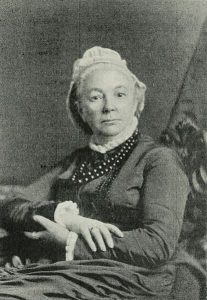
A fascinating look at distopian literature. I haven’t read any of the books mentioned here (other than “The Time Machine”).
In this week’s Dispatches from the Secret Library, Dr Oliver Tearle considers a curious dystopian story by Queen Victoria’s favourite novelist
The terms ‘dystopian’ and ‘ecology’ both gained currency in the mid-nineteenth century, although ‘dystopia’ has been traced back even earlier. The Victorian era witnessed the emergence of a new genre of science fiction, dystopian literature, which would produce several classic novels of the twentieth century. Victorian writers used this new genre to fashion responses to the dramatic social and technological changes they were living through, chiefly the discovery of Darwinian evolution and the rise of industrialisation in the period. The changing landscape of Victorian Britain played an important part in how authors of early dystopian works addressed questions about what we now call ‘the environment’: in both Richard Jefferies’ After London (1885) and H. G. Wells’s The Time Machine (1895), the crowded smoggy metropolis of contemporary London…
View original post 1,190 more words
“This internet thing
Can only immorality bring.
I mean,
Imagine the scene
Where Jack can be Jill
(and almost certainly will),
For who can see behind the screen
Of this new fangled computer machine?”
In my day we had top shelf magazines
And watched scenes
On video
(on second thoughts best not go
There)!
Anyway I swear
That society is going to pot,
(have you got
Any by the way? …)”.
I have updated my “About” page to include details of my recently published collection of poetry, “My Old Clock I Wind and Other Poems”.
Links to all of my published works can be found here, https://newauthoronline.com/about/.
Kevin


