Ten Things You Might Not Know About Famous Poets

InterestingLiterature's avatarInteresting Literature

In this special guest post, Ana Sampson offers some fascinating facts about classic poets

Matthew Arnold struggled a bit with the ageing process

At Oxford University, Arnold made a name for himself as something of a dandy. It was only when he fell in love, and needed to prove that he had prospects, that he finally settled into the position of Schools Inspector, rattling around provincial Victorian Britain on the newborn railway network. Most of his poetry was written during his younger years – he once said that after his thirtieth birthday he felt ‘three parts iced over’. His most famous poem, ‘Dover Beach’, was begun during his honeymoon in 1851, but was not published until sixteen years later.

There was a sad story behind Henry Wadsworth Longfellow’s beard

Longfellow, best remembered now for The Song of Hiawatha, numbered among New England’s ‘Fireside Poets’, so called because their…

View original post 1,013 more words

Party Girl

She was a party girl
Her head in a whirl
Of boys
And expensive toys.

She offered
“No strings fun”
In exchange for money proffered
By those who would
(if they only could)
outrun
The solemn tick tock
Of the ever present clock.

She was gone one day,
Who can say
Where?
Few care
To know.
The man of the world shrugs.
“Drugs.
Best not go
There.
She had naturally blonde hair
I think.
Will you take another drink?”

Balance

The chimes
Are out of tune with the times.
Which way will the pendulum swing?
And what will the future bring?

The tick tock
Of a balanced clock
Is long since gone
But the mechanism grinds on.

The clock may be repaired
And it’s owners spared
The eratic pendulum’s swing
That no balance does bring.

A steady chime
To tell the time
And the singing of a blackbird
Must once more be heard.

National Poetry Day celebrates local poets

To celebrate National Poetry Day, (which took place on 28 September), BBC local radio commissioned 12 poets from across England to write a poem incorporating a local word. To be frank some of these poems left me cold. I was, however rather taken with “Twittens”. To read the 12 poems please visit http://www.bbc.co.uk/programmes/articles/4jjwQBspBn4NLRyB53d0dnJ/national-poetry-day-free-the-word.

An Artists Tribulation

I agree with the author of this post, particularly with their statement that, “You must search for approval foremost from yourself. If you are never happy with your own work, you will never be satisfied with the words from others.
Approval comes from within. It always has”.

Kyle Hughes's avatarKyle Hughes

Perseverance, the word that is great in concept but difficult in action. 

In pursuit of your art, the necessity to not give up but in fact prevail is paramount. If one gives up, their work will not reach the audience that it deserves and thus, the spark will shudder and finally disappear. An artist must work continuously. Each day is another stepping stone to the day in which their work is recognised and appraised.

It is hard, however, to keep the necessary pressure upon yourself and your work each day. It is critical however that you do this. Yes, you are able to have rest days and time off, but it is your future you’re working towards and thus, it must be nurtured and respected.

An artist works long hours, tirelessly trying to improve their creations. You, an artist, must do similar. No individuals work is perfect and flawless. There…

View original post 57 more words

A Dalliance with Poetry

Below are 2 poems which are taken from my collection of poetry and prose, “Dalliance”, which was published in 2014. The first poem is entitled “Fire” and the second “Midnight”.

—

“I have felt the fire’s power;
It kindles brightly and sinks within the hour.
I have watched the embers dying fast;
Looked into the future and gazed into the past.
I have raked the ashes cold, felt the bleakness in my soul”.

—

“Midnight, black as pitch.
No scheming demon, ghost, nor witch.
Only the darkness, which in the human heart resides, manifests itself in cruelty and pride”.

—

You can find “Dalliance” HERE

Can I ask you a daft question?

Being a guide dog owner brings with it many advantages, (the companionship of a wonderful brindle Labrador/retriever and a highly effective mobility tool being 2 of the most obvious).
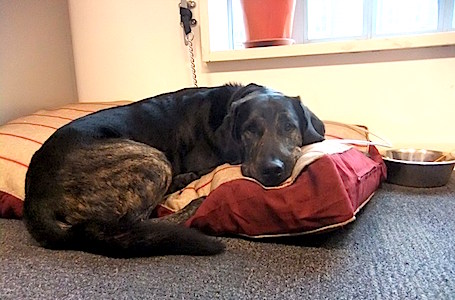
During my social and working life I am asked many questions regarding how guide dogs work, most of which are perfectly reasonable. I always answer such queries as its important that people understand the vital role played by guide dogs in enhancing the independence of visually impaired people. I am however sometimes flabbergasted by the daft questions put to me.

I have lost count of the number of occasions when a question along the following lines has been asked, “so does your dog go to work with you?”

I recently came across a variant on the above query. An acquaintance, being aware that I was traveling to Liverpool to visit my mum asked, “so does Trigger (my guide dog) go to Liverpool with you?”

I am known for my dry (some would say sarcastic) sense of humour. Consequently I am highly tempted to reply along the following lines, “no, he will stay in London for the 7 days I shall be in Liverpool. Don’t worry I shall leave him enough food and water to cover my absence. I am, however a little concerned that my home might be rather messy on my return …!”.

I do, however bite my sharp tongue and respond that the whole purpose of a guide dog is to act as a mobility tool. Consequently Trigger goes everywhere with me (the UK Equalities Act makes it an offence for a provider of goods or services to discriminate against a person for a reason related to their disability.

As a guide (or other assistance animal) is necessary to the independence of many disabled people, the Act makes it an offence for restaurants and other establishments to refuse to admit a disabled person when accompanied by their working assistance animal).

I shall continue to smile and patiently explain about the role of guide dogs when confronted by silly questions while, all the time furiously biting my sarcastic tongue …
Shadows

On such a day, when the winter sun
Casts my shadow upon yonder wall,
It is difficult to recall
That all
This will, one day, be done.

In future, will some other one, sitting here and seeing their shadow fall
Upon this self-same wall,
Know that they may not forestall
The night
Where dancing shadows are forever lost from sight.

—
(Written on 3 December 2016, while sitting in my study).

—

(Note: “Shadows” can be found in my latest collection of poetry, “My Old Clock I Wind”, which is available from Amazon, https://www.amazon.com/dp/B0735JBVBG and from Moyhill Publishing, http://moyhill.com/clock/).