The sun comes and goes on a cold Autumn day
And I think on fun and how quickly it passeth away.
The flower that bloomed
Is soon entombed,
Or if it blooms still
A rill
Of tears
Marks it’s all too tender years.
Passing
4 Replies

The sun comes and goes on a cold Autumn day
And I think on fun and how quickly it passeth away.
The flower that bloomed
Is soon entombed,
Or if it blooms still
A rill
Of tears
Marks it’s all too tender years.
Candy Korman, of Candy’s Monsters is running a poetry competition. The competition closes at the end of October. anyone interested in entering can either post their entry in the comments section or email Candy directly. All entries must have a monster theme. For details of the competition please see http://www.candysmonsters.com/poetry-me/?utm_source=feedburner&utm_medium=email&utm_campaign=Feed%3A+CandysMonsters+%28Candy%27s+Monsters%29

As someone who lost the majority of their vision at approximately 18-months-old (I am registered blind), I welcome this invention. My thanks to Chris the Story Reading Ape for drawing my attention to this interesting article.

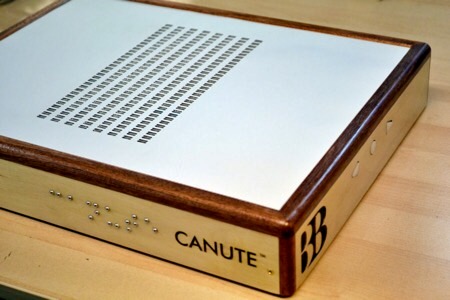
Canute is tackling the decline in Braille literacy – and everyone should care.
Being able to read is one of the most precious of skills: Books free the imagination and inspire creativity – they allow people to learn independently, and relax after a hard day.
But not everyone has that luxury.
This week is National Braille Week: a week dedicated to the raised dots that allow blind people to read letters, numbers, punctuation and words.
But Braille is on the decline.
In the ’60s up to 50% of blind school children in the US were able to read Braille, but this figure is now closer to 10%.
Today one company hopes to turn this around, with a device that’s fit for the digital age.
Get ready to meet Canute.

Book description:
“It’s October 14th 1066, and King Harold’s Saxon army is about to go in to battle against Duke William’s invading Norman army. Among the ranks of the Saxons are two boys who shouldn’t be there: Eadweard, and his best friend, Cerdic.
Daydreams of becoming great war heroes had the boys convinced to disobey their Fathers and go to war, despite the possibility of punishment if they were caught. Now it’s time for the battle to begin, and Eadweard is starting to wish he’d stayed home after all. But it’s too late to turn back now, and Eadweard finds himself witnessing the events of the battle that would later be called The Battle Of Hastings, and learning how different from his imaginings the reality of war actually is.
*Note: This is a work of fiction, which is based on actual events. It tells the story of the battle between King Harold’s Saxon army and Duke William’s Norman army, which took place a short distance away from the town of Hastings on October 14th 1066, in a place now known simply as Battle. Though this is a children’s story, the recommended reading age for this book is eight years and over, since it is a story that takes place on a battlefield, and therefore contains scenes of violence that are not suitable for younger, or more sensitive, readers.”
A reading of the first part of The Waste Land
‘The Burial of the Dead’ is the first of five sections that make up The Waste Land (1922), T. S. Eliot’s landmark modernist poem. What follows is a short analysis of this opening section, with the most curious and interesting aspects of Eliot’s poem highlighted. You can read ‘The Burial of the Dead’ here. What we intend to do is provide a brief summary of what happens in ‘The Burial of the Dead’, but we’ll stop and analyse those features which are especially significant as we go, and point out the meaning of the most important allusions.
In summary, Eliot’s poem opens, famously, with a declaration that ‘April is the cruellest month’. This is because, we are told, flowers and plants grow – as you’d expect from springtime – but they grow ‘out of the dead land’. Few people…
View original post 1,159 more words
There was a young man called Judd
Who married a girl called Rudd.
They where happy together
In all kinds of weather
And particularly relished the mudd!
Wrap
music. Crack,
Discordant sound.
Young men who think they have something profound
To express
Impress
Girls near cracking point.
Lyrics disjoint.
I don’t see the point
But then I am from the right side of the street
And do not meet
Those who make up for what they lack
With Crack.
Hard men
Go down when
Those with faster toys
Mow down boys.
A crack
And all goes black
For one who once did wrap.
I am of a certain background
And have nothing profound
To say
As I overhear a girl who does wrap
Along
To the song
Of Crack.
2 Cars in search of a crash
Jump red lights
On nights,
When black ice
Holds the heart in a vice-like grip.
Girls trip
By
On heels to high
For walking.
Tongues are talking,
“They are prisoners of their own making”.
Much head shaking.
Vehicles collide and slide
Down the embankment towards the river of unmindfulness
Where those who drink
Into forgetfulness sink
And remember not
That it is their lot
To constantly pay
the ferryman Who carries their soul away.
It catches up with you, in the end,
Although its easy to pretend
That the late nights
And fights
With an unknown friend
Under the sheet
Will not defeat
Roistering youth.
The truth
Oft creeps
Up on a man as he sleeps.
Or when, on seeing nature’s beauty he weeps
Over something irredeemably lost,
And counts the cost for a while,
Then with a weary smile
Returns to the merry-go-round
Which will spin him round, and round and round


