Author Archives: K Morris Poet

Unknown's avatar

About K Morris Poet

The purpose of this website (kmorrispoet.com) is to showcase my writing. For details of my published works, please click on the 'About' page of my blog.

Cheshire Cat

My finger lingers
Over the delete button.
One little caress, a mere press
And the process
Will be complete.

The call button.
Am I a glutton
For the fire
With a desire
To burn on a pyre
Of my own making?

Heads shaking
I see
Telling me
I need to be free
Of thee.

One final spree
For you and me?
I imagine the glee
In your eyes
Where no pitty lies.

The smile
Of the Cheshire cat vanishes while
Only a thin lipped grin
Of distaine remains.

Spider

Bluffing.
Toughing it out.
The spider expects a rout
And does employ
The oldest stratagem to destroy
Her foe.

Hey ho
There is nothing new under the sun.
A few turn and run,
While others, having done
As the spider does ask
Find it an impossible task
To escape the pretty creature who spins
Her web composed of human sins.

A few demand
To see her hand.
A command
She can not fulfil.
The spider sulks,
Skulks away
And goes in search of other prey.

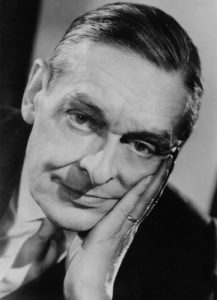
A Very Short Analysis of T. S. Eliot’s The Waste Land

InterestingLiterature's avatarInteresting Literature

A critical reading of a landmark modernist poem

The Waste Land, first published in 1922, is arguably the most important poem of the whole twentieth century. Written by T. S. Eliot, who was then beginning to make a name for himself following the publication (and modest success) of his first two volumes of poetry, The Waste Land has given rise to more critical analysis and scholarly interpretation than just about any other poem. Critics and readers are still arguing over what it means. In this post, we plan to give a brief introduction to, and analysis of, The Waste Land in terms of its key themes and features. We will then zoom in and look at the individual five sections of the poem more closely in separate posts. (We say ‘brief introduction’ and ‘short analysis’, but even the shortest analysis of Eliot’s The Waste Land is going to require…

View original post 1,446 more words

A Poem for National Poetry Day

It had slipped my mind
But now I find
That it is National Poetry Day.
Poets will make hay
Or not
Depending on whether they have lost the plot.
I have got
No plot at all
So will my readers stall
With words that writhe
As they strive
To go somewhere.

Shall I write about a pair.
A clever play on pair and pare?
I swear
That the pair
I have in mind
Is more divine
Than any wine
One will find
In vineyard
Where maidens pick the hard fruit.

How long shall I pontificate?
For it is getting late
And National Poetry Day
Will soon pass away
Have I anything to say
Or do I merely play
With a word
Absurd
Which, joined with another,
(All words are brothers)
Forms a sentence perhaps,
Or do I collapse
Into something, I know not what?
Indeed, I believe that I have lost the plot.

Shark

For the blank
Stare
Of the fish tank,
thank
the shark
Who dwelt in the dark
He has had his wish
And eaten all the fish,
But can no longer glare
As consuming his source of food
Perforce
The reaper stark
Did intrude
And made the shark
His food …

Will you be remembered?

Jack Eason's avatarHave We Had Help?

images

For every writer, the one thing they want whether they admit it or not is for their work to be constantly in the public eye. How will they achieve that? By writing numerous works of literature? No!

For you to become noticed globally, your books have to fulfil the following criteria of being highlyoriginal,influential,andimportant.

Each and every one of us secretly hopes that just one of our books will fit the bill. In the meantime with every one we pen, we want it to become a best seller. But that is a completely different kettle of fish compared to a book being regarded as a seminal work of literature by the literati, particularly here in the UK.

~~~

Here is a partial list of works of literature currently deemed to be seminal by them:

The Iliad and The Odyssey

The Barchester Chronicles

Pride and Prejudice

Gulliver’s…

View original post 216 more words

The Poet On The Hill

K Morris Poet's avatarK Morris - Poet

The poet on the hill

Sits still

And ponders why

Man must die.

The weather is fine

nature or the divine

causes the sun to shine.

Every living thing

Will have it’s spring.

The newly opened  flower

time will devour.

The blossom’s heady scent,

is quickly spent.

Men   soon disperse

We are lent this earth.

All must enter the dark wood

The bad along with the good.

The poet continues to ponder

While yonder

The light begins to fade.

Man’s destiny is the grave.

View original post

“Dane-Geld” By Rudyard Kipling

IT IS always a temptation to an armed and agile nation
To call upon a neighbour and to say: –
“We invaded you last night – we are quite prepared to fight,
Unless you pay us cash to go away.”

And that is called asking for Dane-geld,
And the people who ask it explain
That you’ve only to pay ’em the Dane-geld
And then you’ll get rid of the Dane!

It is always a temptation for a rich and lazy nation,
To puff and look important and to say: –
“Though we know we should defeat you,
we have not the time to meet you.
We will therefore pay you cash to go away.”

And that is called paying the Dane-geld;
But we’ve proved it again and again,
That if once you have paid him the Dane-geld
You never get rid of the Dane.

It is wrong to put temptation in the path of any nation,
For fear they should succumb and go astray;
So when you are requested to pay up or be molested,
You will find it better policy to say: —

“We never pay any-one Dane-geld,
No matter how trifling the cost;
For the end of that game is oppression and shame,
And the nation that plays it is lost!”

—

https://en.wikipedia.org/wiki/Danegeld