A young man named Dave
Invited me to an illegal rave,
Where a girl called Claire
Sang her songs of despair,
Whilst shaving that young man Dave!
The Illegal Rave
5 Replies
A young man named Dave
Invited me to an illegal rave,
Where a girl called Claire
Sang her songs of despair,
Whilst shaving that young man Dave!
When a young lady dressed in heels
Showed me her collection of pet seals,
I said to her, “Claire,
This is a peculiar affair,
As your seals are all wearing heels!”.
When a young lady named miss Hocking
Lost a fine silk stocking,
The bishop’s wife looked grim
And spoke of great sin.
And the bishop’s dog retrieved that stocking …
Yesterday evening, my friend and I fell into a discussion concerning poetry. This came about as a consequence of me mentioning that I am in the process of producing a further collection of my own work.
During the course of our conversation, my friend mentioned that “poetry should be relevant”.
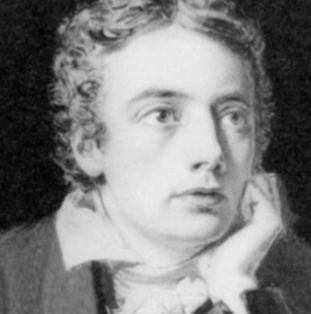
I responded that Keats great poem, “Ode to a Nightingale” (https://poets.org/poem/ode-nightingale), remains as relevant today as when the poet composed it. I said that the poem deals powerfully with the themes of beauty, life and death, and continues to resonate with the 21st century reader due to the fact that it touches on the human condition.
My friend acknowledged that “Ode to a Nightingale” is a wonderful poem. However he said that Keat’s work was written for an educated elite and was not read by ordinary people.
It is undoubtedly the case that at the time of the poems composition few “working class” people possessed the ability to read and write. Consequently “Ode” was (by and large) appreciated by an educated (and often wealthy) reading public. To acknowledge this self-evident fact does not, however imply that we ought to embrace the contention that “poetry should be relevant”.
Every poem is, of course relevant to the poet who puts pen to paper, (he would not have composed it where this not the case). A poet feels love, sadness, despair, sorrow, happiness (or a myriad other emotions) and feels impelled to compose a poem. In the moment of composition his poem is “relevant” to him and usually remains so throughout the remainder of his life.
However the power of a great poem lies in it’s ability to transcend time and place. From the early 19th century Keats “Nightingale” speaks poignantly to people of all social groups today. for the themes of life, death and beauty are as “relevant” to 21st century man as they were to the man or woman of the 19th century. Unlike the early 19th century, in the 20th (and 21st centuries) education is (in the developed world at least) now widespread, which enables people of all backgrounds to appreciate more complex poetry. I say “more complex”, for humans have always enjoyed poems, whether of the nursery rhyme variety, baudy verses or Homer’s “Odyssey” and “Iliad”. The latter were of course (originally) recited from memory so were accessible to people of all social stations. Therefore Homer, who is considered by some as “elitist”, was not viewed in this manner when his great works enthralled the ancients, when recited to the assembled populace.
We do, I believe need to be wary of assuming that because someone grows up in a tower block where the lifts rarely (if ever) work and gangs roam the estate, that they need (if, indeed they need poetry at all), to read poems about people living in similar circumstances to those in which they find themselves.
If an individual living in the circumstances described above writes poetry, she may well compose poems about gangs, drug dealers and other issues which often plague run down estates. Her work may possess literary merit (or it may not). However it should not be argued that her work is (due to it being based in gritty reality) more “relevant” than “Ode to a Nightingale”.
Of course the work of the poet living on a badly maintained estate is as “relevant” to her, as was Keats “Nightingale” to the poet as he sat penning it on Hampstead Heath. We should not, however jump to the assumption that merely because a person comes from poor circumstances that they are, somehow incapable of appreciating Keats, Shakespeare or Wordsworth. Through good teaching people of all kinds can (and should) enjoy our rich literary heritage, for it belongs to all of us. Certainly it is easier for the child growing up in a household full of books to gain an appreciation for the literary arts. But its by no means impossible for the girl or boy growing up on a poor estate to do likewise. Ultimately great art does not only transcend time and place, it also goes beyond social class and touches the hearts of us all. This is why I dislike the word “relevant” when applied to the appreciation of literature.
Devil-may-care,
She, has cut her hair
And her ribbons gay
Have gone away
He
Thinks of Hardy’s “Ruined Maid.
While she
Has no knowledge of poetry.
Hardy’s Maid
Was devil-may care
With feathers in her hair.
For the poet wished to satirise.
But you will find
That girls of a certain kind
Have eyes
That see behind
The smile, of the unstaid maid,
Although they have heard
Not a word of Hardy’s poetry.
In nightmares
The dark
Stares
Within our heart.
And, when
Good men
Awake
They take
A look inside
Their heart.
And decide
“Is that fantasy
The whole,
Or a mere fractionality
Of me?
‘Tis fortunate none can see
Into my soul.
And the lies
Behind my eyes.
When an ill-begotten young man named Cotton
Said, “many a girl’s name I’ve forgotten.
And now I’m drunk
As the proverbial skunk”.
I said, “sir, you are absolutely rotten!”.
A young lady named Ling
Comes round to mine to swing.
The vicar’s pretty wife Lee
Takes tea with Ling and me,
And then we go and swing.
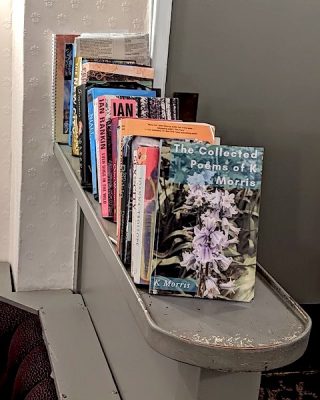
On 21 August 2019, I published my “Selected Poems, (https://www.amazon.com/dp/B07WW8WXPP/). The book encompasses poems composed by me between 2013-2019, and is available in both a Kindle and paperback edition.
I am delighted to announce that I shall be releasing a further collection of my poetry in June/July 2020.
As a taster, I have included below my poem “Dead Stop”, which appears in the forthcoming collection:
“Perhaps some things should not be said
In poetry,
Or maybe
They can not be said
Meaningfully by me.
As does nearly always happen
My train stopped, dead
At Clapham
(Though not for its proper, brief
Stay). We did not pull away.
What can be said
About grief
(Not experienced by me)?
Perhaps some things should not be said
In poetry.
When, that evening I came back
The track
At Clapham
Was clear.
We made good time.
Though a drear
Thought did cross my mind,
But I find
That some things can not easily be said
In rhyme
By me, as I sit here, warm
Thinking of the ajacent platform
And how our train stopped, dead,
But, perhaps some things should not be said
In poetry,
Or at least by me”.
At present my collection is untitled. Therefore, in the time between now and it’s publication I need to come up with a meaningful title for my book!
I will, of course keep you updated on the books progress here.
Kevin
There once was a kindly old squire
Who, on seeing his young housemaid Mariah
Go down on her knees
To shell beans and peas,
Went down to assist young miss Mariah.
 K Morris - Poet