The Class System in Arthur Conan Doyle’s “Sherlock Holmes”

This is an interesting post. I think the author has made some interesting points here as regards how Sherlock Homes (through his portrayal by Doyle) disparages upper class characters. However Holmes is also disparaging of lower class persons, for example in “A Scandal in Bohemia” he remarks to his friend, Dr Watson, “hence, you see, my double deduction that you had been out in vile weather, and that you had a particularly malignant boot-splitting specimen of the London slavey”. Of course Homes comment can be read in 2 ways. It can be construed as being purely tongue-in-cheeck or, alternatively one can view it as showing contempt for the “servant class”.

JesseKellum's avatarJB Kellum

Throughout the works of Sir Arthur Conan Doyle’s famous Sherlock Holmes stories, there is quite a bit of commentary concerning the social classes of the Victorian era. Whether Doyle was depicting Holmes as “upholding the status quo” of the time is a topic that is frequently debated because class inequality was a frighteningly real thing at the time. Women were often thought of as less intelligent than their male counterparts and there was a growing tension between the upper class and the middle and lower classes. Doyle also spends a good amount of time talking about a “criminal class” who are predisposed to take to a life of crime and often composed of people of the lower and working classes. This, by itself, would suggest that Doyle believed that poor people were destined to a life of crime, but I believe it’s a little more complicated than that. There are…

View original post 1,246 more words

I Know A Young Lady Named Dawn

I know a young lady named Dawn
Who owns a pet unicorn.
When we met last night
By the star’s bright light
We danced with that pet unicorn.

—

I know a young lady named Dawn
Who owns a pet unicorn.
While round at mine
We got drunk on wine
And I saw her pet unicorn!

—

While searching for my unicorn
I met a policewoman named Dawn.
When she said, “you are out late”.
I asked her out on a date
And so our love was born!

Its Queer

Do young women show interest in old men?
No, it is not usually so
Though when
Such men
Have money
Its queer
How a certain kind of honey
Will make herself
Most agreeable to the beer
Belly and receeding hair.
But how dare
You whisper “’tis his wealth that attracts her …”!

Thomas Hardy

Approximately 15-16 years ago, I went on a Thomas Hardy weekend and this post reminded me of the discussions which took place, together with the long and enjoyable walks in Dorset.

Jean Reinhardt's avatarJean Reinhardt

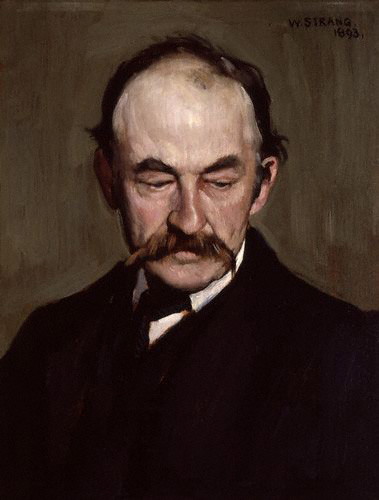
NPG 2929,Thomas Hardy,by William StrangThomas Hardy by William Strang 1893

Thomas Hardy by William Strang 1893

On 11th January 1928, the poet and novelist, Thomas Hardy died at the age of 87 in Dorset, England. He was cremated and his ashes interred in Poet’s Corner in Westminster Abbey but his heart had been removed and was buried in the Stinsford village churchyard of his native parish in Dorset.

Two of my favourite books by this author are Far From the Madding Crowd and the somewhat more depressing Jude the Obscure. The latter is the author’s last completed novel and was first produced in serialized form in a magazine in December 1894 but the following year was published as a book. The protagonist is a young stonemason, Jude Frawley, a working class man who dreams of becoming a scholar. What I like about Hardy’s writing is how he focuses on the class system of his…

View original post 180 more words

He and She

He gave in
To desire
By his gas fire.
And with material so thin
It was easy to sin.

Do you remember him?
Almost certainly no
For when
You go
With many men
And its just
Lust to them
For they do not care
Whether you be Claire or Flair,
How then
Can you care
Who went there?