Monthly Archives: June 2020

Statue of Black Actor and Poet Alfred Fagon Defaced in Bristol

On 9 June, I wrote a post entitled “In Defense of our Monuments”, (please see https://kmorrispoet.com/2020/06/09/in-defense-of-our-monuments/). In that article, I argued that people should be judged by the standards of their time, and condemned the actions of those who damage our monuments.

Last Sunday the statue of Edward Colsoun, a Bristol slaver, was thrown into the harbour. Now we hear that the statue of black actor and poet Alfred Fagon has been covered in a corrosive substance (possibly bleach) and an assessment is being made to determine whether it can be repaired, (please see https://www.bbc.co.uk/news/uk-england-bristol-53011774).

The BBC reports that “Anton Phillips, an actor and friend of Mr Fagon, said following the “dumping” of the Colston statue it “doesn’t surprise me”.” Sadly it doesn’t surprise me either. Indeed, at the time of writing my post “In Defense of Our Monuments”, I was fearful that something of this nature would happen. However I took the decision not to mention my concern lest someone happening on my post took it into their heads to target monuments erected to non-whites.

Damage to monuments is wholly unacceptable irrespective of whether they celebrate the lives of white or non-white people. I unreservedly condemn the defacing of the Fagon statue (as I do that of Winston Churchill). To rephrase the old quotation, “vandalism begets vandalism”, a fact which those who defaced Churchill’s statue, and threw Colston’s into Bristol harbour, should have considered before embarking on their criminal damage.

Anyone who damages our monuments should be subject to the full force of the law. Heavily fined and/or imprisoned. Its simply not acceptable for thuggery of this nature to take place in the UK.

When I Saw a Young Lady Dancing

When I saw a young lady dancing
And said, “are you looking for romancing?”.
And I spoke of sin.
She said, “I am lin.
And sir, your luck you are chancing!”

How to Assist a Blind Person During Social Distancing

I received this message from the Guide Dogs for the Blind Association (GDBA), the charity which trains guide dogs in the UK, and thought it would be of value to my readers as it offers useful tips on how to assist a visually impaired person during this time of social distancing:

“Did you know that only one fifth of the public ‘completely comfortable’ offering to help someone with sight loss while social distancing is in place?*

“Today Guide Dogs has launched a new campaign called ‘Be There’ to give the public ways of supporting people with sight loss during social distancing.

“Social distancing is the most challenging aspect for me in the whole Covid-19 situation… it would really help if people have an awareness of how they can play their part.” Jonathan, guide dog owner

Jon is not alone in this, we’ve heard similar stories many times over the past few months. That’s why we’ve come up with 3 simple tips for the wider public to help them support people with sight loss:

1. Keep your distance, but don’t disappear – People with sight loss may find it challenging to social distance, so if you see someone with a Guide Dog or a long cane then you can help them by making sure you keep 2m away, but that doesn’t mean you can’t also offer your help.

2. Say hello and offer your help – Simply by letting someone with sight loss know you are nearby; you are giving them the opportunity to ask for any help if they need it. People often feel unsure about their ability to help someone with sight loss, but their request could be a simple as finding out where a shopping queue starts, or if there is a safer place to cross a road.

3. Describe the scene – We’ve all had to adapt to unusual sights during lockdown – people standing apart in long lines outside of supermarkets for example. But those with sight loss haven’t always witnessed this to the same extent, which can be isolating and confusing. By describing what you can see to someone with sight loss, you can help them to understand the environment and navigate accordingly”.

As a visually impaired person and a guide dog owner, I have, I think been lucky as I’ve continued to find the public helpful during the current COVID-19 situation. Just last evening I was walking home after having spent a couple of hours with a friend in Crystal Palace park, when I became aware that the pavement was blocked by workmen carrying out pavement works. Without me asking, one of the workmen offered me his arm and guided me passed the obstruction. Again, a few weeks back, a gentleman helped me navigate fallen branches in my local woodland by allowing me to take his arm.

(You can find out more about the work of Guide Dogs here, https://www.guidedogs.org.uk/).

I Walk in the Wood

I walk in the wood
Wishing to keep away
From the fray.

The birds up above
Have something meaningful to say.
Whilst angry crowds,
(Elsewhere, in street and square)
Shout to loud
And call
For everything to fall.

It is easy to smash
And trash
That which you do not understand.

Macbeth’s idiot walks the land.
And, in his tale of sound and fury
There is no room for a more nuanced story.

Maybe I should
Stay in the wood
And write poetry.

But those who know
And love
Their country
Can not see
It brought low,
By those who do not know.

Darkness

I wrote the below poem late one evening, which is unusual for me as most of my writing takes place during the day. Perhaps the late hour of it’s composition goes some way to explaining the somewhat (to my mind at least) sinister nature of the poem.

In Defense of our Monuments

(If you have not read this post, https://kmorrispoet.com/2020/06/08/thuggery/, you may wish to do so prior to reading the below).

Back in 2016, I composed my poem Rhodes, in response to the demands of Oxford students that the statue of Cecil Rhodes should be removed from Oxford University. A recording of me reading that poem can be found below. My apologies for the less than perfect quality of the recording.

The ongoing demonstrations by Black Lives Matter has led to renewed calls for the statue of Cecil Rhodes to be removed from the campus of Oriel College. And the London Mayor, Sadiq Khan has announced the establishment of a Commission to examine whether landmarks such as statues should be removed from the streets and squares of London. (See https://edition.cnn.com/style/article/uk-statues-protest-movement-scli-intl-gbr/index.html.

As reported by CNN (please see the above link), protesters daubed, “was a racist” on the statue of Winston Churchill, whilst others placed a plaque on the 18th-century Scottish philosopher, David Hume accusing him of racism.

Churchill was a product of his time and (as with many other men and women of all political parties and walks of life) undoubtedly held views which would now be considered racist. He did, however lead Britain through World War II and was an artist and author of some distinction. Consequently to mindlessly brand Churchill as “was a racist” shows the crass stupidity of whoever took it into their tiny head to vandalise the statue of a great war leader and prime minister. Churchill was much more than a “racist” and I’ve nothing but contempt for the person or persons who saw fit to deface his statue.

Turning to David Hume. Hume was one of the greatest thinkers of the Enlightenment. To single out his “racism” whilst disregarding his philosophical achievements beggers belief. As with Churchill, Hume was a product of his age and should be viewed in that light.

I wonder where all this will stop. In the city of my birth, Liverpool there have been calls (I suspect by a tiny minority) to have Penny Lane renamed due to it having gained it’s title from a merchant with interests in the slave trade, James Penny. The University of Liverpool has already bowed to student pressure and renamed Gladstone Hall, due to the association of the 19th-century prime Minister’s family with slavery, (see https://www.liverpoolecho.co.uk/news/liverpool-news/liverpool-mayor-joe-anderson-responds-18391938).

Whatever their origin (ignoble or noble), street names, monuments etc become part of communities, interwoven into the fabric of society and we should be wary of simply removing them merely because a vociferous minority clamour for us to do so. Its often said that “he who shouts loudest gets heard”. This is, unfortunately often the case even when the person (or persons) shouting loudest are not representative of the wider community or of society.

Most inhabitants of these islands rightly admire Churchill and are attached to their locality (including street names and monuments). Unfortunately the vast majority do not tend to get heard, partly owing to the disinclination of many people to become actively involved in politics. Sadly this often means that the loud mouths (such as the person or persons who vandalised Churchill’s statue) get heard, whilst the silent majority do not.

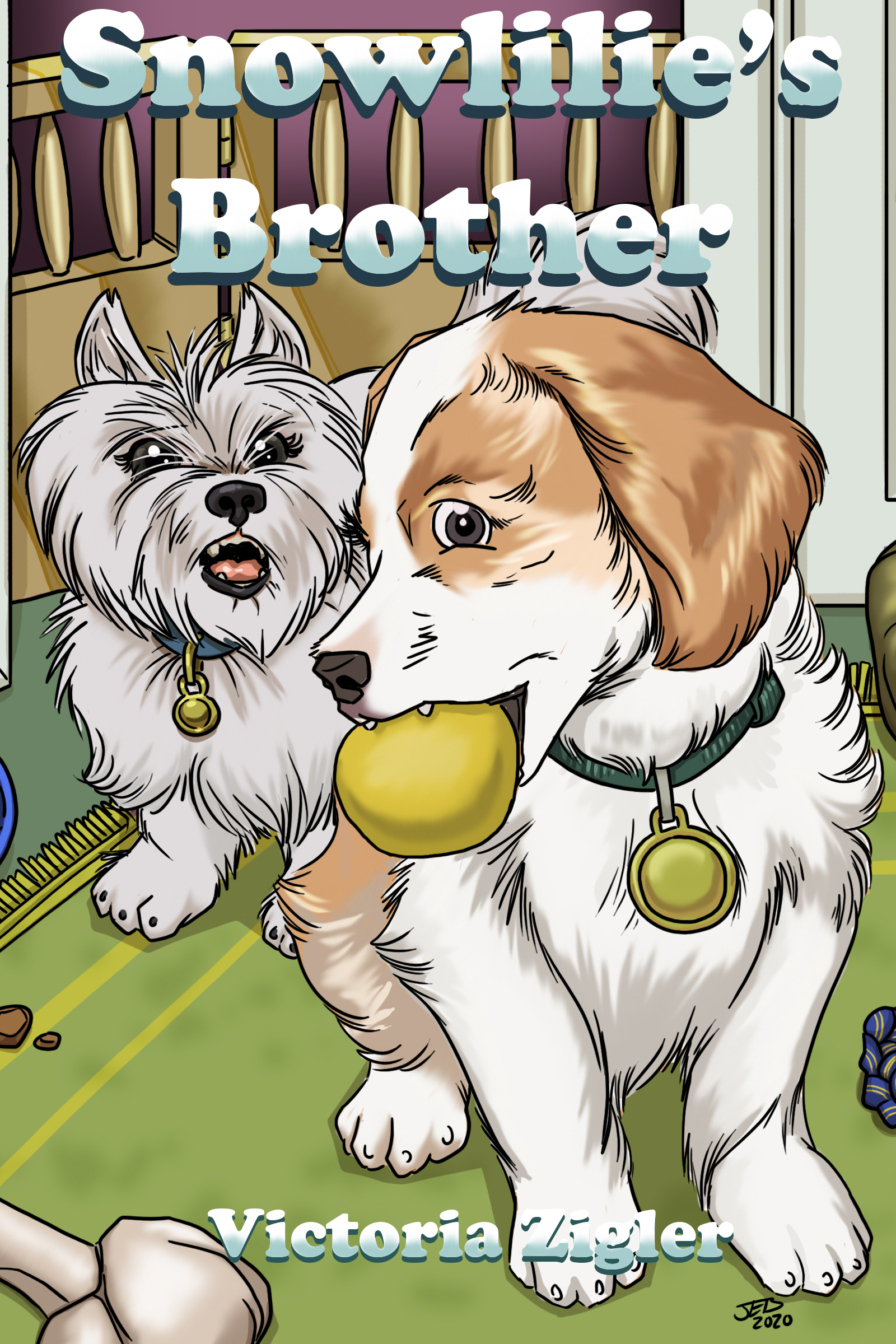
Snowlilie’s Brother – Book Announcement by Author Victoria Zigler

Title: Snowlilie’s Brother

Author: Victoria Zigler

Book description:

“Getting a little brother is a good thing… Right?

When Snowlilie the West Highland White Terrier first meets her new little brother – a Cavapoo puppy, who tells her the humans call him Rascal – and realizes having a little brother means having a new doggy friend to play with, she’s excited. That is, until she realizes it also means sharing everything with him – including her favourite ball, some of her food, and Mummy and Daddy’s attention.

Will Snowlilie be forced to tolerate a little brother she doesn’t like? Or can she learn to like Rascal, and accept the changes having a little brother means?”

Available now as an eBook from…

Smashwords: https://www.smashwords.com/books/view/1022774

Amazon: https://www.amazon.co.uk/dp/B088SZSDQS

…And other online retailers, such as iBooks, Barnes & Noble, and Kobo.

Thuggery

All civilised people have been deeply shocked by the death of the black American George Floyd, (https://en.wikipedia.org/wiki/George_Floyd).

The death of George Floyd has, very naturally aroused strong emotions and has lled to demonstrations (most of them peaceful), protesting at his death, and calling for reform of the US police and judicial system, which the demonstrators see as biased against black people. Given the extremely tense situation (and the need for a fair trial of the officers involved), I wont comment on the case itself, as I don’t wish to further inflame an already extremely tense situation. I do, however wish to comment on the actions of a minority of those who have/are protesting over the tragic death of George Floyd.

I understand the sense of sadness and anger felt by those who have taken to the streets to protest at the death of George Floyd and what they see as indemic racism in the US judicial and policing systems. A small minority are, however participating in acts of vandalism which can, in no way be excused.

An example of the vandalism refered to above concerns the removal of a statue of the Bristol slave merchant Edward Colston and the throwing of it into the harbour by demonstrators, (https://en.wikipedia.org/wiki/Edward_Colston).
The Black Lives Matter demonstrators where incensed that a statue of a merchant who had been a participant in the transatlantic slave trade continued to stand in a public place, so took the action outlined above.

Now, no reasonable person is going to defend slavery. The idea of buying and selling human beings is abhorrent, as is the belief (which underpinned the trade in human lives) that black people are racialy inferior to white people. However Colston’s statue represents an important part of British history. It is not a noble aspect of our past. It is, nonetheless part of the historical record and vandalising a statue of a slave trader does nothing to bring back those who cruely suffered as a consequence of slavery, nor does it assist, in any shape or form in achieving justice for George Floyd and his family and friends.

However abhorrent the practice of slavery is (and it is undoubtedly a vile practice), we must (however hard it is to do so) look at men such as Colston in the context of the time in which they lived. Opposition to slavery was not widespread during Colston’s lifetime, indeed it had widespread support. This fact does not, of course mean that slavery can, in any sense be justified. It does, however mean that we need to show some objectivity when viewing men such as Edward Colston.

Prior to the criminal removal of the statue, discussions had taken place regarding the placing of a plaque mentioning Colston’s involvement in the slave trade, together with his donations to local charities. Such discussions where still ongoing at the time of the statue’s forceable removal. In my view the affixing of a plaque revealing the history of the man (warts and all) would have been the correct course of action, rather than the act of vandalism which took place.

Of course, if we all took it into our heads to remove statues because of our dislike of the persons they celebrate, there would be chaos. We all have our heroes and vilains. Take, for example the statue of Engels which stands in the city of Manchester, (https://www.atlasobscura.com/places/soviet-engels-statue). Whilst neither Engels nor Marx can be blamed for the crimes of Lenin, Stalin and other Communist dictators, the ideology of Marxism has led to the deaths of millions of human beings in Stalin’s Gulags and Mao’s Great Leap Forward. Whilst I can well understand why someone who had suffered under Communism might well want to pull down Engels statue, I would not defend them where they to do so. Engels lived for 30 years in Manchester and can be regarded as a prominent citizen. Those on the far-left who cheered on the vandalism of Colston’s statue, would be hopping mad where the same treatment to be meted out to that of Engels. They would rightly condemn the pulling down of Engels as criminal damage. So, to those who support the destruction of statues of people who they find objectionable, is it now open season for anyone (and everyone) to deface statues of people they dislike?

Of course human life is more important than property. However the tragic death of George Floyd does not excuse the acts of thuggery committed by a minority of those who claim to act for the betterment of the lives of black people.