Good advice for authors. Kevin
A Blogging Tip for Authors
Leave a reply
Good advice for authors. Kevin
Many thanks to Olivia Emily for taking the time to read and review my book, “Dalliance; A Collection Of Poetry And Prose”. For Olivia’s 5 star review of “Dalliance” please visit the following link, (https://bibliomad.wordpress.com/2015/08/19/dalliance-a-collection-of-poetry-and-prose-by-k-morris-book-review/).
Kevin
Books are one delight that all children should be introduced to as early as possible in their lives. For a parent there is no feeling quite like the first time you read to your son or daughter. You are opening the door onto the huge world of literature. There is a book available for every type of reader, whether factual or fiction. Reading to your child will open their eyes to the world around them and the possibilities available to them; providing they are willing to let their imaginations run wild.

Reading aloud to kids – a memorable gift
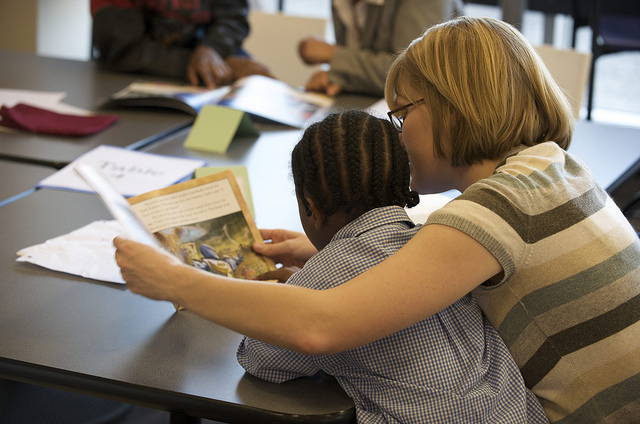
Reading aloud to a child is possibly one of the most amazing gifts that can be given to anyone. It is actually the gift of time and of sharing this time together. Reading aloud to your child will create a lasting memory and a bond between you that will be incredibly difficult to break. In fact, many adults describe being read to as a child as one of their most cherished memories. This gift allows your child to explore strange new worlds while wrapped in the security and safety of a parent’s arms.
The impact of today’s technology on reading
It is far more difficult in today’s modern age of electronics to obtain and sustain the attention of your child. Televisions are commonplace with a multitude of channels available to tempt anyone away from productive activities. Computers and the internet call out, desperate to tell you about the latest, incredibly important video release. Quite possibly this is concerning sleeping cats or hapless children. Society is gradually moving towards the completely electronic age and books will potentially become a forgotten form of media. This makes it even more important to read to your children for as long as you can hold their attention. If you do not make this attempt many children will never experience the joy of reading or the pleasure of time spent with a parent.
Reading aloud creates a visionary perspective
Reading aloud allows you to portray the characters in a far superior way to simply reading the book. You are able to paint a picture and enthrall your children with the story. Their imaginations will know no limit as they immerse themselves into the story and become the hero, or even the villain of the piece.
The storyline does not matter when it comes to your child learning from reading. They will listen to you, your pronunciation of the words and the meaning of them and learn this for themselves. Reading aloud to a child is one of the most effective ways to improve their language skills and broaden their vocabulary. Reading aloud to your child will also educate them in using their imagination and compiling these thoughts into a usable chain of events. Equally it will confirm to them that there is always time for reading.
Making the time to read to your kids
It can seem difficult to find time to read aloud to your child but it is not as difficult as you think. If you were to monitor the amount of times in one day you check your phone for an email, message or social media update you would quickly realize that you easily waster more than the twenty minutes of reading time recommended for children. By simply restructuring your day you may well gain more than twenty minutes. You will certainly gain a better relationship with your child.

Reading skills
Research shows that children who are read to will grow up with a love of books and will want to learn to read, simply to pursue this love. Reading is an excellent way of learning and a vital skill – even if the majority of what you read is on the web. Taking the time to read to your child will ensure they want to learn this skill and they will be grateful for this as they grow older.
As a parent, it should concern you that kids nowadays prefer tablets and Smartphone over books. Start reading to them from an early age, and you may instill a passion for reading. Do it periodically and make sure you read aloud; this way the story will become much more compelling.
By Paul Trevino and LoveReading.co.uk!
One of my favourite songs from one of my favourite bands, https://www.youtube.com/watch?v=5cnIQHJ169s


Who am I
to intrude upon
your thoughts, your time, your space
to ask for something, anything
except a selfish, old fool
with the audacity
to love you so ardently
View original post 101 more words
The click of heels fades.
Silence crashes over him in waves.
Sadness contends with rage.
The turning of a new page
Or a man digging his own grave?
Beware the dangers of complacency. I boarded the 17:22 from London Victoria to Gypsy Hill yesterday. It was boiling hot and the heat combined with the movement of the train made me sleepy. I dozed. At some point I became aware that the train had stopped. I and my fellow passengers where stuck in no man’s land between Battersea Park and Clapham Junction station. The windows where open but the lack of motion rendered this fact of little consequence. I along with my fellow commuters made the best of a sticky (in more than one sense of the word) situation. People read their papers. a man complained to someone or other rather loudly on his mobile that he was stuck on a train, he hated the idea of driving for 2 hours to get somewhere or other that evening but that he would, reluctantly make the effort, while a gentleman…
View original post 398 more words
“You look smart. Are you off somewhere nice?”, said the man operating the luggage gate at London Victoria’s mainline station. (Being blind this gentleman has assisted me onto trains on numerous occasions hence his familiarity in speaking to me in this manner).
“No, just work”, I replied.
“But its Sunday Kevin!”, he said with obvious surprise.
Suddenly everything clicked into place. The 4 coach train at my local station when, during the working week the train consists of 8-10 carriages should have screamed, “It’s the weekend you crazy man!”. Likewise the lack of people at the station together with their relative absence on my walk there should have registered with me as signifying that it was a Sunday.
I have never done anything like this before and can only conclude that my desire to be early for the meeting I was due to chair on Monday morning, coupled with the need to prepare for it so occupied me that I neglected to notice the trifling fact it was Sunday rather than Monday! Oh well at least my guide dog Trigger enjoyed an early morning trot albeit on a Sunday!
Kevin
This is the place of passing delight,
Where souls are lost at dead of night.
This is the place of lust and sighs,
Where something in each man dies.
This is the place of creaking boards,
Where men unsheathe their mighty swords.
This is the place of guys called John,
Where satisfaction, once obtained, they are gone.
Recently I asked an acquaintance whether, in her opinion my poetry “is to personal?” She responded that poetry is, by it’s very nature personal and that my writing does not, in any case fall into the category of overly personal poetry.
The above conversation started me pondering on what a poet’s work says about the writer. The first point which must be made is that the mere fact of writing about a topic does not imply that the poet has any involvement in it. For example he may write about boxing or stamp collecting without ever having participated in either activity. One must be careful therefore not to draw erroneous conclusions that A must be somehow involved in Z merely owing to A expending much ink on Z. Having entered the above caveat, it is undoubtedly true that much poetry is personal and by immersing ourselves in the poet’s work we gain an enhanced understanding of both the poet and his poetry.
In his poem, “Aubade” Philip Larkin describes waking at 4 am, looking around his room and thinking about death, from which none of us can escape, try as we might to hide from the fact of our own mortality. Larkin’s poem is intensely personal, “I work all day and get half-drunk at night …”. Larkin describes religion as a “moth eaten brocade” and his lack of religious conviction adds to his fear of death. Larkin’s fear of the grim reaper is intensely personal and the brilliance of Aubade lies in the manner in which the poet communicates his dread of “unresting death”. (For an interesting article on the poem please see http://www.telegraph.co.uk/comment/columnists/anwilson/3554550/Philip-Larkins-almost-perfect-poem.html).
Ernest Dowson’s Cynara is another profoundly personal poem. In it the poet describes his encounter with a prostitute,
“All night upon mine heart I felt her warm heart beat,
Night-long within mine arms in love and sleep she lay;
Surely the kisses of her bought red mouth were sweet;
But I was desolate and sick of an old passion,
When I awoke and found the dawn was grey:
I have been faithful to thee, Cynara! in my fashion”.
Dowson’s hedonistic lifestyle, “I called for madder music and stronger wine” is an attempt to escape from the memory of Cynara, the poet’s unrequited love interest. Despite Dowson’s attempts to blot out the recollection of Cynara she remains ever present, a kind of Banquo’s ghost at the poet’s parties. Dowson’s life was cut short (he died at the age of only 30). Yet he left behind the wonderfully moving and personal Cynara.
In conclusion it can be seen that poetry can (and frequently) does reveal much about the poet. Indeed it is virtually (perhaps entirely) impossible to write poetry without revealing something of oneself. However, as pointed out earlier in this post we should not conclude that writing about a subject necessarily implies that the writer is somehow a participant in the matter being described.

 K Morris - Poet