Monthly Archives: May 2015

So Just What Does Make A Good Book Good? by @RobertHughes05

Hugh W. Roberts's avatarLit World Interviews

I’m guessing everyone will have an answer to this question, but what do you think makes a good book good?  After all, we have all started reading a book which we never finish, usually because we don’t particularly like the story, but what is it that makes us read a book right to its end?

As writers and authors we could all put a list together and, I’m pretty sure, we’d all have lists where many of the answers would match up.   Without a doubt answers such as the cover, the opening paragraph, the way it is written, and the genre would appear, but if I were to ask you to choose just one answer, what would it be?

Eighteen months ago I would have given you a completely different answer to that I am going to give you today, because eighteen months ago I was hardly writing anything…

View original post 267 more words

From Idea To Ebook – A Guest Post By Victoria (Tori) Zigler

Thank you to Victoria (Tori) Zigler for the below guest post. You can find Victoria’s blog here, (http://ziglernews.blogspot.co.uk/).


I’m sure you’ve read many posts from a variety of authors about their writing process, and probably their publishing process too. Well, now it’s my turn to tell you mine.


Ideas come to me in a variety of ways, from dreams and daydreams to overheard conversations, and everything in between. When they come to me, I make a note of them in a regularly backed up document on my computer. Then, when I’m ready to do so, I pick one to work with; usually whichever one is jumping about excitedly inside my head, eager to be allowed to escape in to the world. In fact, more often than not, this results in me working with a few ideas at once, but – for simplicity’s sake – I’m going to focus on dealing with discussing the writing and publishing process for just one idea during this post.


Once I know what idea I’m working with, the next step is to turn it from a plot bunny eagerly hopping about inside my head, to something resembling a full story. So, I open a blank document on my computer, and simply start writing. At this stage I don’t worry about typos, grammatical errors, or any of that other stuff; I just write, letting the story take me where it will.


Once I reach the end of the story, I begin rewrites and research.


Now, you might think that writing fiction, as I do, there won’t be any research. But there is. For one thing, being blind, I sometimes have to verify descriptions of real objects (either by looking them up, or checking with my husband). For another thing, there are often facts that appear in even fantasy worlds which need to be checked. Fantasy worlds will often break rules of real worlds, but you need to know which rules you’re breaking. Also, if – for example – you want to be sure your woodland sounds like a real woodland, you need to be sure that the plants and animals you’ve included to create this impression would actually be found in a woodland. Or, if you’re putting something in a woodland that wouldn’t be found there, then you need to know for sure that you’re doing this. There are also things like – to stick with the woodland theme – checking that things that don’t bloom until summer aren’t already blooming if your story is set in spring, etc. I’m sure you get the idea.


As I said, along with research, I also do a couple of rewrites. These are to change things that no longer work with the direction the story went – which isn’t always the direction I thought it would – add in those extra bits of details and descriptions my research has helped with, fix obvious typos and grammatical errors, and generally tidy up the manuscript a little.


It’s at this point that I usually make sure to arrange a cover with one of my cover artists; if I haven’t already done so (I only do so before this point if I had a clear idea from the start of how I wanted the cover to look).


Cover creation for me is a process that requires three people: the cover artist, my husband, and myself. I send the cover artist a detailed description of the cover I imagine, and the cover artist draws it. Then – depending on the cover artist I use – the rough cover is either sent to me for me to show my husband, or sent directly to my husband. At this point my husband has no clue what I’ve asked for exactly. I leave it this way intentionally, because his task is to describe what he sees, so I can decide if it matches what I imagined. If it does – and, it usually does; I have a couple of amazing cover artists – I give the go-ahead for it to be used, but if not – which doesn’t happen often – I’ll send a message to the cover artist to explain what doesn’t work for me. Like I said though, most of the time the cover artists I use either manage to capture exactly what I had in mind, or do something better than I imagined, so I go with their idea anyway. When the cover is done, and all three of us are happy with it, I save it as a clearly labelled file on my computer, and also make sure to save a backup copy; just in case.


Next comes hours and hours of editing.


I put my poor story through several editing phases, doing everything in my power to catch each little typo, and polishing it until it’s as shiny and sparkly as I can make it. Then it gets one more editing phase – the phase most people refer to as the proof reading phase – before I call it done.


After that, it gets yet another read through, and then – and only then – I create the file that will be uploaded to Smashwords; the one that contains all the copyright stuff, and the piece I put at the end of all my eBooks to tell everyone where they can find me online (assuming they want to, of course).


Sometimes I’ve already written the synopsis for it by this point, other times I haven’t. If I have, then I read through it again to make sure it still sounds good to me. If I haven’t, I write it now. Either way, once the synopsis is done, I check through it for typos and grammatical errors; just like I would a story. After all, I don’t want people to be put off by a synopsis filled with mistakes, which they would – understandably – assume would reflect the quality of the eBook itself, making them reluctant to take a chance on my book. At least, I assume that would be the case, since I know that I myself am reluctant to take a chance on a new author if they can’t even get the editing right for their synopsis, since I assume their story will be the same way; the synopsis is your chance to grab a reader, after all, and the reader deserves the little bit of extra time and effort needed to clean up those typos.


Anyway, once I’m happy with my synopsis, it’s time to publish!


I publish via Smashwords, because I find their website easier to navigate, which means I can publish myself, despite being blind. I did also publish via Amazon for a while, but I had to have help with this, and after a certain conversation with an Amazon representative – which I won’t go in to hear – I decided I was no longer happy to publish directly with Amazon. I allow Smashwords to distribute my books everywhere, so – perhaps – one day my books will appear on Amazon again; when Amazon decides I sell enough copies to qualify for distribution to them from Smashwords. In the meantime, I publish via Smashwords, and they send my books to sites like Barnes & Noble, Kobo, and Apple, among others.


And that, in a nutshell, is how I get my stories from idea to eBook.


Of Roots And Wreckage – A Guest Post By Author Laura A Lord

Many thanks to Laura A Lord for the below guest post. I have pre-ordered Laura’s latest book, “Of Roots And Wreckage” and look forward to reading it on it’s release in June 2015. For Laura’s website please visit, (http://lauraalord.com/).

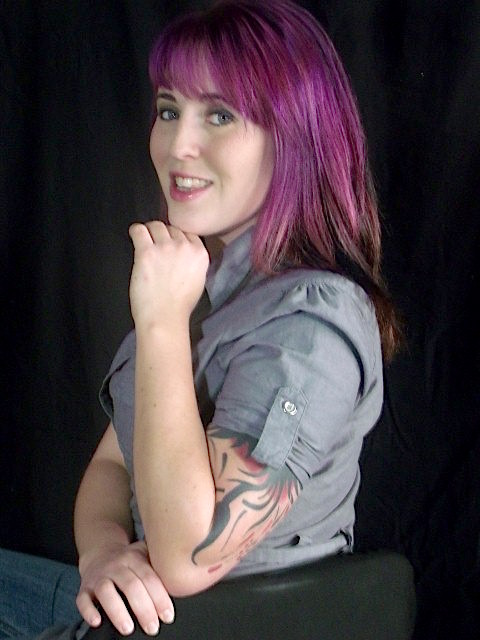
GEDSC DIGITAL CAMERA

GEDSC DIGITAL CAMERA

Laura A. Lord is the author of numerous collections of vignettes and poetry and one awesome children’s book about a T-Rex screwing up her entire day. It’s absolutely a true story.

Laura’s work has been featured in The Beacon, The Collegian, Whirl with Words, Tipsy Lit, Precipice, Scary Mommy, The Powder Room, The Reverie Journal, and Massacre Magazine.

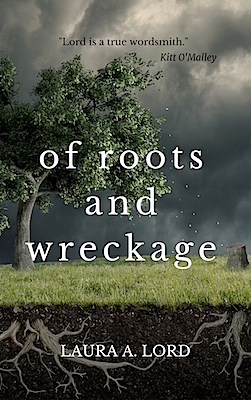
Her newest collection, Of Roots and Wreckage, focuses heavily on where she grew up. Split into three sections, this collection explores the ideas of “roots” and hometowns, of people and change, of aging and death.

Want to win a free copy of Laura’s Of Roots and Wreckage?

Enter Laura’s Goodread’s Giveaway Here!

Here is a selection from Of Roots and Wreckage:

Summerfest

Summer’s heat made a hazy

playground visage of the street –

lightening muted colors

from the limp rag plastic signs.

Dead breeze.

Fried grease.

The gum stuck to the bottom of

my shoe and snaps with

a smack with every step like

it were still stuck between the

plump red lips of that over-dressed

old woman with her small wire

cart and her flamingo pink umbrella,

with her life packed into every square

crevasse of skin mapped out in

the wrinkles of days past

and I am young and stupid here,

with my skirt too short and my flat

belly exposed, so that the bare

expanse of my legs is a railroad

track straight to the heart of the

issue with fourteen year old girls

and their ignorant lust.

The world hangs heavy and wags

a finger in my direction to lure

me over to this place where the cream

has melted into the asphalt and

the balloons are deflated piles

of rubbery mass on the ground and the

gum smacks on my shoe, while

that battle-axe woman,

that ancient grin

with its black toothed gaping maw,

is welcoming me in to this carnival,

this celebration,

of my future scrawl.

© Laura A. Lord 2015

frontcover

Pre-order your copy now!

You can find this author and poet in all these wonderful places!

Twitter

Facebook

Soundcloud

YouTube

Amazon

Goodreads

Google +

Pinterest

Independent Author Network

Dystenium

Why The Best Reading App Available Is Not What You Think

An interesting post arguing that paper, rather than electronic reading methods are superior. Being blind I love the text to speech facility on my Kindle as it allows me to read print which, in the absence of the device would not be possible. Having said that, I love the scent and feel of hard copy books and would hate to see them vanish. A home without bookshelves is, for me difficult to imagine. For the article please visit (http://michaelhyatt.com/best-reading-app-paper.html?utm_source=Michael+Hyatt+Newsletter&utm_campaign=93dec8a7d3-rssdaily2&utm_medium=email&utm_term=0_d1fa5823d7-93dec8a7d3-250628637).

#Indie #Authors #BOOKGARAGE is for YOU…

An exciting prospect for both readers and authors. Kevin

Chris The Story Reading Ape's avatarChris The Story Reading Ape's Blog

logo

BookGarage

A dream and a vision for professional self-publishing

We are the witnesses of a (r)evolution in the publishing industry triggered by Amazon and the like.

Jeff Bezos has opened the gates and the gatekeepers are looking at each other unsure of what to do.

Self-publishing has created a marvelous thing: everyone can publish a book, and establish a one-to-many direct relationship with readers who buy and enjoy the new voices.

There’s a terrible monster that haunts the publishing valleys, too: everyone can publish a book, and readers are exposed to the slush pile for the first time visible to the many. Recently, Books-A-Million has declared that its bookstores will be equipped each with POD printers. “Every book is printed because it has been sold,” breaking the old paradigm stating that “every printed book maybe is sold.”

The advent of cheaper and cheaper flash printers, together with higher and higher…

View original post 894 more words

Poet Charles Bukowski’s Last Poetry Reading

Poet Charles Bukowski’s last poetry reading, (https://www.youtube.com/watch?v=QB6IyLTvB7M&feature=em-subs_digest-vrecs). The event contains much bawdiness interspersed with the odd poem. If you enjoy Bukowski’s work the performance is worth watching, however much of the performance consists of exchanges between Bukowski and the audience, rather than the poet reading his poetry.

How To Get Your Book Into A Library

I am fortunate to live within 10-15 minutes walking distance of Upper Norwood’s Joint Library, the oldest and, I believe the only independent institution of it’s kind, (http://uppernorwoodlibrary.org/).

In search of ways to get my book, “Dalliance: A Collection of Poetry and Prose” into the hands of more readers I visited the library to ascertain whether they would add it to their shelves. To my delight a librarian confirmed the library would be pleased to accept my book. Its wonderful to know that “Dalliance” is available for the residents of Noorwood to enjoy.

The following article contains useful advice on getting a self published book into a library, (http://www.wikihow.com/Get-a-Self-Published-Book-into-Libraries). The article mentions the importance of specifying that you wish your book to be added to the library’s stock rather than sold. This is good advice and I asked the librarian to add “Dalliance” to the library’s shelves rather than selling it.

My experience diverged from the advice contained in the article in the following manner. The article refers to many libraries requiring more than one copy of a book. I offered the Upper Norwood Joint Library 2 copies of “Dalliance”. However the librarian politely advised me that it is their policy to only accept 1 copy of a book.

On my next visit to the city of my birth, Liverpool I will make a point of popping into Liverpool’s central library and donating a copy of my work.


Kevin