Tag Archives: disability

The Dangers Posed by Electric Cars to Blind People

maxresdefault

The Guide Dogs for the Blind Association (the UK charity which trains assistance dogs for visually impaired people) is campaigning to raise the issue of the danger posed by electric cars to those with sight loss.

Electric vehicles make little noise which make them particularly dangerous to people who are visually impaired and rely on their hearing to get around safely.

To watch the video please follow this link:

http://www.guidedogs.org.uk/supportus/campaigns/#.V7AUojVMTIU

Disability

I hear
The sea in my ear.
It’s waves ever near
Go swish swish.
I wish
They would withdraw.
But what if the roar
Should cease
Leaving a deafly peace?
To be blind and without sound
Is to some a horror profound.
Yet many who in silence dwell
Do not consider it hell.

Society puts it’s fear
On those who can not hear
And finds
In the blind
An object of pity
For it is easy to patronise
Those with no eyes.
“I could not cope
And would abandon hope”
They say
While the disabled shrug
And get on with their day.

Interview with visually impaired writer Susie Steiner

My thanks to my friend John for drawing my attention to this interesting interview with visually impaired writer and Guardian columnist Susie Steiner, (http://www.bbc.co.uk/programmes/b0766g1s). The interview, which starts approximately 10 minutes into the programme, covers matters such as the impact of blindness on Susie’s writing.

Kevin

“Mobility Matters: Stepping Out In Faith” – Book Review

A review of “Mobility Matters: Stepping Out In Faith ” (http://doublevisionblog.com/2016/02/24/book-review-mobility-matters-stepping-out-in-faith/).
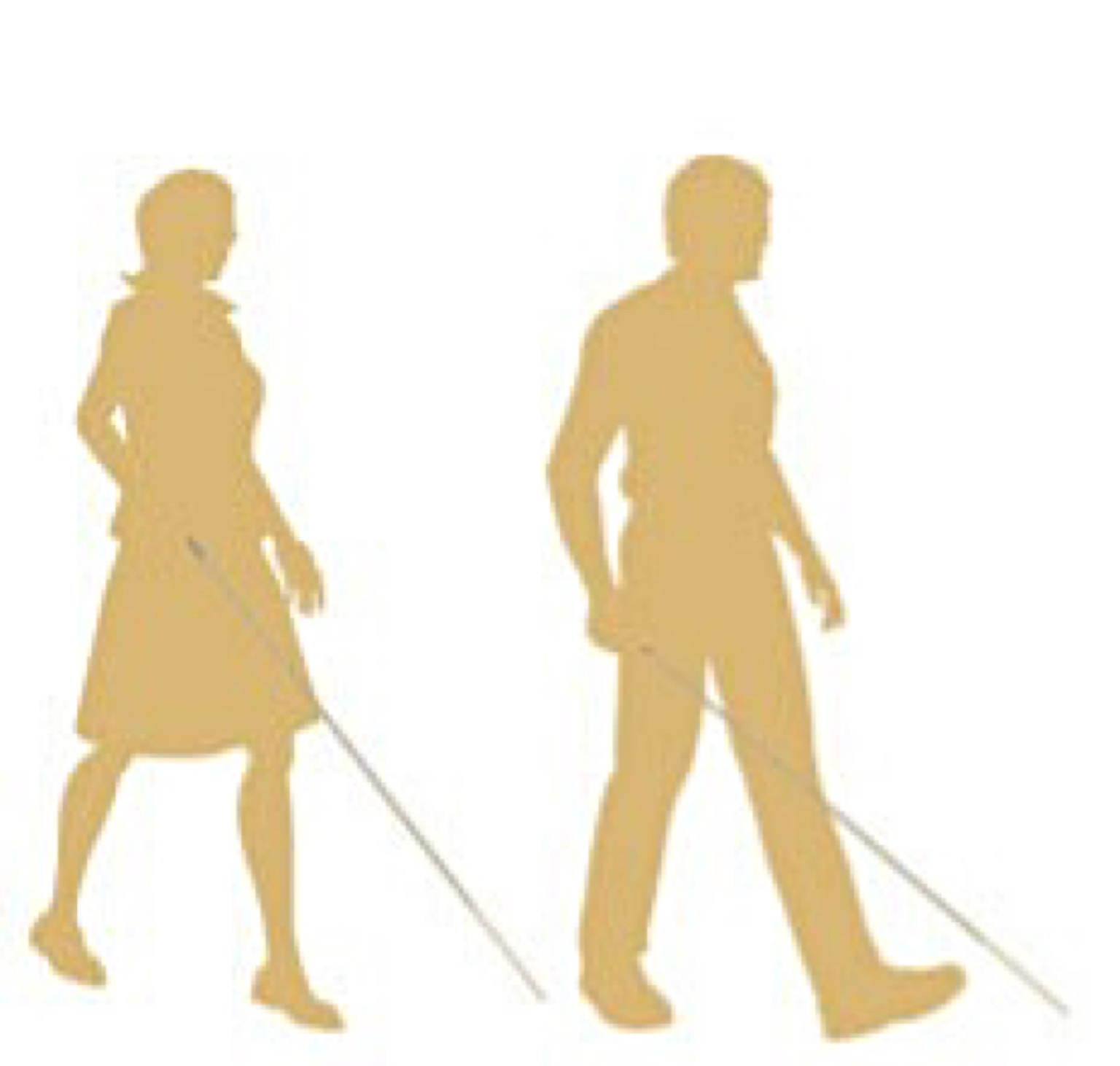
As a visually impaired guide dog owner, I was interested to read this review of a book regarding one lady’s experience of mobility training, using a long white cane. Prior to getting my first guide dog, Drew I used a long white cane and have happy memories of it getting stuck in cracks between the pavement or bent into the shape of a banana following a close encounter with a lamp post or tree (oh happy days)!
Yesterday I fell into conversation with a colleague who asked how visually impaired people, who are not guide dog users cope as regards mobility. I was surprised by the question as the majority of those who are partially sighted or blind do not, in fact use guide dogs but utilise (as in the case of the above) a long white cane. In my view its vital that guide dog owners should possess the capacity to use a cane as the dog may become ill or, on rare occasions it may not be possible (or advisable) to use their four legged friend. For example several months ago my present guide dog, Trigger had several benign lumps removed which meant he was not able to work for 10 days. During this period I worked from home and utilised my white cane when out and about.

Kevin

Kevin In The Lion’s Den

Yesterday, I entered the lion’s den and survived to tell the tale! There where 20 lions in total. They sat in silence for most of the time, the quietness of the room being occasionally punctuated by an approving roar (sorry laugh) when I (or my fellow poet and colleague, Toby Wheeler) regailed the audience with a humorous poem. At the end of both performances these mighty beasts of the jungle put their paws together and clapped, leaving both Toby and I to emerge to fight another day!
To be wholly serious for a moment. As a visually impaired person (I can discern outlines but not facial features nor can I read print), it was impossible for me to see the faces of the audience. Where they nodding in approval, listening with undivided attention or glancing at their watches praying for the event to end! The sound of laughter during my humorous poems gave me an indication that my performance was not sinking like a lead balloon. However, as mentioned above, the audience was, for much of the reading silent making it impossible for me to ascertain their mood.
Following the reading, I chatted to a colleague and asked his opinion as to how my reading had gone down with the lions. As a sighted person he, also found it difficult to ascertain the mood of the audience. However his impression was that they enjoyed the performance which strengthens me in my desire to give further readings.
So hear I stand neither blooded nor bowed. I hope to give further readings in the near future and will post details on this site once dates are confirmed.

Kevin

Please Support RNIB’s Campaign To Protect The Right Of Visually Impaired Persons To Continue To Receive Personal Independence Payment (PIP) By Writing To Your MP Before 29 January 2016

image

The UK government is consulting on possible changes to Personal Independence Payment (PIP), a benefit paid to disabled people which, if implemented could lead to blind individuals losing some (or all) of the financial support they are currently receiving. The purpose of PIP (previously known as Disability Living Allowance) is to provide support to disabled people as regards the extra expenses they face as a consequence of being disabled. So, for example a blind person such as myself may (and, in my case does) use part of their Allowance to pay for someone to read printed material to them. The Royal National Institute Of Blind People (RNIB) is asking that people contact their Member of Parliament (MP) requesting them to right to The Secretary Of State For Work And Pensions, Ian Duncan Smith, to express opposition to the proposed changes. You can find details of the RNIB campaign by following this link, http://www.rnib.org.uk/campaigning-current-campaigns-employment-and-welfare/pip-campaign. I would very much appreciate it if you would please consider writing to your MP in support of RNIB’s campaign. The consultation closes on 29 January 2016 so an email to your MP before that date would be much appreciated.

Thank you for reading.

Kevin

To The Young Lady Who Assisted Me Across The Road

Girl’s long scented hair
For a moment there.
Then she is gone
And I continue on.

As a visually impaired guide dog owner, I frequently accept (and sometimes request) assistance from the public when crossing busy roads. The above was sparked by the young woman who assisted me in crossing the road earlier today.

Working With Guide Dogs

On Wednesday 2 December I gave a talk about my experience of working with guide dogs. Below are extracts from that presentation.

I remember being struck on reading Charles Dickens, “A Christmas Carol” by the reference to guide dogs. Speaking of Scrooge Dickens writes,
“Even the blind men’s dogs appeared to know him; and when they saw him coming on, would tug their owners into doorways and up courts; and then
would wag their tails as though they said, “No eye at all is better than an evil eye, dark master!” (http://www.gutenberg.org/files/46/46-h/46-h.htm).
Researching the history of guide dogs, I have been unable to discover any record of guide dogs being trained in the United Kingdom until the 1930s, when the Guide Dogs For The Blind Association was established (the same charity that trains guide dogs today). However the reference to blind men’s dogs in “A Christmas Carol” indicates that dogs where being used by blind people in Victorian England. I can only surmise that visually impaired people trained the dogs themselves or training took place with the aid of family and friends.
The history of guide dogs does, however go back far beyond the 19th century. A roman sculpture exists of a blind man being lead by a dog, while a plaque from the middle ages shows a blind man being lead on a leash.
In the late 18th century the Paris hospital for the blind trained guide dogs.
It appears that the first (modern) and systematic attempt to train guide dogs took place in Germany. A German Doctor left his dog with a patient while he was called away to business elsewhere. On his return he was so impressed by the way in which the dog had been looking after his patient that he determined to train dogs as guides for the blind. The doctor’s work lead to the establishment of several guide dog schools in Germany and there is evidence of dogs being sent to the UK amongst other countries.
The work of Doctor Stalling inspired the founding of The Seeing Eye in the United States which trained dogs for the blind and (later) the establishment of The Guide Dogs For The Blind Association in the UK. (http://www.guidedogs.org.uk/aboutus/guide-dogs-organisation/history#.VmMIbL-yKSo).

I am now working with my fourth guide dog, a lovely brindle lab/retriever called Trigger. All of my companions have been male with the exception of my third dog, Drew, a lovely yellow lab/retriever who sadly died in March 2011 as a result of a heart attack.
Guide dogs are trained to walk in a straight line and to avoid obstacles. On reaching an obstacle they can not navigate the dog stops and it is then incumbent on the owner to assess the situation and (if in any doubt as to how to proceed) to ask for sighted assistance.
Guide dogs are taught to stop at kerbs and to only go into the road at the command of their owner. Guide dogs lack the capacity to know that vehicles pose a danger (there sitting at kerbs is, therefore purely down to their training). However guide dogs are taught not to go into the road when a vehicle is approaching. However owners are told not to rely on the dog taking evasive action as they have no understanding of road safety (I.E. it is a useful aspect of training but the responsibility for safety remains fairly and squarely on the shoulders of the owner). Having said that, Trigger has, on several occasions pulled me back when I have misjudged the situation and attempted to cross as vehicles approach.
In the UK guide and other assistance dogs are allowed by law to enter food and other premises which pet dogs are prohibited from entering. It is, in fact an offense for a provider of goods or services to refuse entry to a working guide dog. Despite the legislation discrimination does, unfortunately persist and I have myself experienced it on a number of occasions.
In conclusion, guide dogs enhance the independence of visually impaired people and on a much deeper level provide companionship. I and other guide dog owners have built up strong bonds with our dogs who are, to us much more than mere working animals.

Can I touch Your Face?

Being blind

I sometimes find

myself wondering what women look like.

With little sight

it is impossible to tell

so why do I on this subject dwell?

I do perceive

that a voice may deceive.

Girlish tones

Can belong to old crones.

A scent draws me in

thoughts of skin

and sin.

“Would you like to touch my face?”

“This is not the place

my dear.

People are near.

Besides we have only just met.

I don’t even know your name yet”!

She lingers.

Thinking of sensitive fingers

Loss of sight

does not equal no delight …


White Cane In Hand (Humour)

Prior to getting my first guide dog more years ago than I care to remember, I used a long white cane as a mobility aid and to prevent accidents. I still possess a cane, however I now rarely use it preferring the services of my trusty steed (sorry guide dog Trigger). The below post by a visually impaired lady about her white cane is extremely funny and resonates with me, http://doublevisionblog.com/2015/07/26/white-cane-in-hand-a-parody-of-green-eggs-and-ham/.


Kevin