Author Archives: K Morris Poet

Unknown's avatar

About K Morris Poet

The purpose of this website (kmorrispoet.com) is to showcase my writing. For details of my published works, please click on the 'About' page of my blog.

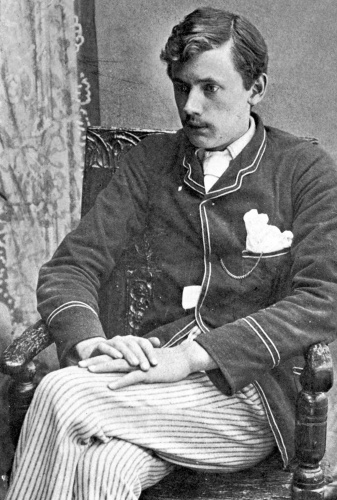
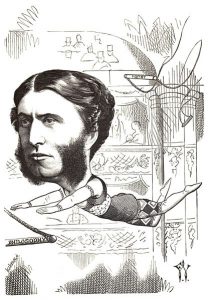
A Very Short Biography of Matthew Arnold

Dover Beach is one of my favourite poems and one to which I return regularly.

InterestingLiterature's avatarInteresting Literature

An interesting introduction to Arnold’s life

Matthew Arnold (1822-88) is best-remembered as a poet, although very few of his poems remain widely known. ‘Dover Beach’ is the most famous of these. But he led a curious life and has left us with some lasting legacies, so in this post we intend to offer a very short biography of Matthew Arnold, taking in the highlights of his life and work.

Matthew Arnold was born in Surrey, England on Christmas Eve 1822, the son of Thomas Arnold, influential and celebrated schoolteacher and Headmaster of Rugby School, where young Matthew studied. Thomas Arnold would later be immortalised in the Thomas Hughes classic Tom Brown’s Schooldays (1857). Arnold – Matthew, that is – had to wear leg braces for two years during his childhood to correct crooked legs.

View original post 469 more words

A review of my book, “Refractions”

Refractions

I was delighted to receive the below review for my recently released collection of poetry, “Refractions”: “To be able to capture the world with words that allow another to experience the inspiration that created the poem, is a true talent. K. Morris has such talent.

His poetry has an artistic quality that keeps you going back for more long after the first read. You would not know that he is blind, as his words show you what he sees, with his heart. His imagination, wisdom, sense of humor and appreciation for life pours out onto each page. This is Kevin’s bestwork to date!”.
For the above review please visit, HERE

To read a free sample or to purchase “Refractions” please visit https://www.amazon.com/dp/B01L5UC2H2 (for the US) or https://www.amazon.co.uk/dp/B01L5UC2H2 (for the UK).

Many thanks to Annette for the above review.

Why I Prefer “Real” Books

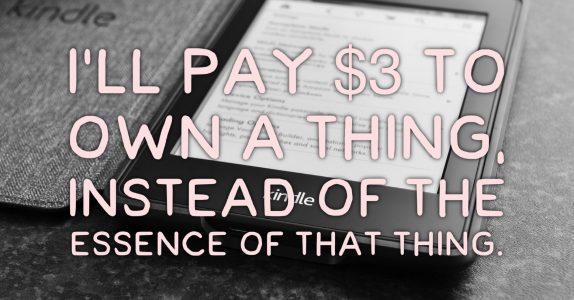
Some good arguments in support of physical books over their ebook cousins. As someone who is registered blind and unable to read print, I value electronic books as the text to speech facility on my Kindle enables me to have a book (which I would otherwise be unable to read) read aloud to me. While I can read braille and value the hard copy braille books I own, it takes up much greater amounts of shelf space when compared to it’s hard copy (print) counterpart. In addition only a fraction of the books produced in print and/or in electronic format are ever transcribed into braille. Having said all that, I love the scent and feel of real (physical) books and own quite a few which I read using a scanner (something like a photocopier) which is equipped with speech software that turns the scanned text into speech. Had I the ability to read print without the need to scan it, I would, undoubtedly own far more “real” books than is currently the case. Long may the physical book continue say I! Kevin

My latest collection of poetry, “Refractions” is available to purchase in the Amazon Kindle store

Refractions

I am pleased to announce that my latest collection of poetry, “Refractions” is available to purchase in the Kindle store. To read a free sample of “Refractions”, or to buy the book, please visit Amazon HERE (for the UK) and HERE (for the US).

The book description for “Refractions reads as follows:
“The poet may redact
The light that through his poem does refract.
But the reader will therein construe
That she believes to be true”.

Light refracts causing confusion as to where it is going in the same
way that poems do. What the reader thinks the poet means and
what he actually does are often 2 rather different things but readers
will, none the less draw their own conclusions (eroneous or
otherwise).

(For my previous collection of poetry, “Lost in the Labyrinth of My Mind” please visit http://moyhill.com/lost/).

“Autumnal” by Ernest Christopher Dowson

Yesterday evening, I sat in my living room leafing through “The New Oxford Book of English Verse”. Pausing at Keats, I read several of his poems, the last one among them being “Autumn”. “Autumn” is one of those poems which refreshes the jaded soul and causes the reader to gasp in wonder at the sheer beauty of the poet’s creation.
Having read Keats, I was minded to reproduce “Autumn” on this site. However “Autumn” is well known and rather than quote a much loved and well known poem, I have chosen instead to share Ernest Christopher Dowson’s poem, “Autumnal”:

image

“PALE amber sunlight falls across
The reddening October trees,
That hardly sway before a breeze
As soft as summer: summer’s loss
Seems little, dear! on days like these!

Let misty autumn be our part!
The twilight of the year is sweet:
Where shadow and the darkness meet
Our love, a twilight of the heart
Eludes a little time’s deceit.

Are we not better and at home
In dreamful Autumn, we who deem
No harvest joy is worth a dream?
A little while and night shall come,
A little while, then, let us dream.

Beyond the pearled horizons lie
Winter and night: awaiting these
We garner this poor hour of ease,
Until love turn from us and die
Beneath the drear November trees”.

Grumpy Interview

An amusing interview with Lucy Brazier, the creator of “Secret Diary of Portergirl”.
Kevin

Lucy Brazier's avatarLucy Brazier

I wasn’t my usual chipper self when giving this interview, and when I received the notes back I realised that I sound like a proper arsey little madam!

00 lucy 2 Looking pretty arsey here.

1. I was surprised when you told me that Porters in a College don’t actually carry any bags for anyone. They simply guard the keys.

Portering is far more than just guarding keys, I assure you! The Porters ensure the smooth running of the day-to-day business of College life, handling everything from the post to broken hearts. They are the backbone of academia – providing security, advice and a friendly ear at any time of the day or night. Guarding keys, indeed. Pah! Philistine. 

2. PorterGirl is a work of fiction but based heavily on your life as the first female Deputy Head Porter at a Cambridge college. What was the hardest thing about writing this book?

There…

View original post 1,053 more words

Nostalgia

In a recent article in The Daily Mail, entitled “Forget the Age of Plenty, We Were Happier in the 1700’s” (http://www.dailymail.co.uk/news/article-3756368/Forget-age-plenty-happier-1700s-Briton-s-content-life-era-slums-gin-mothers-workhouses-today.html), it is reported that research shows the 18th century was the period in which people were happiest, despite the grinding poverty in which much of the population lived.
The above article reminded me of a comment made by a reviewer of my collection of poetry “Lost in the Labyrinth of My Mind” that “ There is a feeling of nostalgia in some poems, e.g. “Modernity”, (https://emmalee1.wordpress.com/2016/05/11/lost-in-the-labyrinth-of-my-mind-k-morris/). The poem is reproduced below in order that my readers may judge for themselves:

“Give me something real

Not this plastic I feel.

Give me books in cloth boards

That I may not be bored.

Give me a chime

To measure time.

Give me solid wood

To caress and love.

Give me objects that last

A link to the past.

The world moves fast

Vast

Nothingness beccons.

Enumerable seconds

engaged

In rage

Against the gleam

Of the machine

That haunts my dream”.

(For “Modernity” and the other poems in “Lost in The Labyrinth of My Mind” please visit http://moyhill.com/lost/.