Monthly Archives: January 2018

Does he take sugar?

Yesterday evening, while out for a meal with my friend Brian, I was reminded of the former programme on BBC radio 4 entitled “Does he take sugar?” The programme derived it’s title from the question posed to the non-disabled companion of a disabled person, as to whether the person with a disability wanted sugar in his tea. The obvious point being that the question should have been directed to the disabled person (not to their companion), as by addressing the non-disabled individual the man/woman posing the question was patronising the disabled person.

To return to my meal yesterday evening. As a blind guide dog owner I have been eating in this restaurant for approximately 18 years. The food is (almost invariably good) and the service (usually excellent). Yesterday evening our waiter was attentive and the food arrived promptly and tasted as a good Indian curry should taste. However the waiter proceeded to address Brian (who is fully sighted/non-disabled) and asked “Is the dahl his”, “is the chicken his”.

The above was most odd as I have (as I said above) been eating in this restaurant for some 18 years or so. I sometimes pop into the place alone and enjoy a quiet meal and on these occasions the waiter in question has interacted with me in a civil and friendly way. It is, therefore most bizarre that yesterday evening he chose to basically ignore me and interact with my non-disabled friend.

To ignore a disabled person and interact with their companion is deeply disrespectful. It is, in effect treating the person with a disability as a non-person (as though they where incapable of thinking and acting independently). In the vast majority of cases those with disabilities are more than capable of answering for themselves and treating them as non-persons is deeply demeaning. There are, of course exceptions to this. For example a minority of people with very severe learning disabilities are not capable of making decisions for themselves and do need others to act and speak on their behalf. However many other people with learning difficulties do live independently and are capable of speaking for themselves and the assumption should always be that an individual is able to represent him/herself unless their exists strong evidence to the contrary.

Some people fear what they have not encountered and this may help to explain why they disregard the person who is disabled and choose instead to interact with their non-disabled companion. More education is needed to drive home the point that those who are disabled are persons in their own right and are possessed of thoughts, hopes and desires in the same way as are their non-disabled peers. I will, I feel sure encounter other incidents of this nature. It is deeply depressing and all I can do is keep my temper and politely request that the person doing the patronising please address me and not my non-disabled friend.

Kevin

What is the point of poetry?

A good article in “Spiked”, by Joe Nutt, entitled “What is the point of poetry?” I agree with the thrust of this piece and, in particular with the concluding sentences,
“In the great and even not so great outdoors, I notice much more. Poetry has been, and is, a way for me to understand my life better, and because of that, I believe those closest to me benefit, too. Because I share the world with flesh and blood living beings, not with cables, screens and keyboards”.
For the article please visit http://www.spiked-online.com/newsite/article/what-is-the-point-of-poetry/20778#.WmMqfIinzIV.

There Was A Young Lady Named Sally

There was a young lady named Sally
Who said “I shall your sins tally”.
I made reply “and I yours,
But behind firmly closed doors
Who knows how we dilly and dally! …

To a Poem is a Bott the Stranger

I have know knowledge of coding. Consequently parts of this very interesting post had me scratching my head. However the long and the short of it appears to be that coding bots can produce poetry of a kind. Perhaps the deeper philosophical question centres around not whether coding bots can write poetry, but whether they will ever be able to comprehend what they write and (even more profoundly) whether comprehension equates to feeling. A beautiful scene reduces many to tears of joy (the delight of melancoly) and poets reflect this in their verse. Likewise the beauty of the singing of the thrush in Thomas Hardy’s “The Darkling Thrush” leads the poet to muse on how the bird can produce such wonderful music when all around the landscape is desolate, as is the poet’s mood. Kevin

There Was A Young Labrador Named Muff

There was a young Labrador named Muff
Who’s knowledge of grammar was extremely rough.
He thought correct spelling a pain
And said “I will always maintain
That all one needs is a woof!”.

Youtube Vlogger Accuses Dublin Hotel Of Bullying Her

From time to time, I come across posts encouraging bloggers to request “freebies” in return for either reviewing the product/service in question, or providing free publicity for said product and/or service.

A Youtube Vlogger, Elle Darby, approached a Dublin hotel asking for a free stay for her and her partner, over Valentine’s weekend, in return for providing the hotel with free exposure on her Youtube and Instagram. The hotelier, Paul Stenson was not impressed and informed Ms Darby of his displeasure in no uncertain terms. The exchange has now gone viral with a good deal of abuse being heaped on the vlogger’s head.

Whatever the rights and wrongs of Ms Darby’s offer (and Mr Stenson’s response) abuse is wholly unacceptable and it is highly regrettable that Ms Darby has been attacked in such a personal manner by some who have commented on the story.

You can read more about the incident here, http://www.dailymail.co.uk/news/article-5283551/YouTube-vlogger-accuses-Dublin-hotel-bullying-her.html.

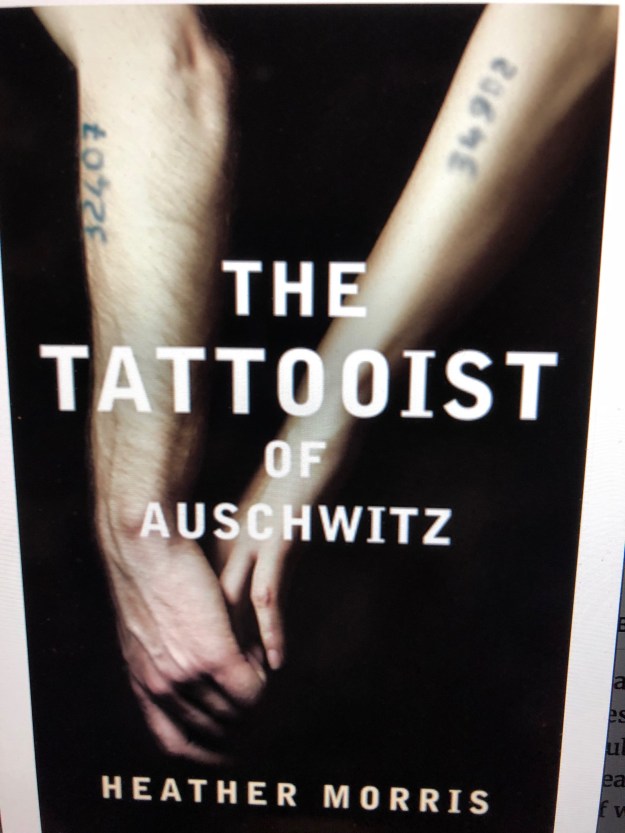
My Review of “The Tattooist of Auschwitz” by Heather Morris

lindasbookobsession's avatarLinda's Book Obsession:

image_537969510057697

My Review of “The Tattooist of Auschwitz ”  by Heather Morris

Kudos to Heather Morris, Author of “The Tattooist of Auschwitz” for combining the Historical Fiction and Fiction genres. From the Goodreads Blurb”, “The “Tattooist of Auschwitz” is based on the true story of Lale and Gita Sokolov two Slovakian Jews who survived Auschwitz and eventually made their home in Australia.”

In this novel, Heather Morris portrays Lale as a charming, and enterprising individual. To save his family, Lale volunteers to leave with the German Gestapo, believing that his family will be safe. Of course, Lale realizes when he is in a crowded  Cattle Car, he suspects that this is the beginning of a devastating time. Lale does reach out and helps calm some other men. In Auschwitz, Lale somehow finds himself becoming The Tattooist,  having to tattoo the numbers on his fellow prisoners. There he meets Gita, a young…

View original post 197 more words