There was a young lady named Kate
Who wished to abolish the state.
She became an anarchist bold
But lo and behold
The state outlasted Kate
There Was A Young Lady Named Kate
Leave a reply
There was a young lady named Kate
Who wished to abolish the state.
She became an anarchist bold
But lo and behold
The state outlasted Kate
Hobbes
Lobs
Bricks at Locke,
While Lenin’s work
Is excoriated by Burke.
Friedman stands aloof
Believing he holds the absolute truth,
While Engels continues his long wait
For the end of the Capitalist state.
—
1. I studied history and politics at University College of Swansea and read all of the below works during the course of my studies. The books still reside on the bookshelves which live in my spare room, which I glorify with the name of study!
2. Thomas Hobbes was a philosopher who, in 1651 published “Leviathan”, http://www.gutenberg.org/ebooks/3207. Essentially Hobbes argues in favour of a government with absolute power as a means of preventing a return to “the state of nature” which is, for Hobbes a “state of war of every man against every man”. People should not challenge governmental authority as this will lead to chaos (in other words any authority is better than no authority). However, if a government does fall then the populace should give its loyalty to the new authority. Hobbes view of human nature is bleak and in part at least flows from his experience of the bloody anarchy which flowed from the English Civil War which saw the execution of King Charles I.
3. John Locke was a Whig philosopher who in his “Second Treatise of Government” defended the right of the people (if all else failed) to overthrow a tyrannical government. The “Second Treatise” was, in part at least a defence of the “Glorious Revolution” of 1688. The “Second Treatise” can be found here, http://www.gutenberg.org/ebooks/7370.
4. Lenin was the leader of the Bolshevik Revolution of 1917 in Russia. One of his best known works is “The State and Revolution” in which he sets out his view on how the Capitalist state will be replaced by a socialist/communist society, https://www.amazon.com/State-Revolution-V-I-Lenin/dp/0717801969.
5. Edmund Burk is often regarded (in a philosophical sense) as being the founder of modern Conservatism. In his “Reflections on the Revolution in France” Burke roundly condemns the French Revolution and argues that such uprisings inevitably lead to anarchy and Terror. Consequently Burke stands diametrically opposed to Lenin. You can find “Reflections” here, http://www.constitution.org/eb/rev_fran.htm.
6. Milton Friedman was a major contributor to the free-market school of economics. In his “Free to Choose” co-authored with his wife Rose, he argues in favour of personal and economic freedom. “Free to Choose” is, in all probability the most accessible of Friedman’s works and is based on a television series of the same name, https://en.wikipedia.org/wiki/Free_to_Choose.
7. Engels was Marx’s friend and produced several works of his own, including “Socialism Utopian and Scientific”, in which he criticises what he regards as “utopian” socialism, which he contrasts with what he argues is the “scientific” socialism of Marx. As with Marx, Engels believed that Capitalism would inevitably collapse and be replaced by communism for (according to Engels), the laws of science proved the inevitability of communism’s triumph, https://www.amazon.com/dp/0717801918.
There was a young lady of Dutch extraction
To whom I felt an attraction.
She was a lover of art
And lived in my heart,
But to her I was a mere abstraction!

I hope people will read my writings after I have ceased to be. This is perhaps somewhat peculiar in that I possess no certainty of life after death (being inclined to agnosticism). If one will have no awareness after one has shuffled off this mortal coil, then why concern oneself with the survival of one’s writings? None the less I do (as stated above) hope that my work will survive and in some small way enrich the lives of future generations. Kevin
Death, the one thing that is inevitable. It cannot be stopped. Life can be prolonged but death cannot be conquered. It comes from the darkness, taking its due.
But not all is sadness, for as writers, we have abilities that can even live long past our own death.
I am talking about our legacy.
We write stories each day. We create epic journeys of heroes conquering evil, of forgotten races rising from the depths and of love appearing in places of darkness; and we sometimes forget that we can change peoples lives.
We as writers can change so many peoples lives, every single day.
With this post, however, I am speaking about, in particular, our legacy.
The Macmillian Dictionary states legacy as,” something that someone has achieved that continues to exist after they stop working or die.”
I strongly believe that a writer’s legacy is incredibly important. Our life stories…
View original post 199 more words
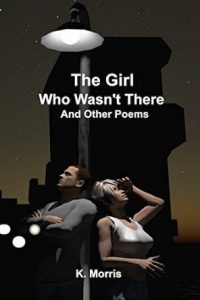
Below are 2 poems, “The Girl Who Wasn’t There” and “Two Voices”.
Both poems can be found in my collection of poetry, “The Girl Who Wasn’t There”, which was published in September 2015 and can be found HERE.
—
I am the girl who wasn’t there.
I did not sit upon that chair,
Playing provocatively with my hair.
I did not drink that expensive wine,
While gazing on your paintings fine.
I did not recline under the quilt so red,
Or moan with ecstasy in your bed.
If, by chance, an earring she should find,
Worry not; it is not mine.
—
You talk to me of lambs gambolling, of ramblers ambling, through fields green, beside the meandering stream.
You speak to me of verdant bowers, where lovers while away the hours, in love’s young dream.
I tell you of an urban street, where the gale buffets and people battle to retain their feet.
I impart to you the wind’s loan moan, as I wander home alone, in weather bleak.
There was a young man named Sleary
Who advocated Marx’s theory.
When his ideas failed to come to fruition
He said “the people require more tuition,
For there is nothing wrong with the theory!”.
Two is company but three
Is a crowd you see.
Yet for some three is the magic number.
Fear of judgement may encumber
The desire to fish
But still waters run deep
And the wish
To sleep
May overtake
And secret fires wake
There was a young poet named Zeff
Who wrote a poem about death.
The Grim Reaper heaved a great sigh
And said “I have long pondered on why
You poets are so obsessed with death”.
Thanks to Annette for bringing this day to my attention.
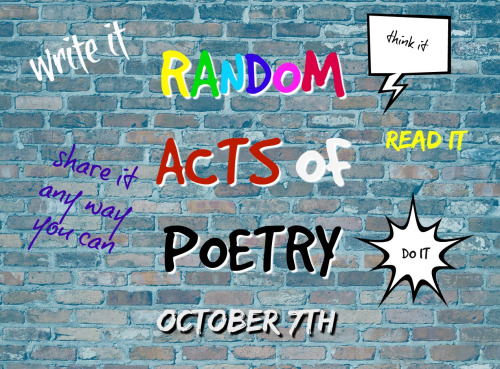
Calling ALL scribes! This is a terrific opportunity for you to let your voice be heard, as Saturday, October 7th is
RANDOM ACTS of POETRY DAY
Whoa! Are they sure they know what they are doing here? Unleashing bards and bardettes from all over the world to explode with poetic joy, any and every where they are? Methinks, this could be one for the books…
or walls…
or coffee houses…
All of you who have a poem or two in your boodle bag, this is day to bring it out for some fresh air! Write it on a wall (okay, write it on a sticky note and LEAVE IT on a wall), sing it in your car or pretend you are part of an invisible flash mob and get it going while you are walking through the mall. Imagine that all the ghosts of poets past, are joining you, one…
View original post 371 more words
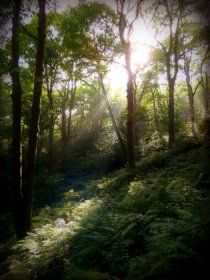
Being blind I can not see the photograph. I am, however rather taken with the poem.
A
shaft
of light
illuminates one tree
and silhouettes in stark relief
the ravages of Autumn’s dessicating wind and warmth
Source: Change of Season


 K Morris - Poet