This is beautiful.

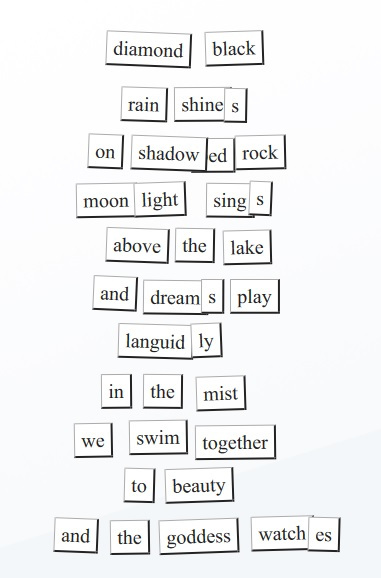 Diamond black
Rain shines
On shadowed rock.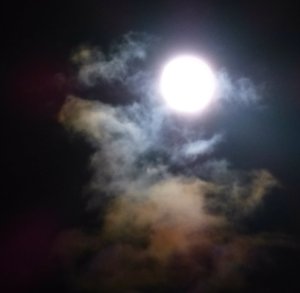
Moonlight sings
Above the lake
And dreams play
Languidly
In the mist.
We swim together
And the goddess watches.
This is beautiful.
Diamond black
Rain shines
On shadowed rock.
Moonlight sings
Above the lake
And dreams play
Languidly
In the mist.
We swim together
And the goddess watches.
Its fascinating to learn that the ancient Greeks may have reached China long before Marco Polo did.
Newark Abbey
August, 1842
with a remembrance of August, 1807
I gaze, where August’s sunbeam falls
Along these grey and lonely walls,
Till in its light absorbed appears
The lapse of five-and-thirty years.
If change there be, I trace it not
In all this consecrated spot:
No new imprint of Ruin’s march
On roofless wall and frameless arch:
The hilss, the woods, the fields, the stream,
Are basking in the self-same beam:
The fall, that turns the unseen mill
As then it murmured, murmurs still:
It seems, as if in one were cast
The present and the imaged past,
Spanning, as with bridge sublime,
That awful lapse of human time,
That gulph, unfathomably spread
Between the living and the dead.
For all too well my spirit feels
The only change this place reveals:
The sunbeams play, the breezes stir,
Unseen, unfelt, unheard by her,
Who, on that long-past August day,
First saw with me those ruins grey.
Whatever span the fates allow,
Ere I shall be as she is now,
Still in my bosom’s inmost cell
Shall that deep-treasured memory dwell:
That, more than language can express,
Pure miracle of loveliness,
Whose voice so sweet, whose eyes so bright,
Were my soul’s music, and its light,
In those blest days, when life was new,
And hope was false, but love was true.
There was a young lady called Gay
Who ate apple pie every single day.
She preferred it with mustard
And refused to eat custard.
As to why? She refused to say!
There was a young lady called Claire
Who fell asleep while climbing the stair.
Should you ask me why
I shall make reply,
“How would I know, I wasn’t there!”
I was recently reminded of Sleary’s words, to Mr Gradgrind, in “Hard Times”:
“People mutht be amuthed. They can’t be alwayth a learning, nor yet they can’t
be alwayth a working, they an’t made for it”.
It happened in this manner. I fell into conversation with an acquaintance in the pub, who mentioned that a friend had said words to the following effect:
“Poetry should be serious. Proper poetry isn’t humorous”.
I am the first one to defend serious poetry. The expression of heartfelt melancholy as in Keats “Ode to a Nightingale”, or Dowson’s “They are not long the weeping and the laughter”, engenders in me a profound sense of connection with the poet, long since deceased. I feel as they felt or as close to it as it is humanly possible to feel. Serious art (whether poetry or otherwise) has the power to shake us out of our complacency, make the strong man weep or simply cause the reader to reflect deeply on existence and her place in it.
Humorous verse does, in contrast cause us to laugh outloud, as in Lewis Carroll’s wonderful Jabberwocky, or Edward Lear’s “The Owl and the Pussy-cat”, To possess the power to make others laugh uproariously is a real talent and those who have the capacity to do so should not be dismissed merely owing to the fact that their work is not “serious”. To misquote Sleary:
“A man can not always be serious”!
Perhaps it is attitudes such as that expressed by my acquaintence’s friend (that poetry must be serious), which help to explain (at least partially) why so many people maintain they “don’t like poetry”.
Sitting here
My mind is almost clear
Of old junk.
For now the detritus has slunk
Away to hide
Inside
The maze of my calculating brain.
The stain
Of a thing overthought
Frequently leaves me overrought.
This room is still and full of peace
So why can not my mind for long cease
In it’s whirring motion?
Must I forever be tossed upon this restless ocean?
I long for a lack of motion.
Yet there is no magic potion
To achieve a quiet soul,
A goal
Pursued by men of every nation
And station.
Though ‘tis a fact both sad and true
That inner peace is gained by so few.
The young man makes hay
And little heed does pay
To the odd grey
Hair.
With desire he does stare
At maidens fair
While the hay turns bad
And the lustful lad,
With expression sad
Sees that the grey
Has chased the brown away.
The man strays still
But the rill
Of joy is almost dry.
Try
As he might
To lose himself in sensual delight
Man does hear
With fear
Night’s footsteps, creeping near.
A researcher has launched a project to make simulations of the dead a reality. In future, he postulates you could be having breakfast with your spouse then leave for work. However you would not, in fact be eating with your partner but rather a simulation of the dear departed. This, the researcher hopes will enable those left behind to cope better with grief. Ultimately, as the technology improves the line between the living and the dead will become increasingly indistinct.
The article does touch on the dangers of such simulations, the main ones identified being the people left behind finding it easier to converse with the departed (or rather their simulation) rather than connecting with those in the living world. To my mind another risk with simulations of this nature is that rather than assisting the bereaved to move on, they become trapped in a cycle of interactions with the simulated departed spouse or friend. Of course this already happens to some extent, for example the bereaved may keep a photograph of the loved one who has died on a locket and/or a bedside table where it acts as a reminder of former times. However photographs and recordings don’t constitute full emmersion in the personality of the departed, for one is always aware that one is looking at a picture or listening to a recording. How easy to lose one’s grip on reality and come to believe the simulation is, in fact your friend or loved one and to quite literally lose the plot.
For details of the research please visit, (http://www.dailymail.co.uk/sciencetech/article-3935362/Would-bring-dead-spouse-life-VR-Researchers-say-simulations-evolution-bereavement.html).
In my poem “Death is Dead” I imagine a world in which the Grim Reaper has finally been conquered. Is this the world to which we are slowly moving?
Death is Dead
“Funeral orations are no longer spoken.
Death’s scythe is broken.
His tread echoes not
And the graveyard plot
No longer inspires dread,
For death is dead!
The ageless sit.
Some wit
Cracks a joke, but there is no laughter
As after
Countless repetitions, humour palls.
Lothario calls
On his latest conquest.
Going through the motions, he longs for rest,
For all passion has long since gone,
And women’s faces have merged and become as one.
Yet he must carry on and on …
The celebrity’s aplomb
Is frayed.
No longer is attention payed
To her.
People can only stare
Or listen to the same old song
For so long.
Death is no more.
Even the bore
Tires of his own voice
But he has no choice
Other than to bore on
For the reaper has gone
And tedium eternal is in store
For the noble and the whore”.
Strolling through Bushy park.
In the Autumn dark.
Hark,
The sound of a deer
Very near
Warning my dog to steer clear.
Other animals peacefully feed.
My dog, on the lead
Can not read
The disquiet of the first one
And trots excitedly on
With my friend and I,
Perhaps wondering why
He can not play
With this unfamiliar prey.
Reaching Hampton Court, we wander about this historic place.
Commerce’s face
Does not despoil the grace
Of the palace by night.
I think of Henry the eighth
When no man was safe
And heads fell down
When the King did frown.
Tomorrow the visitors will return.
I wonder will they discern
What I perceive,
A place full of vanished pomp and state
Where Ann Boleyn does grieve
And she, and other ghosts wait.
But it is getting late
And my friend and I repair to the pub
For English ale, and good old-fashioned grub.
—
On Saturday 12 November I took a walk through Bushy Park with my friend Brian (https://en.wikipedia.org/wiki/Bushy_Park). Our stroll took us as far as Hampton Court (http://www.hrp.org.uk/hampton-court-palace/#gs.YOB2cdI). It being after 5 pm when we reached this historic place, the palace itself was closed although we where able to wander about the grounds in the growing gloom.
 K Morris - Poet