Tag Archives: conservatism

When The Squire, Sitting By His Fire

When the squire
Sitting by his fire,
Rang the bell,
Who can tell
Whether the servant, summoned by his call
Had any desire
For the great hall to fall.

How easy ’tis to condemn
Past men.
But tell me
would you reject
The established imperfect
For a future that can never be?

Out of Place

I would
That this forest,
This little wood
In which I trace
The seasons slow pace
Could remain
The same.

Spring
Summer, autumn and winter does bring
A natural order to this changing thing
Which alters not, save in accordance with nature’s law.

The woodland floor
Is now with leaves strewn
But soon
Winter’s chill
Will
Lay an icey hand
Upon this land.

Yet it is not as before
As the forest floor
Is strewn with leaves in summers overly hot
For man has forgot
The natural order of things
And his action brings
The leaves too early down.

The town
It flows towards the countryside.
The urban tide
May rise
And sweep
That which I would keep
Away.

The planners say
“The people must have somewhere to stay.
We must build a little on the greenbelt
Where once the owl dwelt
In solitude.
We can not exclude
The young who need their own home”.

The squire has long since gone
And progress marches on.
There is nothing to hold
Dear but gold
And we are told
That we should “embrace
This marketplace
In all things, while the stupid left speak of an equality
Which can never be
For in this world of tears, we can not be
Both equal and free.

Sometimes I look back with nostalgia to the squire
And half desire
Him to rise
From his grave
And the country save
From this tide
Of progress
Where left and right contend
Over who can best defend
This sterile world of high tech screens,
While country scenes
Are lost, save in dreams.

“How to Be a Conservative”, by Roger Scruton – book Review

“How to Be a Conservative”, by Roger Scruton, is as the title suggests a defense of Conservatism.

Growing up in a working class household with a father who was deeply committed to Socialism, Scruton nonetheless discovered in his father a conservatism (of the non-political variety), for Scruton’s father was a lover of the English countryside and was possessed of a strong desire to preserve ancient buildings and the traditions of his locality.

While Scruton is a Conservative of the political kind, anyone reading “How to Be a Conservative” with a view to obtaining a detailed programme/manifesto will find instead a thoughtful defense of the philosophy of Conservatism in its broadest sense, rather than a list of proposals regarding how Conservative governments should operate. In passing Scruton does advocate choice in education via such methods as providing parents with vouchers in order to enhance choice in schooling. He also writes in support of welfare reform. However, as already stated “How to Be a Conservative” is not a manifesto.

So what is Scruton’s view of Conservatism?
Scruton argues that Socialism is a top down philosophy whereas Conservatism flows from the natural instincts of the people. People form into the “little platoons” defended by the Conservative philosopher Edmund Burke. Such “platoons” include the family, sports clubs and local charities through which people find meaning in common cause with others. For Scruton we are individuals and he criticises Socialists for what he perceives as their disregard for this self-evident fact. However the author is also critical of what he refers to as “homo economicus” (the tendency to view human activity in purely economic terms). So while Scruton defends private property and the market economy, he does so only insofar as they do (in his view) promote human flourishing. For example a good portion of the book is devoted to defending “high culture” which should not, in Scruton’s view be left to the visicitudes of the market. There is, for Scruton such a thing as “objectively” noble/good in the field of culture and there are things which constitute trash.

While Scruton defends aspects of the late Lady Thatcher’s legacy, he is critical of the obsession of many Thatcherites with economics pointing out that, in the end it is through social attachments (“the little platoons” that we flourish, not through economics.

During the existence of the former Eastern (Communist) Block, Scruton visited Czechoslavakia and met with disidents. He was arrested and expelled. His experiences behind “the Iron Curtain” help to explain Scruton’s Conservatism. In Czechoslovakia Burke’s “little platoons” had been abolished or absorbed into the state, there being no independent boy scouts or other independent institutions promoting human flourishing. Given the author’s experiences and the suffering he observed amongst disidents, one can understand why he adopts the position he does of defending those “little platoons”.

While Scruton shares the Classical Liberals view that the individual and private property should be protected from the encroachments of the state, he deplores “human rights” arguments seeing in them a potentially slippery slope leading to the lessening of human freedom. For example he mentions the decision of the courts to allow travellers to occupy a village green on the grounds that they (the traveling community) had a “right” to live somewhere. The courts did not take into account the concrete rights of the local property owners to enjoy the facilities of the village free from unwelcome intrusions. So, for Scruton there is a right to private property and to government welfare (although the latter is less than that supported by those on the left of the political spectrum).

The defense of existing institutions is, of course a cause dear to the Conservative’s heart. For Scruton (as for all true Conservatives) institutions reflect the collective history of the country and this fact leads the person of a conservative disposition to value them on account of this. For instance many people no longer attend church on a regular basis, yet the Christian ethos still plays an important role in the country and many people who would not regard themselves as religious are, nonetheless imbued with its ethos. We see the spires of churches and are glad they are there for they represent a part of who we are as a country. While things change the Conservative should attempt to shore up what is left and protect our culture from cultural relativism.

There is much in “How to Be a Conservative” with which Conservatives of all hues will agree. The defense of “the little platoons” and the scepticism regarding human nature are common to all true Conservatives. However Scruton’s support for the withdrawal of the United Kingdom from the European Union is an issue which has split the Conservative Party, while others within the Conservative fold are (unlike Scruton) less inclined to advocate “family values”. While Scruton does not use the term “family values” he is strongly supportive of the traditional (hetrosexual) family, while other Conservatives hold that the state has no business in telling consenting adults how they should conduct their sex lives.

Finally people who are not political Conservatives will, I think still nonetheless find aspects of Scruton’s arguments persuasive, for instance his love of the English countryside and his advocacy of the need to protect and preserve historic buildings. For anyone wishing to understand traditional Conservatism I recommend this book.

“How to Be a Conservative”,, by Roger Scruton, https://www.audible.co.uk/pd/How-to-Be-a-Conservative-Audiobook/B00NGVR6NO

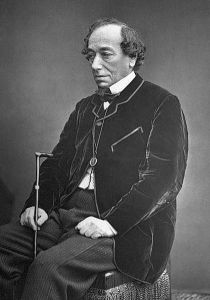
Does Disraeli Awake?

I would like to think that the author of this article is correct in his view that the Conservative Party is seeing a revival of One-Nation Conservatism/Toryism within it’s ranks, https://blogs.spectator.co.uk/2018/08/why-have-the-tories-abandoned-their-promise-to-fight-burning-injustices/?

Is Poetry Socialist?

A little while back, a friend and I sat enjoying a curry and a bottle of wine. At some point during our conversation my friend remarked on how poetry is, in some sense “socialist” or “left-wing”. At the time I said that I didn’t agree with his perspective, and our conversation moved on to other topics.

Rather than entering into an exposition of my own views on the above question, I would be interested in hearing those of my readers. Is poetry in some sense “Socialist” or “left-wing”? If so why?

Obviously there have been (and remain) Conservative poets (for example Philip Larkin). Likewise men such as W. H. Auden where of the left. However, leaving aside the fact that poets hold different political perspectives, is there some sense in which poetry appeals more to those on the left of politics? Or is the art form, in some sense profoundly Conservative with a big or a small c?

Conservatism?

“Most Conservatives for most of the time have wished to keep things as they are and believe along with the Duke of Cambridge that the time for change is when it can no longer be resisted”.
(Lord Robert Blake, “The Conservative Party from Peel to Churchill” p271).

I was reminded of Blake’s highly readable work, when I came across this article by Ryan Bourne of the libertarian Cato Institute, https://capx.co/why-are-some-conservatives-so-obsessed-with-libertarians/.  Bourne’s piece also brought to mind my own poem, “Conservatism”, which is reproduced below:

Conservatism is a scepticism regarding what some call “progress”
Coupled with a desire to redress
Genuine grievances, lest the great wall
Crumble and fall
Crushing all.

Conservatism is men who
Wish the clock
Would stop
At half-past 2
But know that this man can not do.
While the reactionary believes that one can rewind the clock
And it’s hands lock
At some frozen place
In time and space.

Conservatism is scepticism about equality
For the Conservative does see
That each tree
Is different. but the forest has a heart
And we are all part
Of an organic whole
With each being possessed of his own unique soul.

Some say
That the Conservative way
Is an obsession with the bottom line
And that selfishness does Conservatism define.
Others maintain
That economics is an obsession of the Classical Liberal’s brain
And that the liberal interloper
Should slope away.

Conservatism is walks in country parks
As the larks
Twitter high above.
It is a love
Of old friends
Who are not means to ends.
It is a desire to enjoy
And not to destroy.

The ship must be kept on an even keel
Lest we into anarchy reel.
Yet some say
That today
Many Conservatives do not behave that way …

Conservatism

Conservatism is a scepticism regarding what some call “progress”
Coupled with a desire to redress
Genuine grievances, lest the great wall crumble and fall
Crushing all.

Conservatism is men who
Wish the clock
Would stop
At half-past 2
But know that this man can not do.
While the reactionary believes that one can rewind the clock
And it’s hands lock
At some frozen place
In time and space.

Conservatism is scepticism about equality
For the Conservative does see
That each tree
Is different. but the forest has a heart
And we are all part
Of an organic whole
With each man being possessed of his own unique soul.

Some say
That the Conservative way
Is an obsession with the bottom line
And that selfishness does Conservatism define.
Others maintain
That economics is an obsession of the Classical Liberal’s brain
And that the liberal interloper
Should slope away.

Conservatism is walks in country parks
As the larks
Twitter high above.
It is a love
Of old friends
Who are not means to an end.
It is a desire to enjoy
And not to destroy.
The ship must be kept on an even keel
Lest we into anarchy reel.
Yet some say
That today
Many Conservatives do not behave that way …

“Nothing matters very much, and few things matter at all”

I am a great lover of quotations. I recently came across the below quotation by Arthur Balfour, which struck a chord with me:

“Nothing matters very much, and few things matter at all”.

In his work “The Conservative Party from Peel to Churchill”, the late Lord Robert Blake writes of Balfour in the following terms:

“The new Prime Minister was a person of immense charm, great intellectual power, and much political sagacity. Like his uncle, he took it for granted that parliamentary democracy would only work—if it could work at all—as long as “the masses” continued to elect their leaders from “the classes”. Not that he was himself, any more than Salisbury, a typical member of the order to which he belonged. He was too clever, too cool and too detached to be thus categorised …”.
(“The Conservative Party from Peel to Churchill”, by Lord Robert Blake. Eyre and Spottiswoode (publishers) LTD. Chapter 5, Tory Democracy and the rule of Lord Salisbury 1881-1902).

For anyone interested in finding out more about the enigmatic Balfour, the following article may be of interest, https://en.wikipedia.org/wiki/Arthur_Balfour.

Benjamin Disraeli

I must confess to nurturing a soft spot for the novelist and politician Benjamin Disraeli https://en.wikipedia.org/wiki/Benjamin_Disraeli.

The second of the 2 quotes is, I believe correctly attributed to Disraeli. There is, however some dispute regarding the first, with some attributing it to Disraeli, while others attribute this witticism to Moses Hadas. I, personally like to think that Disraeli was responsible for both witticisms, although the consensus of opinion is in favour of Hadas as regards the first one.

“Thank you for sending me a copy of your book – I shall waste no time in reading it”.

“A member of Parliament to Disraeli: ‘Sir, you will either die on the gallows or of some unspeakable disease.’

That depends, Sir,’ said Disraeli, ‘whether I embrace your policies or your mistress.”