Tag Archives: children’s literature

“The Light Of Dawn And Other Poems” By Victoria (Tori) Zigler – Book Review

“The Light Of Dawn” by Victoria (Tori) Zigler is a highly enjoyable and thought provoking collection of poetry. The poems range from verse dealing with the passing of the seasons through to poems about the natural world and more humorous verses. In the latter category “The Finest Young Man From New York” made me smile as did the author’s other humorous poems.
As regards the more serious poems in this collection, Victoria’s “Time Stopped” particularly resonated with me,
“I swear this night won’t end
No Matter what I do.
I wish the time would change
Like I want it to”.
We have all, I believe been in the self-same situation of wishing that the clock would move on allowing us to leave a given situation, only to feel that time has become stuck and we must, forever remain trapped.
The author’s poem, “Appearance” also struck me. In “Appearance” she asks why people worry so much about how people look. Why indeed? Are there not far more important issues in the world we should concern ourselves with.
The collection contains several poems dealing with fairies. Children will love these as will adults with an interest in folk tales.
For “The Light Of Dawn” by Victoria Zigler please visit the following link, https://www.smashwords.com/books/view/291563.

Kevin

Reading Aloud: An Almost Magical Entry Point for Kids in the World of Books

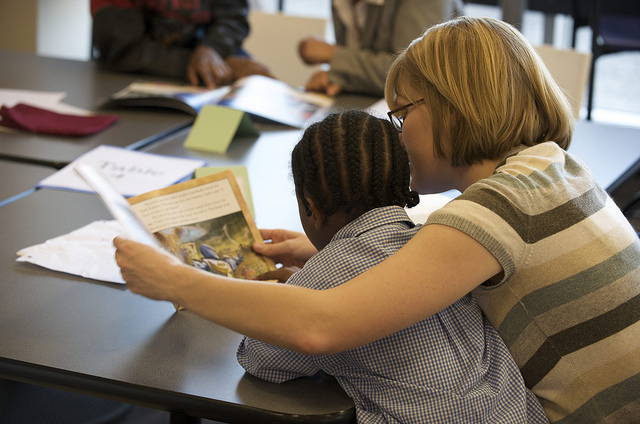
Books are one delight that all children should be introduced to as early as possible in their lives. For a parent there is no feeling quite like the first time you read to your son or daughter. You are opening the door onto the huge world of literature. There is a book available for every type of reader, whether factual or fiction. Reading to your child will open their eyes to the world around them and the possibilities available to them; providing they are willing to let their imaginations run wild.

d1fHUX

Reading aloud to kids – a memorable gift

Reading aloud to a child is possibly one of the most amazing gifts that can be given to anyone. It is actually the gift of time and of sharing this time together. Reading aloud to your child will create a lasting memory and a bond between you that will be incredibly difficult to break. In fact, many adults describe being read to as a child as one of their most cherished memories. This gift allows your child to explore strange new worlds while wrapped in the security and safety of a parent’s arms.

The impact of today’s technology on reading

It is far more difficult in today’s modern age of electronics to obtain and sustain the attention of your child. Televisions are commonplace with a multitude of channels available to tempt anyone away from productive activities. Computers and the internet call out, desperate to tell you about the latest, incredibly important video release. Quite possibly this is concerning sleeping cats or hapless children. Society is gradually moving towards the completely electronic age and books will potentially become a forgotten form of media. This makes it even more important to read to your children for as long as you can hold their attention. If you do not make this attempt many children will never experience the joy of reading or the pleasure of time spent with a parent.

ltBZjx

Reading aloud creates a visionary perspective

Reading aloud allows you to portray the characters in a far superior way to simply reading the book. You are able to paint a picture and enthrall your children with the story. Their imaginations will know no limit as they immerse themselves into the story and become the hero, or even the villain of the piece.

The storyline does not matter when it comes to your child learning from reading. They will listen to you, your pronunciation of the words and the meaning of them and learn this for themselves. Reading aloud to a child is one of the most effective ways to improve their language skills and broaden their vocabulary. Reading aloud to your child will also educate them in using their imagination and compiling these thoughts into a usable chain of events. Equally it will confirm to them that there is always time for reading.

Making the time to read to your kids

It can seem difficult to find time to read aloud to your child but it is not as difficult as you think. If you were to monitor the amount of times in one day you check your phone for an email, message or social media update you would quickly realize that you easily waster more than the twenty minutes of reading time recommended for children. By simply restructuring your day you may well gain more than twenty minutes. You will certainly gain a better relationship with your child.

yeV1PE

Reading skills

Research shows that children who are read to will grow up with a love of books and will want to learn to read, simply to pursue this love. Reading is an excellent way of learning and a vital skill – even if the majority of what you read is on the web. Taking the time to read to your child will ensure they want to learn this skill and they will be grateful for this as they grow older.

As a parent, it should concern you that kids nowadays prefer tablets and Smartphone over books. Start reading to them from an early age, and you may instill a passion for reading. Do it periodically and make sure you read aloud; this way the story will become much more compelling.

By Paul Trevino and LoveReading.co.uk!


Discounted Children’s Books By Victoria (Tori) Zigler

Author Victoria (Tori) Zigler is offering a number of her books at a discounted price in the Smashwords Summer Sale. For details please see (http://ziglernews.blogspot.co.uk/2015/07/smashwords-summerwinter-sale-2015.html).


Kevin

The Great Degu Round-Up and A Very Degu Christmas By Author Victoria (Tori) Zigler Are Now Available From Createspace

I am delighted to publish the below announcement from fellow author Victoria (Tori) Zigler regarding the availability of her books in print from Createspace:


“My name is Victoria Zigler, and I’m a blind author of children’s

fiction and poetry.


In April 2012, I began publishing my books as eBooks via Smashwords,

who then distribute them to multiple eBook retailers, including – but

not limited to – Apple, Barnes & Noble, and Kobo.


Since then, I’ve received several requests to make my books available

in paperback format.


I’m pleased to announce that I am finally able to grant these requests!


The first two of my books are now available to buy in paperback from

CreateSpace and Amazon, with the rest of my backlist of books

following as soon as it can be arranged.


The paperback versions will also be made available to request from

other retailers and bookstores, as well as from your local library,

though this will take a little longer to arrange.


“The Great Degu Round-Up” and “A Very Degu Christmas” are the titles

already available to buy in paperback.


~*~

Victoria “Tori” Zigler

(Children’s author and poet)


*~*~*

Website:

http://www.zigler.co.uk

Smashwords:

http://www.smashwords.com/profile/view/toriz

Goodreads:

http://www.goodreads.com/toriz

Facebook:

http://www.facebook.com/tori.zigler

Facebook author page:

http://www.facebook.com/pages/Victoria-Zigler/424999294215717

Twitter:

Blog:

http://ziglernews.blogspot.com


Father Frost

In the depths of winter, I thought I would share with you one of my favourite Russian folk tales, “Father Frost”. As the story is in the public domain (I.E. there are no copyright issues) it is reproduced in full below:


Father Frost


In a far-away country, somewhere in Russia, there lived a stepmother who had a stepdaughter and also a daughter of her own. Her own daughter was dear to

her, and always whatever she did the mother was the first to praise her, to pet her; but there was but little praise for the stepdaughter; although good

and kind, she had no other reward than reproach. What on earth could have been done? The wind blows, but stops blowing at times; the wicked woman never

knows how to stop her wickedness. One bright cold day the stepmother said to her husband:


“Now, old man, I want thee to take thy daughter away from my eyes, away from my ears. Thou shalt not take her to thy people into a warm

izba.

Thou shalt take her into the wide, wide fields to the crackling frost.”


The old father grew sad, began even to weep, but nevertheless helped the young girl into the sleigh. He wished to cover her with a sheepskin in order to

protect her from the cold; however, he did not do it. He was afraid; his wife was watching them out of the window. And so he went with his lovely daughter

into the wide, wide fields; drove her nearly to the woods, left her there alone, and speedily drove away—he was a good man and did not care to see his

daughter’s death.


Alone, quite alone, remained the sweet girl. Broken-hearted and terror-stricken she repeated fervently all the prayers she knew.


Father Frost, the almighty sovereign at that place, clad in furs, with a long, long, white beard and a shining crown on his white head, approached nearer

and nearer, looked at this beautiful guest of his and asked:


“Dost thou know me?—me, the red-nosed Frost?”


“Be welcome, Father Frost,” answered gently the young girl. “I hope our heavenly Lord sent thee for my sinful soul.”


“Art thou comfortable, sweet child?” again asked the Frost. He was exceedingly pleased with her looks and mild manners.


“Indeed I am,” answered the girl, almost out of breath from cold.


And the Frost, cheerful and bright, kept crackling in the branches until the air became icy, but the good-natured girl kept repeating:


“I am very comfortable, dear Father Frost.”


But the Frost, however, knew all about the weakness of human beings; he knew very well that few of them are really good and kind; but he knew no one of

them even could struggle too long against the power of Frost, the king of winter. The kindness of the gentle girl charmed old Frost so much that he made

the decision to treat her differently from others, and gave her a large heavy trunk filled with many beautiful, beautiful things. He gave her a rich

“schouba”

lined with precious furs; he gave her silk quilts—light like feathers and warm as a mother’s lap. What a rich girl she became and how many magnificent

garments she received! And besides all, old Frost gave her a blue

“sarafan”

ornamented with silver and pearls.


“Old Frost gave the gentle girl many beautiful, beautiful things”


“Old Frost gave the gentle girl many beautiful, beautiful things”


When the young girl put it on she became such a beautiful maiden that even the sun smiled at her.


The stepmother was in the kitchen busy baking pancakes for the meal which it is the custom to give to the priests and friends after the usual service for

the dead.


“Now, old man,” said the wife to the husband, “go down to the wide fields and bring the body of thy daughter; we will bury her.”


The old man went off. And the little dog in the corner wagged his tail and said:


“Bow-wow! bow-wow! the old man’s daughter is on her way home, beautiful and happy as never before, and the old woman’s daughter is wicked as ever before.”


“Keep still, stupid beast!” shouted the stepmother, and struck the little dog.


“Here, take this pancake, eat it and say, ‘The old woman’s daughter will be married soon and the old man’s daughter shall be buried soon.'”


The dog ate the pancake and began anew:


“Bow-wow! bow-wow! the old man’s daughter is coming home wealthy and happy as never before, and the old woman’s daughter is somewhere around as homely and

wicked as ever before.”


The old woman was furious at the dog, but in spite of pancakes and whipping, the dog repeated the same words over and over again.


Somebody opened the gate, voices were heard laughing and talking outside. The old woman looked out and sat down in amazement. The stepdaughter was there

like a princess, bright and happy in the most beautiful garments, and behind her the old father had hardly strength enough to carry the heavy, heavy trunk

with the rich outfit.


“Old man!” called the stepmother, impatiently; “hitch our best horses to our best sleigh, and drive my daughter to the very same place in the wide, wide

fields.”


The old man obeyed as usual and took his stepdaughter to the same place and left her alone.


Old Frost was there; he looked at his new guest.


“Art thou comfortable, fair maiden?” asked the red-nosed sovereign.


“Let me alone,” harshly answered the girl; “canst thou not see that my feet and my hands are about stiff from the cold?”


The Frost kept crackling and asking questions for quite a while, but obtaining no polite answer became angry and froze the girl to death.


“Old man, go for my daughter; take the best horses; be careful; do not upset the sleigh; do not lose the trunk.”


And the little dog in the corner said:


“Bow-wow! bow-wow! the old man’s daughter will marry soon; the old woman’s daughter shall be buried soon.”


“Do not lie. Here is a cake; eat it and say, ‘The old woman’s daughter is clad in silver and gold.'”


The gate opened, the old woman ran out and kissed the stiff frozen lips of her daughter. She wept and wept, but there was no help, and she understood at

last that through her own wickedness and envy her child had perished.


The End


(For the original public domain work please visit, http://www.gutenberg.org/files/12851/12851-h/12851-h.htm#FATHER%20FROST).


THE END 

Enid Blyton Removed From School Library

I have happy memories of my grandfather reading Enid Blyton’s The Famous Five as I sat on his knee. As a child it never crossed my mind that Blyton’s books could be construed as being racist. Today however a number of reprints of the author’s works have been published with certain words and passages having been amended to avoid giving offence. Today’s Daily Mail has an article concerning a school who removed Blyton’s books from it’s shelves, http://www.dailymail.co.uk/news/article-2519806/Enid-Blyton-Famous-Five-childrens-classics-axed-school-win-race-equality-award.html. If you read the entire article it becomes clear that most of the books which where deemed to be unacceptable have been replaced by versions with the language which some deem offensive, having been removed.

Racism is ugly and it is right and proper that children are taught that all ethnic groups possess equal worth and everyone, irrespective of their origin should be treated with respect. Having said that, would it not be possible for teachers, parents etc to explain the historical context in which Blyton was writing to youngsters, explaining that words and phrases which where once deemed acceptable are now (rightly) not so deemed. Blyton as with Kipling was a product of her time. Even great authors such as Dickens used language which we now view as unacceptable, for example his reference to “the jew” in Oliver Twist. I love Dickens, Kipling and Blyton, however to say this does not imply that I or any other reader shares their views on race or any other issue. We need, as I said above to judge authors in accordance with the historical context in which they wrote. Obviously it is easier for adults to make such judgements but, with sensitive and appropriate explanation it ought to be possible for children to continue to enjoy The Famous Five.

Reading Aloud

On Monday one of my colleagues mentioned how he reads to his 2-year-old daughter using a Kindle. His little girl likes to look at the pictures on screen, however my colleague said that he prefers print books as the photographs are bigger.

I was heartened to learn that parents still read to their children as it brought back happy memories of visits to W H Smiths with my grandfather. Most Saturdays we would pop into Smiths and buy (well my grandfather would do the purchasing) a book. On reaching home I would sit on my grandfather’s knee or lie in bed as he regailed me with the adventures of The Famous Five or other classics of children’s literature.

Today most of my reading is done using the text to speech facility on my Kindle. After a while I forget that I’m being read to by a dalek and enjoy the experience of listening to the classics of world literature, however there is no substitute for the human voice, of being read to by a much loved parent or grandparent. Sadly my grandfather died many years ago but I often think of him reading aloud to me or of our walks together in the woods near to where he lived.

Was Enid Blighton A Racist?

Plans to celebrate the work of the children’s writer Enid Blighton have led to controvasy in the Buckinghamshire town of Beaconsfield (United Kingdom) where the author lived for a significant portion of her life. Some inhabitants are claiming that Blighton was a racist and a snob and, as such her life and works should not be celebrated. Others argue that Blighton and her work should be viewed in the context of the mid twentieth century when atitudes to race and social class where less enlightened than they are today.

I have happy childhood memories of my grandfather reading the Famous Five and other books written by Enid Blighton aloud to me. At that time it never occurred to me that Blighton might be a racist, a snob or any of the other unflattering labels which her detractors are now pinning on the long deceased author (she died in 1968).

Racism and snobbery are obnoxious traits and are rightly deplored by civilised individuals. It is right that we have laws to prevent discrimination on the grounds of race, however it is unfair to judge Enid Blighton by today’s standards. As pointed out above she grew up in an era when Britain still possessed an empire and this shaped her view of the world and, very possibly inbued the writer with attitudes which most people rightly condemn today. However Enid Blighton was far from unique in holding such views and if we follow the logic of her detractor’s then surely Kipling’s works should also be consigned to the dustbin as he was (undoubtedly) a racist and an imperialist.

The fact is that a writer may possess views which we disagree with very profoundly. We may, however still regard them as great writers. Are we to stop reading Kipling because his words “lesser breeds without the law” (see his poem Recessional) jar with our modern sensabilities? The answer has to be a resounding no!

We must so far as is possible separate the writer from their work. Some say that Enid Blighton was not a nice lady. This may or may not be true, however it is irrelevant as a writer’s niceness or lack of it does not (and should not) affect how we view the worth of their literary output. A man (or woman) may have treated their family terribly, however if they are a great writer then that is what they are.

In the case of Enid Blighton people of every race and religion continue to enjoy her work which does, surely say a great deal about the quality of her writing.

I don’t like witch hunts and the whole Blighton issue has the potential to turn into something rather nasty. Lets judge authors on their writing and leave aside so far as is humanly possible whether they are “nice” or any other label one cares to put on them.

For the Telegraph’s article on Enid Blighton please visit http://www.telegraph.co.uk/culture/books/booknews/9870065/Town-torn-over-celebrations-of-Enid-Blytons-racist-work.html.