Category Archives: short stories

Legal Deposit for Self-Published (And Other) Authors

Yesterday evening, I met up with an old friend (who is also an author) for dinner. Inevitably the conversation touched upon writing and I asked whether my friend had provided print copies of his novel to the British Library and the 5 other libraries as stipulated under Legal Deposit legislation. He was unaware of Legal Deposit as (I believe) are quite a few other authors. I therefore thought it would be helpful to furnish the below information pertaining to Legal Deposit.

In the below extract, the British Library refer to the duty on publishers to furnish copies of publications to the designated libraries. In the case of most (perhaps all) self-published authors (including both my friend and I) this duty does, in practice devolve on us as authors who utilise Print on Demand or (POD) technology.

Introduction to legal deposit

Legal deposit has existed in English law since 1662. It helps to ensure that the nation’s published output (and thereby its intellectual record and future
published heritage) is collected systematically, to preserve the material for the use of future generations and to make it available for readers within
the designated legal deposit libraries.

By law, a copy of every UK print publication must be given to the British Library by its publishers, and to five other major libraries that request it.
This system is called legal deposit and has been a part of English law since 1662.

From 6 April 2013, legal deposit also covers material published digitally and online, so that the Legal Deposit Libraries can provide a national archive
of the UK’s non-print published material, such as websites, blogs, e-journals and CD-ROMs.

The Legal Deposit Libraries are:

list of 6 items
• the British Library,
• the National Library of Scotland,
• the National Library of Wales,
• the Bodleian Libraries, Oxford,
• the University Library, Cambridge, and
• the Library of Trinity College, Dublin.
list end

The legal deposit system also has benefits for authors and publishers:

list of 5 items
• Deposited publications are made available to users of the deposit libraries on their premises, are preserved for the benefit of future generations, and
become part of the nation’s heritage.
• Publications are recorded in the online catalogues, and become an essential research resource for generations to come.
• Most of the books and new serial titles are listed in the British National Bibliography (BNB), which is used by librarians and the book trade for stock
selection. The BNB is available in a variety of
formats.
• Publishers have at times approached the deposit libraries for copies of their own publications which they no longer have but which have been preserved
through legal deposit.
• Legal deposit supports a cycle of knowledge, whereby deposited works provide inspiration and source material for new books that will eventually achieve
publication.
list end

(Taken from http://www.bl.uk/aboutus/legaldeposit/introduction/)

Indie Versus Traditional Publishing – A Guest Post By Author Stephen Morris

Thank you to author Stephen Morris for the below guest post:

Author: Stephen Morris
Website: http://www.stephenmorrisauthor.com
Amazon Author central: https://www.amazon.com/Stephen-Morris
Facebook: https://www.facebook.com/StephenMorrisComeHell/
Facebook: https://www.facebook.com/PragueFlood/

Title: “Why Should I Have to Pay For an Editor??”

“Why should I have to pay for an editor? Or a cover design? Or for advertising? If my book is published by a real publisher, then won’t they pay for all that?”

I wrote my first book over the course of a half-dozen or so years. I spent several months submitting it to agents. No response. This was in 2010. In 2010, self-publishing was still just another name for “vanity publishing,” printing your own book because it wasn’t good enough for a regular publisher to print. You would pay the vanity press a lot of money and end up with a garage full of books that you tried to sell but eventually couldn’t even give away. To publish your own book was a shameful declaration of failure.

That first novel of mine involved the very real flood that had devastated Prague in 2002. I wanted it out into readers’ hands in 2012 as one of the events to mark the 10th anniversary of that flood. If it wasn’t picked up by a traditional publisher by 2010, there wouldn’t be time for it to appear by 2012. But just about the time I was getting ready to throw in the towel and admit defeat, the New York Times ran a series of four articles about how this new phenomenon of “self-publishing” was changing the publishing world. A small handful of authors had self-published their novels and hit the bestseller lists. Some of these were even authors who had been successful with traditional publishers but had decided to self-publish their most recent books. Suddenly, self-publishing was no longer about vanity and failure. It was about writing books—making art—and getting them into the hands of readers who wanted them.

All at once, self-publishing was a viable option. My book still had a chance of appearing by 2012! I picked apart those stories in the New York Times with a fine-toothed comb. I wanted to know how these authors had done it so that I could do it as well.

Well, the first thing they had each done—after writing the book itself, of course—was to have an editor work with them on the manuscript. I had to admit, I had been looking forward to that experience as much as I had been looking forward to holding a published book in my hands with my name on it. I had heard—and read—time after time how editors and authors became the best of friends, how working with a good editor was like getting an MFA in writing, how editors could take lackluster drafts and spin them into gold. I wanted all that.

So I found an editor. I went to the Editorial Freelancers Association website (http://www.the-efa.org ) and posted a job there, indicating the number of words in my manuscript and a price-range for the project. Twenty-something freelance editors responded. I short-listed five of them, based on previous projects they had worked on that seemed similar to mine as far as genre and length. I gave each of them the same 5-10 pages of text and asked for a sample edit. Then I chose one. While my editor and I did not become the best of friends, I did learn more than I could ever have expected. Marta (http://tanmar.biz/about/ ) knew how to deliver what might seem devastating critiques but in a way that felt uplifting and supportive. (An editor who cannot communicate with the author in a way that the author is able, or willing, to hear may as well not be editing at all. These are the two most important attributes an editor can have: exquisite editorial skills and outstanding communication skills. Likewise, a good communicator who has nothing to say is not going to provide an author with the necessary guidance either.) The novel was infinitely better because of her input. The money it cost was more than well worth it. She deserved every penny; I got more than I paid for.

Some people might point out that authors get to work with an editor for free, if they go through a traditional publisher. Just like a publisher will provide the advertising and sales force for the finished product. (But a traditional publisher will not spend a single cent on advertising for a new, unknown author.) “Why should I have to pay for editing?” some new authors might ask. Well, you do pay for editing—and all those services—if you go through a traditional publisher. You pay for them up front when you self-publish and then you get 30-70% royalties when readers buy the book; you pay for editing, etc. with a traditional publisher by getting less than 10% royalties when readers buy the book. (And you’ll pay for all your own advertising and promotional work with a traditional publisher as well. They get you both coming and going!)

I think the realization that I’d pay for all these services, one way or the other, was the nail-in-the-coffin of my thoughts that traditional publishing was somehow better than self-publishing.

I also joined http://www.bibliocrunch.com and took all the classes and seminars that were available about self-publishing: how to get reviews, methods and places to advertise, suggestions for how to set up websites and Facebook pages—even how to use Twitter and hashtags! No matter how “introductory” the class was billed to be, I always learned something. (Now most of the workshops are done by webinar and I have mastered that skill as well!) Each class or workshop was about an hour long—not onerous and always illuminating!

I am lucky enough that my domestic partner is a professional book illustrator and designer so I did not have to go far to find someone to design my book’s cover. But it is—again!—worth the money to have a professional design your book’s cover since that will be the first thing about your book that a potential reader sees. The reader decides to “click” on the book’s image or not because of the cover design. Does it grab the reader by the lapels? Does it effectively communicate the genre of the book? Is it a striking, unforgettable image? The cover design and the title deserve all the attention that you can give them. (BiblioCrunch can help put you into contact with designers, editors, etc.)

I also bought a block of ISBNs from Bowker (http://www.bowker.com ) so that I could retain control of who owns my work. (If you let a self-publishing company assign you one of their own ISBNs, they often control where your work can appear.) (The ISBN is like a social security number for your book and is necessary to track sales and pay royalties.)

When the book and cover were ready, I chose to publish through CreateSpace and KDP (Kindle Direct). If you look at the bottom of the Amazon home page, you will see “Self-Publish with Us.” Click on it. Then just follow the directions, which are clearly written and easy-to-follow. (I tried some of the other self-publishing platforms as well but none sold anywhere near as many copies as Amazon and the other platforms all required the files to be uploaded to be just different enough from Amazon’s that it was a real pain-in-the-neck. The amount of work required to tailor the files (cover and manuscript) to fir the requirements of each platform were not worth the small number of sales that the various platforms produced.

Pre-orders? If you can set up pre-orders for your book, that helps push the sales ranking up. For example, if a reader can pre-order a book for a few days or a month or even longer before the book’s official release date, none of those sales are counted until the actual release date arrives. Then, rather than counting each individual sale dribbling in over the course of a month (for instance), all those sales are counted on ONE day and help push the book into “best seller” status. The other way to help achieve best-seller status is to select key words or genre categories that are as specific as possible because this limits your competition. For instance, your book may be #346,821 in the “general fiction” category but its #457 in “mystery, thriller, and suspense” and #108 in “mystery, thriller, and suspense/mystery” as well as then #57 in “mystery, thriller, and suspense/mystery/supernatural” and finally #18 in “mystery, thriller, and suspense/mystery/supernatural/vampires.” See how that happens? The more you can narrow down your genre, the higher your ranking goes and the higher your ranking goes, the more likely your book will show up in readers’ searches for books like that. The more readers see your book, the more likely they are to buy it and then read it. And then—hopefully—post a review about it.

Reviews are absolutely necessary to post on the book’s sale page(s). A few very well respected reviewers an author can pay for (https://www.kirkusreviews.com/indie-reviews ) but those can take time; the more reviews you can have on release day or shortly thereafter helps the book show up in readers’ searches as well. Give copies of your book or manuscript to people who agree to post a review. It doesn’t have to be long (a sentence or two in some cases) or even say good things; a few bad reviews prove that the reviews are all honest whereas reviews that are all star-struck can seem manufactured.

You can also enter your book in contests to get noticed. Reviews from judges—and bragging rights if you win or get Honorable Mention!—are always good to have. But some contests are better than others. Check out any contest you think of entering (http://selfpublishingadvice.org/allis-self-publishing-service-directory/award-and-contest-ratings-reviews/#listing-R ) to make sure it’s not a scam preying on authors.

Email list. Social media. Book signings and readings or other events. All these help get books noticed. Set up a newsletter on MailChimp, even if it’s only a handful of friends and family at first. Create a professional Facebook page for yourself as an author as well as an Amazon Author Central page. Make a website. (Websites and Facebook pages should be focused on you rather than your specific book; you don’t want to have to make a new page or site every time you publish a new book. I’ve also noticed that websites hosted by HostMonster provide a lot more behind-the-scenes information than some other platforms; HostMonster will tell you what search engines are bringing people to your site, what search terms they used, and what links they click once they are looking at your site. All this information can help you know what to emphasize in future posts in order to keep attracting online attention.)

But don’t just always tell people, “Buy my book!” Talk about lots of other stuff. Talk about writing. Review other people’s books. Talk about the weather. Talk about baking cookies. Only a tenth of your posts should be about your book(s); no reader likes to be hammered in the head with “Buy my book!” messages and all the other things you talk about in your posts helps people feel connected to you and that connection is more likely to keep and build a base of additional readers or fans.

The best advertisement for the book you’ve written is to write the next book. This one may not be noticed right away but the next one, or the one after that, might be the one that grabs everyone’s attention and then they go back and want to read everything else you’ve written before. Persevere! Keep at it! We write—and self-publish—because we write a book that we would want to read and dare to dream that someone else likes to read the same things we do.
We write—and self-publish—not to become wealthy but because we have stories to tell and we want to share those stories with others. We write—and self-publish—because we know the joy that comes with discovering a new, well-told story ourselves.

The Broke Author’s Secret Weapon – A Guest Post By Yecheilyah Ysrayl

Thank you to Yecheilyah Ysrayl for the below guest post:

Can we be real?

Self-Publishing has opened the door for writers to finally make their dreams come true. Dreams that were hindered by way of jobs that got in the way of writing, Traditional Publishing rejections, children that parents needed to raise first, a school that needed to be finished first and a slew of other reasons that has stopped the passionate writer from producing a book.

Not only all of this but finances also play a part.

Self-Publishing has allowed people who have always wanted to write books an easy way to do so. With the industry changing and demanding more in the way of excellence and professionalism for the Indie Author (stigmas are fading and authors can no longer afford to produce mediocre work), it is no secret that financial strain is what stops many writers from either finishing a book or publishing it.

With advice after advice on how we should invest in our careers, many authors feel that they simply cannot afford to do so and produce something professional at the same time.

For instance, I recently came across professional website building at $800. We know how important it is for authors to have professionally designed websites but let’s be real, who can afford to pay that much for a website unless they are already established enough to afford it?

Unless you were given a loan, grant, or someone blessed you with the money, $800 is as much as some people pay for rent and simply not the kind of money many Indie Authors can afford to invest in one website. A website that may not even bring them a return.

So, what does an author do? What is the broke author’s secret weapon to successfully and professionally producing books? TIME.

Simple, right?

The secret weapon is time. What you can’t afford in money you make up in time.

Although you may not get paid for hours put in the same way you would your hourly job (wouldn’t that be nice!) you will see a difference in the kind of material you put out.

How many hours a day do you spend working toward your books? By “working on” I mean either writing, blogging, promoting, networking, social media (real social media work not lollygagging), research, online classes, webinars, video tutorials, email list building, reading, email marketing, etc. So, how many hours?

On a good day, I spend anywhere between 8 – 12 hours on my work. I am a writer full time and have spent many nights in the office putting in the time long before my wonderful husband gets home from a job that actually pays him for hours put in.

The thing is, a return on time for an author is reflected in his work. Authors who put little to no work in their books (rushing to get them out) is bound to produce mediocrity. On the other hand, authors who invest time not only in the books they write but also in other aspects of the business (blogging, promoting) is bound to receive a much better turnout.

Let’s take a look:

30 Day List Building Challenge – After investing 30 days in a List Building Challenge I increased my list of email list subscribers by 40%. This took me passed my 100-subscriber mark (the first 100 subscribers are the hardest to get!)

Free Webinars— I can’t afford to pay for a writer’s conference. I know, I know, they are valuable but that’s not a realistic goal for me financially right now. I am not that cheap. I would love to invest that kind of money into my education. I would also love to take a publishing course at a University. Again, this just isn’t the reality for me right now. Instead, I take free webinars.

You know, those emails you get about a free webinar on some aspect of publishing that we skip through? STOP IT! I didn’t mean to yell, it’s just, they are soooo helpful!

I learn a lot from free webinars. Just last week I took a Leadpages Interactive Training and the week before that a training on building the Author Media Kit. The result is pages of notes and a head filled with ideas I can use to make my media kit better and ideas I can implement into my email list to help nurture it. (Growing a list is only half the battle. Now you gotta be sure people are interested enough to stick around)

In fact, the idea for this article came while listening to a webinar. They were offering something at the end that I could not afford, that is when I thought about time. I can now take this idea, turn it into an article and Guest Post on someone’s blog. That’s increased exposure for me, my blog, and my content and it only costs me two hours.

Guest Blog Posts / Author Interviews – Speaking of guest posting, we may as well go here next.

Time spent writing articles has resulted in over twenty articles that I’ve posted on someone else’s blog, author interviews, guest blog features, and a radio show appearance. This is free publicity for me and my content and all I had to spend was time.

Time drafting the email of inquiry (your emails should always be professional even when you are seeking to guest post on someone’s blog), writing the articles, and time answering the questions.

My radio show feature with Annette Rochel Aben only took 30 minutes as a matter of fact. It will forever be part of my author portfolio and it only costs me 30 minutes of my time.

Images / Promotional Ads – A few hours a day using Canva and PosterMyWall allows me to create my own professional images and Ads.

A few hours a day and you can never tell if I hired a professional or not. Using free mock-up templates from places like covervault allows me to create images for my books in Photoshop.

Just a $10/mo investment and I can purchase the cheapest package in photoshop CC to get this done.

Before I even had that, I used a free 3D image creator for creating 3D images of my books. It only costs me my time.

Book Cover Design – I have a Book Cover Design dream. My Book Cover Design Dream is to purchase a professional custom Book Cover from one of my favorite book cover designers. Thing is, he’s too expensive for me right now so I can’t support him like I’d want to just yet. I do however have time (time means you can support others too! Though I can’t afford him, I know others can. I follow him on social media and always like and share his work).

With the time I had on hand, I was able to research cheap custom book cover designers. The cover to The Aftermath, my first novel costs me less than $200. The cover of Book Three in The Stella Trilogy (The Road to Freedom – Joseph’s Story) costs less than $100. For the second book in The Stella Trilogy (Beyond the Colored Line) I paid less than $30. It just cost me the price of the stock photo (Winter Woman).

The rest I did from a free MS Word template offered by Derrick Murphy.

Broke Author…

But, we’re talking about the broke author so let’s take it all the way back.

My first poetry book cover cost $0.

I published with Lulu and used one of the templates they already had. You can do the same with Createspace. Sure, there are some hideous ones out there but we’re talking about investing time. If you’re not lazy and cheap with your time, then you can produce a nice cover from one of the free cover design templates or whichever POD you’re using whether that is Createspace, Lulu, or Lightening Source (IngramSpark), or whatever you use to publish your paperbacks.

Premades – If you’re looking for something more professional than a free one (or couldn’t find one you liked), you still don’t have to spend a lot of money. If you don’t have the money for a custom designed cover, you can purchase a pre-made.

Premade book covers are pre-designed book covers by professional graphic designers and sold at a lower cost than a custom made. The only drawback is that designers sometimes use the same stock photos across premade sites.

However, with a little time, this can be overcome by choosing a unique look. They are out there, you just need the time to find them. Don’t just pick the first pre-made you see that looks nice. Think about whether or not it speaks to what your book is about. (And don’t choose a pre-made cover that uses a stock photo you’ve seen lots of times.)

Websites – Hours a day spent building a website using Squarespace, WIX, Website.com or any less expensive option can result in a decent author website for those who don’t have the money to purchase an expensive one. If you don’t have money at all, you can create a website here on WordPress for free.

It will only cost you time.

Editing – Editing is expensive for the broke author. The thing is, editing should be expensive. I review books for free and it takes a lot of time. I can only imagine having to make corrections too.

However, there are different kinds of editing and not all of them are expensive. If you are willing to put off the release of your book a while, you can get your manuscript Beta-read first. Your Beta’s can help you with the overall story so you know if something is confusing or if there are major plot holes. Then, you can pay a copyeditor to help with those grammatical mistakes.

Over time you will need to invest in an editor but we’re talking baby steps. If in the beginning, you don’t have the funds, you can still have your work looked at by someone more knowledgeable than you.

There are tons of services out there to help those low on finances, you just have to take the time to look. You may also need to put off the release of your book. This means you can’t rush through it just to get something out there. You will have to take your time.

Offline Events – What if you want to run a book signing or offline event? Surely, you need money to do this.

Hosting a Book Signing is free at places like Libraries but your books are not.

Crowdfunding is a great way to raise money that you do not have, even if it means to purchase bulk copies of your book.

I did not have the money to host a book signing in Atlanta last year. The library wasn’t charging but I still needed money for books and promotional products. Instead of giving up, I set up a GoFundMe account to help pay for what I needed. I did have to invest time in setting it up and promoting it but that’s all it costs me.

We can go on and on. You can even discover editing services that are cheaper than most if you are willing to look for it.

The point here is time. If you are willing to invest time into your work, then not having the money is not a reason not to publish a book. Baby steps are key.

Should you invest finances in your writing? Of course, you should but that doesn’t have to mean right now. You don’t have the money right now. What you do have is what you woke up with this morning: Time.

Sometimes, all you need is the internet and books! There are tons of free webinars, blogs, and how-to books out there to assist in your education of the Industry. What are they? Where are they? That’s for you to find! It only costs you your time, the most valuable commodity out there and the broke author’s secret weapon.

Biography:
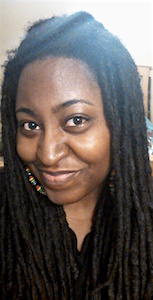
yecheilyah-ysray

Yecheilyah Ysrayl is the Historical Fiction author of Young Adult Black American Literature and Poetry. The author of nine books she attended Chicago State University, Robert Morris College, and Everest College. Yecheilyah is currently working on her next book series “The Nora White Story”. Book One is due for release July 15, 2017.

Yecheilyah will also be in attendance at The Tampa Indie Author Book Convention in Tampa Florida. Yecheilyah is a Blogger and Book Reviewer.

Originally from Chicago, IL, she now resides in Shreveport, LA with her husband where she writes full time. She is currently working on her memoir and BREATHE: Letters of Inspiration to Keep You Inspired, Motivated, and Writing.

Author Website

Blog

Facebook

Twitter

Instagram

Why the Budds Are Sticky In Springtime

As a small boy, I remember my grandfather telling me the below story, as to how the buds come to be sticky in springtime. I always assumed that he took the story from a collection of fairytales. However I have searched high and low and it would appear that he invented the tale to entertain me. However, if anyone does know the origin of the tale please do leave a comment. (I don’t remember the tale word for word so have used poetic license when retelling it).

In spring, a group of naughty gnomes (all unseen)
Did toadstools paint with glue
In order to catch the fairy queen.
‘Tis true
For my grandfather told me how the queen stuck fast
And, at last,
On her escape, she did say
To the gnomes “go your way
For I pardon your crime.
But, come springtime
You
Must paint the budds with your pots of glue.
Every year mind,
Or you shall find
That I am not so kind!”
So every year
Out of fear
Of what the fairy queen would do
Where they to forget,
The gnomes paint the budds with glue
(they are busy yet)!

So You Want To Be A Writer? – A Guest Post by Lucinda E. Clarke

Many thanks to Lucinda E. Clarke for the below guest post.

You can visit Lucinda’s website HERE.

SO YOU WANT TO BE A WRITER?

Asked that question when I was five and my answer was ‘Yes’ – asked again at school leaving and the answer was still ‘Yes.’ But you know how it is, life gets in the way and I took the ‘family approved’ route and became a teacher. Five countries and almost two decades later, I fell into writing almost by accident and was commissioned by the South African Broadcasting Corporation to write for radio. This led to scripting for television, then major corporate companies, government departments, and all points in between. From 1985 until 2008 I earned my living by writing, producing and directing videos and broadcast programmes.

I was a writer for hire. On Monday I would be scribbling for an international food company extolling the great nutritional value of their potato crisps and on Friday writing for the Heart Foundation persuading people never, ever to eat potatoes because they were so bad for your health.

In my time I wrote mayoral speeches, brochures, leaflets, adverts for radio, TV and print. I had a newspaper column, wrote articles for magazines and had a couple of educational books traditionally published.

What advice would I give to anyone thinking of writing for a living?

Firstly, unless you write the next major hit, and have the amazing one in several million chance of getting it traditionally published and turned into a Hollywood drop dead blockbuster, it’s unlikely you will be able to sustain a family and a mortgage by self publishing your books. It may happen, but don’t hold your breath, however good your book is. So, if your major love is writing, think outside the box and write for money. Annual company reports are not thrilling, but they will put food on the table. At the same time, you are honing your skills and learning the nuts and bolts of the trade.

Secondly, when you finally find the courage to publish your baby, and by then it will be more precious than any other member of the family, you may expect to sit back and wait for the accolades to roll in right? Wrong!

To paraphrase some famous writer – ‘If you put your head above the parapet, you must expect to be shot down.’

You have written the most brilliant masterpiece that Shakespeare would envy, but not everyone will like it, enjoy it or understand it. You will get criticism, warranted or otherwise. The first time this happens it’s devastating, the second, it hurts a little less, the third time you begin to shrug it off and giggle at the bad spelling and grammar your less than thrilled reviewer has posted for all the world to see. Grab a glass of wine or a huge mug of coffee and read the one star comments on books you’ve loved, it’s the best remedy I know.

Now, I thought after supporting two children, a husband and a St Bernard among other furry household members by writing for almost thirty years, that I could, in fact, write. Wrong again.

When I retired, I couldn’t stop writing, it gets in your blood, it’s a disease. So I tried my hand at writing books and it was like starting all over again at the bottom, and even after seven books I’m still learning.

If you want to find out how I ‘fell’ into writing and how my career morphed from the classroom to the television studios you can check out my books:

Truth, Lies and Propaganda http://goo.gl/Ws7b4w
and

More truth, Lies and Propaganda http://goo.gl/z9iLFa

These links take you to Amazon but both books are available on all channels as eBooks and in paperback.

If you are a born writer, then you won’t be able to stop writing, so don’t fight it.

Go and write the next bestseller!

Rise in the number of children calling a helpline as parents are TOO DRUNK . . .

“CHILDREN as young as five are calling a helpline to be read bedtime stories because their alcoholic parents are too drunk to tuck them in at night”,

http://www.express.co.uk/news/uk/769135/Children-call-helplines-for-bedtimes-stories.

This is just so incredibly sad.

Do you judge writers?

Christopher Slater raises an interesting issue in this article entitled “Do you judge writers?” (https://ryanlanz.com/2017/02/16/do-you-judge-writers/)

My own view is that while it is difficult not to judge writers (their morals or lack of them), one should, so far as is humanly possible avoid doing so. A great writer remains so even if he (or she) was/is a terrible parent to their children or held/holds views with which most liberal (with a small l) individuals would disagree.

In this article for the Telegraph A N Wilson mentions the poet, Philip Larkin’s wish (expressed in his correspondence) to join the far-right National Front and Eliot’s anti-Semitism (http://www.telegraph.co.uk/comment/personal-view/3588935/World-of-books.html)

Wilson argues that we need to separate the author’s artistic creations from their views. This is a perspective with which I concur absolutely. We don’t have to share an author’s views to admire their work and if we only read those who concur with our perspectives our lives and the world in general would be a very arid place.

The Case of the Missing Book

“Holmes!” I cried,
I have tried
To deduce who took
My book.
I gave it to a girl, that she might read
And by so doing her mind feed.

She works in a store,
And would, I thought handle it with care,
But, on my return I discovered it was no longer there.
I fear it will be seen no more
And is forever lost somewhere in that store”.

My dear Watson, someone took
Your book,
While it was left lying around
By a shop girl, in a well known store.
I agree you will see it no more.
It is a problem too profound
For the great detective to solve.
Therefore resolve
To neither a borrower nor a lender be,
Else you will see
Another book
Get took
By the light fingered kind.
But quieten your mind
For it was in all likelihood
Taken by one who thought your poetry good!”