The ring
Of lustre pure
Is a thing
Of desire
To many men
But, when
Man does explore
The prize
As yet Untried,
To the very core
Oh how soon the fire
Does Expire
For that particular thing.
The Ring of Lustre Pure
2 Replies

The ring
Of lustre pure
Is a thing
Of desire
To many men
But, when
Man does explore
The prize
As yet Untried,
To the very core
Oh how soon the fire
Does Expire
For that particular thing.
My thanks to Robbie Cheadle for taking the time to review my collection of poems, “Lost in the Labyrinth of My Mind”.

A collection of poems about nature, love, and life in general.
I have to state right up front that I love the style and flow of Kevin Morris’ poetry. There is something about how Kevin writes that seems to captures the true heart of poetry and it is a pleasure to read his poems.
I have read other poetry books by Kevin Morris and they have been lovely reading experiences but this particular volume really appealed to me. Perhaps because the poems in this book are slightly darker and highlight the more secretive, devious and hidden side of human nature and also the more willful, untamed and wilder side of nature. Kevin uses his carefully chosen and powerful words to cut to the beating heart of a wide variety of weighty and sometimes political subjects.
Here are a few of my favourite stanza’s from poems…
View original post 379 more words

I was intrigued and delighted when author and poet Victoria (Tori) Zigler invited my guide dog Trigger, to be interviewed by her own four-legged canine friend.
You can find Trigger’s interview HERE
During the course of his interview, Trigger was kind enough to talk about my poetry (amongst many other things)!
Kevin
There was a young lady of Dunblane
Who, on marrying a strapping Dane,
Moved to Denmark
With their pet shark,
And was never seen again!
I know a young lady named Spink
Who has a very unusual kink.
When we passed on the stair
I most solemly swear
That she gave me a significant wink!
—
There was a young man of Liverpool
Who, being a bit of a fool.
jumped into the Mersey river
And started to quiver
As he mistook it for a pool!
Use the “E”
Not the “P”
Word. For “E”
Is for company
And the passing smile
Of a girl with style.
While “P”
Does not go
On business trips
Although, you know
She also
Employs her hips.
My dog snuffles
and scuffles
amongst the leaves.
He is just there
With no care
For what I think
As I drink
In the fresh morning air.
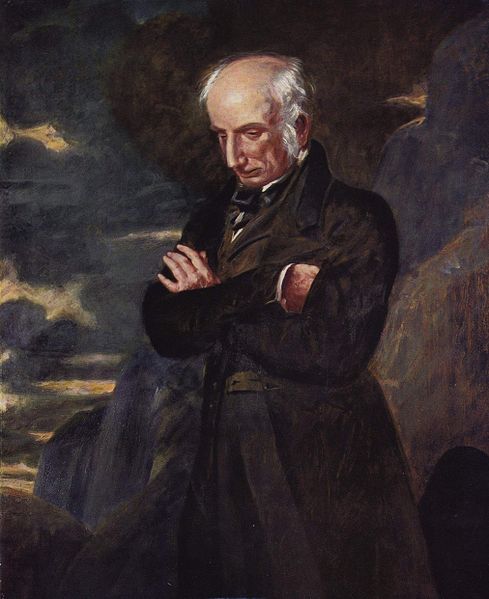
“The Solitary Reaper” is my favourite Wordsworth poem.
‘The Solitary Reaper’ is one of Wordsworth’s best-known poems. Although it’s a ballad, it didn’t appear in Wordsworth’s most famous collection, Lyrical Ballads, because he wrote it after the publication of that volume (co-authored with Samuel Taylor Coleridge) in 1798. ‘The Solitary Reaper’ appeared in Wordsworth’s 1807 collection Poems in Two Volumes. The poem has received a fair bit of critical analysis; here, we offer some notes towards a commentary on it.
The Solitary Reaper
Behold her, single in the field,
Yon solitary Highland Lass!
Reaping and singing by herself;
Stop here, or gently pass!
Alone she cuts and binds the grain,
And sings a melancholy strain;
View original post 546 more words
Please tease
Forth the rain. Go softly though
For slow
will make it flow
In a strong deluge
And the joy
To the thirsting boy
Will be huge
When a young lady whose name is Ann
Married a rich old man,
He left all of his money
To his young mistress Honey,
Thus foiling Ann’s dastardly plan!


