Author Archives: K Morris Poet

Unknown's avatar

About K Morris Poet

The purpose of this website (kmorrispoet.com) is to showcase my writing. For details of my published works, please click on the 'About' page of my blog.

10 Great Facts about Writers and Dogs

A great post for all you dog lovers out there including myself. I particularly like, “The first draft of John Steinbeck’s novel Of Mice and Men was eaten by his dog, Max.” Hopefully the invention of computers and other storage devices precludes this from happening today …! Kevin

InterestingLiterature's avatarInteresting Literature

Short facts about writers and their pet dogs – and the canine figures in the works of famous authors

Fearing attacks from rivals, poet Alexander Pope rarely left his house without a brace of pistols and his dog, a Great Dane named Bounce.

Virginia Woolf’s first published essay was an obituary for the family dog, Shag.

The first draft of John Steinbeck’s novel Of Mice and Menwas eaten by his dog, Max.

Emily Brontë’s dog, Keeper, followed her coffin to the grave when she died and, for weeks after, howled outside her bedroom door waiting for its owner to return.

View original post 142 more words

Name a Blind Poet

An interesting short piece regarding blind poets and how their blindness impacts their poetry. Being blind I find that much of my work describes senses other than sight – smell, touch and man’s emotions. Kevin

Don Iannone, D.Div., Ph.D.'s avatarPoetic Alchemist

I am intrigued by how poets are influenced by their visual sense. This is reflected in their verse, as well as the use of accompanying photographs and other visual artwork. And many of you practice both Taiga and Haiga poetry.

This leads me to wonder about the poetry of blind poets. First, which poets were/are blind? Besides Homer and John Milton, I was at loss to name any others, so I started a small research project.

Please help me build a list of blind poets.

Here are those I have identified thus far: the ancient Greek poet Homer, 17th century English poet John Milton, 15th century Hindi poet Sant Surdas, contemporary Australian poet Michelle Taylor, 9th century Persian poet Rudaki (alledgedly blind), 18th century Irish poet Anthony Raftery, 9th century Arab-Spanish poet Muqaddam Ibn Mu afa al-Qabri, 19th century American hymn writer and poet Fanny Crosby, 19th century Jewish-American poet…

View original post 33 more words

Lie Down With Dogs Get Up With Fleas

From the sunlit uplands man’s heart turns.

Those who play in the gutter attract germs.

The birds soar above,

While in the dirt man grubs.

Flowers are trampelled underfoot,

All that is noble is reduced to dust.

The rats scurry away,

They have no stomach to fight and stay.

Why Librarians Don’t Want to Buy Your Self-Published Book

An informative post for authors wishing to get their books into libraries. Kevin

Molly Wetta's avatarwrapped up in books

When a self-published author contacts someone in the collection development department at my library, we let out a collective groan. Inevitably, our answer to the request to add their book to our collection will feel personal, which is awkward. It will definitely mean more work for us no matter what, and for acquisitions and cataloging staff as well if we do accept the book as a donation or decide to purchase it.

Librarians don’t want to buy your self-published book, but not for the reasons you think. 

I’ve been thinking about self-published books and their place in libraries a lot recently, as my library has been updating our collection development policy and brainstorming ways to streamline how we deal with requests from authors to include their self-published materials in our collection and how our collection development work complements our strategic goal of supporting content creation in our community.

Then, this weekend…

View original post 919 more words

Home

The closing of my door.

Me Sitting alone in the twilight, on my sofa, the furry blue throw soft against my hands, listening to the companionable rain.

The friendly bookcase in the corner, packed full of books, the ting tang clock standing atop it, keeping the elephant bookends and Austrian stein company.

The ebony elephant on the cabinet, one ear slightly mauled, watches me quizzickally, far from his home in China.


—


The bookcase in my bedroom, still smelling faintly of the pine forest, fuses with the scent of books.

The luxury of freshly laundered sheets against my skin.

Home. Bliss!

Lust

Unadulterated lust.

Needs must.

No scent of musk,

Just dust

And my nose savouring the scent of books!


(The above was inspired by reading the following post by Jennifer Calvert, https://jennifercalvertwriter.wordpress.com/2015/06/17/lustful-sin/. If you haven’t already please do check out Jennifer’s blog).


Kevin

A disillusioned Man Of The World’s Song

A rhythmic motion

Like a ship upon the ocean

Your legs swung

But to me no joy brung.

You spoke in a foreign tongue.

No songs where sung.

You where young

Eighteen or twenty

Our hearts they where empty.

Yes you where young,

Your feet in heels swung .

I see them swinging still

I have had my fill

Of desert beds and swinging legs.

Love to me is dead.

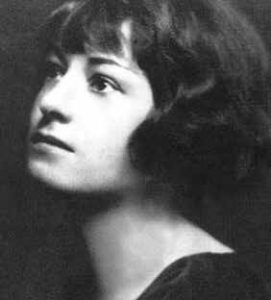
The Best Sourced Dorothy Parker Quotes

InterestingLiterature's avatarInteresting Literature

10 of the best quotes from Dorothy Parker and where they first appeared

Dorothy Parker was born on this day in 1893, so in honour of this we’ve compiled a list of ten of the wittiest and wisest quotations from the Dorothy Parker oeuvre, as well as some of her pithiest and most memorable one-liners. Many quotations have been attributed to Parker, but here we’ve confined ourselves to the things that she definitely did say.

There’s a hell of a distance between wise-cracking and wit. Wit has truth in it; wise-cracking is simply calisthenics with words. – Interview in Paris Review, 1956

I’m never going to be famous. My name will never be writ large on the roster of Those Who Do Things. I don’t do anything. Not one single thing. I used to bite my nails, but I don’t even do that any more. – ‘The Little Hours’…

View original post 223 more words

The Abyss

“Battle not with monsters, lest ye become a monster, and if you gaze into the abyss, the abyss gazes also into you.” (F Nietzsche).

I first came across this quote while at university and it has stayed with me ever since. There is a fascinating discussion regarding it’s meaning here, http://forums.philosophyforums.com/threads/and-if-you-gaze-for-long-into-an-abyss-the-abyss-gazes-also-into-38060-11.html