Tag Archives: history

Remembrance

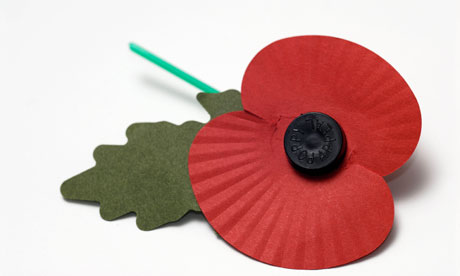
In honour of those who gave their lives for freedom, I am reproducing below my poem “Poppy”, which first appeared here on 4 November 2016. This year I was able to purchase a poppy to remember the dead.
To those who died that you and me
Might live free.
To those who gave their sweet breath for King and Countrie.
I regret that yesterday
I had no cash to pay
For a poppy deep red
To remember the dead.

I will not know the stench
Of trench
Nor the wrench
Of fear
And pain as spear
Drains the life away.

What can the poet say
Who has never known
The touch of steel against bone?
We die alone
But most will peaceful go
And will not know
The whoa
Of comrades lost,
Nor count the cost
Of bloody strife.
They will not give their life
That others (you and me)
May live free.

Having only my debit card I regret to say
That I could not buy
A blood red
Poppy to remember the dead
As I wended my way
To my nine to five job yesterday.

How Stalin Hid Ukraine’s Famine From The World

The Atlantic has published a fascinating article by Anne Applebaum entitled “How Stalin Hid Ukraine’s Famine From The World”. In it Applebaum shows how the majority of western journalists in the Soviet Union denied that famine was present in Ukraine despite being well aware of its presence. The vast majority of the western press feared losing their journalistic accreditation to work in the Soviet Union so used terms such as “hunger”.

Applebaum relates the story of Lloyd George’s Private Secretary who managed to obtain permission to visit Ukraine (there was a ban on journalists visiting famine stricken areas) and blew the whistle on this largely man-made disaster, which flowed from forced collectivisation of agriculture and the state’s requisitioning of food from starving peasants. To their shame western journalists accused Jones (Lloyd George’s Private Secretary) of exaggerating the famine, despite them being well aware that he was not doing so.

You can read Applebaum’s article here, https://www.theatlantic.com/international/archive/2017/10/red-famine-anne-applebaum-ukraine-soviet-union/542610/..

Mass Murderers Both

Yesterday evening I bumped into an old acquaintance in the pub. Our conversation ranged far and wide and at one point touched on the atrocities perpetrated by Adolf Hitler and Joseph Stalin. There was some discussion as to which dictator was the worst criminal, with my acquaintance maintaining that Stalin was the greater due to him having murdered around 20 million of his own people. My view of the matter is set-out in my poem, “Hitler and Stalin” which first appeared here some time ago:

The Gulag.
The present like the past is mad.
Black clad figures
Their fingers on triggers.
Russian or Prussian?
An interesting discussion.
Jews and Kulaks their lives lose.
Who to choose?
A man drowning in his country’s blood,
Or one who would destroy Jewry if he could?
What a choice.
History’s voice
is cold and level,
“We allied with the devil,
To destroy his twin,
the mirror image of him.
The world is a better place
But a nasty taste
Still lingers.
Man has burned his fingers,
To often,
History’s lessons are easily forgotten”.

(From my archives) – “Kipling May Regret”

This poem first appeared here on 9 April 2017:

In the restaurant its just the waiter and I,
While outside the window Vehicles speed by.
“There are a lot of beautiful women outside today”,
He remarks by way
Of conversation.
I drink
My wine and think
About this nation
On who’s empire the sun would never set.

Kipling may regret,
Yet
The sun continues to shine
And there is curry and wine,
While in the street
Multiracial feet
Hurry
Along,
Beating out a more or less harmonious song.

“We are all equal” he said

“We are all equal” he said.
We nodded our collective head
For who can disagree
That all are equal? But what about free?

“Society is unfair” he said.
Once more, a nod of the collective head.
But who will give up his bed
For the tramp who carries his load
Along yonder road?

“Much of the map was once red
And the English have blood on their hands” he said.
So we dwelt on empire’s shame
And absolved today’s corrupt dictators of all blame,
For Mugabe is a saint
And it is quaint
To believe that the empire did any good
For, of course it produced only blood.

“Let us raise a toast
To the ghost
Of Marx” he said.
I shook my head
And headed for bed.

LongAgo

Long ago
I used to know
A lady who thought that Communism was best.
So, we sat drinking fine wine
(Enjoying the trappings of the west),
And I would smile while
She argued that the Berlin wall
Must not fall
As it protected,
The system she respected.

She was neither bad nor mad
But I, as a mere lad
Could see
The people of the east were not free.
A precocious teenager I was
Who argued because
I believed,
And also I perceived
That it was fun
To have adults on the run.

Now the wall has come down
And secret policemen drown
Their sorrows in champagne,
And use their brain
For financial gain.

My old friend
Saw Communism’s end.
I wonder does she remember a precocious teen
Who did preen,
Yet maintained a dream
That tyranny would end
And believed,
That for all its faults
The West
Was best?

Peasants in late Medieval London faced extreme violence

According to recently published research, “Peasants in medieval London faced extreme violence”.

Skulls of peasants unearthed in the UK’s capital show a much greater number of fractures than do those of the upper classes and it is conjectured that many died soon after having received their injuries.

The researchers believe that due to the cost of the legal system, peasants in Medieval London had no ability to employ barristers so would frequently settle their disputes in bar or street brawls, many of which ended in death. Interestingly most of these brawls appear to have taken place on Sunday, which was the only day peasants had off.

In contrast the better off residents of London had recourse to legal representation to settle disputes or, if they did engage in duelling, they wore armour which greatly reduced the danger of death.

For this interesting article please visit, http://www.dailymail.co.uk/sciencetech/article-4833460/Peasants-late-medieval-London-faced-extreme-violence.html.

“Beyond the Blaydon Races” by Alan Clothier

I have enjoyed a number of conversations with the granddaughter of Alan Clothier, (the author of “Beyond the Blaydon Races”), and it was from her that I learned of his work on the Blaydon railways.
The book’s description reads as follows:
“The area covered by this book is mainly that of the five waggonways delivering coal to their staiths on the River Tyne at Lemington from collieries at
Wylam, Heddon, Throckley, Walbottle, Hollywell and Black Callerton. The main objective has been to place the early wooden waggonways fully in the context
of their purpose and usage within the mining industry and continues with their development and the coming of railways up to the demise of the coal industry
in that district. There is a more detailed insight into the multifarious activities of Colliery Viewers whose work it is felt has not always received the
attention which it deserves. For much of this feature, the author is indebted to the wonderfully detailed work diaries of William Oliver held by the North
of England Institute of Mining and Mechanical Engineers. The opening date for the Wylam Waggonway has long escaped the notice of historians and many well-known
writers have had it wrong; the author is pleased that his researches have at least narrowed it down to the year in which this event occurred. A Glossary
of Terms used in the mining industry is also included as well as numerous plans and a Chronological Listing of Events. Whatever a reader’s interests are,
they are wished as much pleasure in following up their leads as the author has derived from gathering his”. For further information on “Beyond the Blaydon Races” please visit https://www.amazon.co.uk/dp/B06XMQ7MJ5.

The hidden History Contained in Pages

There is much history in books, if one looks carefully enough. By this I do not mean those works concerned with history itself, nor am I refering to historical fiction. Rather I am referring to passing references, such as that contained in the 4-volume edition of John Buchan’s “The Thirty-Nine Steps”, which resides on the top shelf of the tall pine bookcase in my bedroom. The book’s title page reads
“… printed and published by the National Institute for the Blind, Great Portland Street, London W” and carries the date of 1938.

The National Institute for the Blind has, for many years, been the Royal National Institute of Blind People, and its head office is today located in Peterborough.

On turning over the title page, the reader comes across the following
“The price given for this book in the National Institute’s books catalogue represents the actual cost of production. The book is sold to libraries and institutions for the blind in the British Empire, and to blind persons resident in the United Kingdom, or in any part of the British Empire at one-third the catalogue price”.

The British Empire has, of course long ceased to be. However contained within the pages of the braille edition of “The Thirty-Nine Steps” I find a reminder of a vanished age.

I would be interested to learn of any books owned by this blog’s readers which contain interesting historical data. Please do comment below.

Kevin