Category Archives: Uncategorized

‘I was much further out than you thought’

I first came across Stevie Smith’s “Not Waving But Drowning” in “The New Oxford Book of English Verse”, chosen and edited by Helen Gardner. This post certainly does the poem justice.

charlottegann's avatarCharlotte Gann

IMG_20180105_125224092_HDRThe poem ‘Not Waving but Drowning’ by Stevie Smith is only twelve lines long. Yet, the first time I read it, it created in my mind, for evermore, a whole world – and life story. Not thepoet’s – or certainly not directly; no, ‘the dead one’’s:

Nobody heard him, the dead man,
But still he lay moaning:
I was much further out than you thought
And not waving but drowning.

The poem paints a vivid scene. We see a man waving; drowning; overhear words spoken perhaps in a crowd – at least, I picture a small knot of people gathering on the shore; maybe, someone quoted in the local news – a witness. (And Stevie Smith did get her original inspiration from a newspaper story, she said.) But these aren’t just casual bystanders; they also know or knew the man, at least in passing. Maybe they’re neighbours, or…

View original post 611 more words
10 Classic Wilfred Owen Poems Everyone Should Read

InterestingLiterature's avatarInteresting Literature

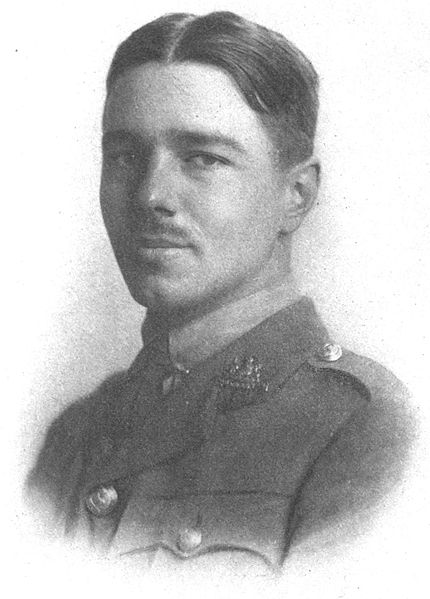
The best poems of Wilfred Owen

Previously, we’ve selected ten of the best poems about the First World War; but of all the English poets to write about that conflict, one name towers above the rest: Wilfred Owen (1893-1918). Here’s our pick of Wilfred Owen’s ten best poems.

Futility’. This is a brief lyric that focuses on a group of soldiers standing over the dead body of a fallen comrade, and is one of Owen’s finest uses of his trademark pararhyme (or half-rhyme). Although the speaker and his fellow soldiers seem to think that the ‘kind old sun’ will be able to revive their dead comrade, we readers know that this is hopeful optimism if not naivety on the part of the speaker.

Strange Meeting’. Siegfried Sassoon called ‘Strange Meeting’ Owen’s passport to immortality; it’s certainly true that it’s poems like this that helped to…

View original post 875 more words

An Interview with a Poet: Peter Sansom| LibroLiv

A fascinating interview with poet Peter Sansom, including some useful advice for aspiring poets.

Liv's avatarLibroLiv

Way back in April 2017 I got the opportunity to interview an amazing poet, Peter Sansom. If you haven’t read his poetry, I definitely recommend it! I wrote this post for Hive South Yorkshire, but thought I would also post it here for you guys to read. To see the original post, click here. Hope you enjoy! Olivia x

View original post 3,166 more words

Book Review: My Old Clock I Wind and Other Poems by K. Morris

Thank you to Audrey Driscoll for taking the time to read and review “My Old Clock I Wind And Other Poems”.

Audrey Driscoll's avatarAudrey Driscoll's Blog

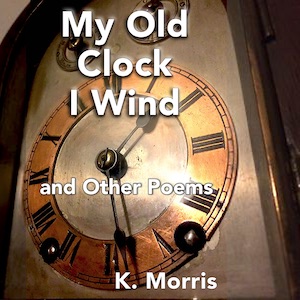
mociw-for-acx-cover-2-small

The first poem in this collection of 74 contains the theme that pervades the entire work – the relentless passage of time.

Morris’s verses are products of reflection and mature thought, expressing both resignation and a zest for life. This poet is not fighting advancing age and eventual death, but lives with an intense awareness of the temporary nature of human lives and preoccupations. “Passing By,” for example, sums this up perfectly in only three lines. The fleetingness of beauty and attraction are pictured in “Chiffon” and “Dark and Light.” As sadness frequently follows delight /Mourn not, for there can be no dark without the light.

The poet’s mixed feelings about his relationships with others are exemplified by “Shall I Sit Out This Dance?” whose last five lines are especially poignant. “What Is A Double Bed?” further explores love, joy, and pain.

Humour is not absent from the collection…

View original post 197 more words

Will AI Violate Copyrights?

This is an interesting post, written by a philosopher. I really don’t think that authors need to concern themselves, in the foreseeable future (perhaps never) with the possibility that artificial intelligence will infringe their copyright. As for us placing restrictions on the ability of AI to infringe copyright (and this being “another reason” for them “to kill us”) I chuckled at the very idea and I suspect the author of this post had his tongue in his cheeck when he wrote those words.

Michael LaBossiere's avatarA Philosopher's Blog

While it is popular to rail against the horrors of regulation, copyright laws are rather critical to creators and owners of creations. On the side of good, these laws protect creators and owners from having their works stolen. On the side of evil, these laws can lock creations out of the public domain long after they should have been set free. However, this essay is not aimed at arguing about copyrights as such. Rather, my aim is considering the minor issue of whether Artificial Intelligence (AI) could result in copyright violations. The sort of AI I am considering here is the “classic” sci-fi sort of AI, that is something on par with HAL 9000, C3PO or Data. I am not considering the marketing version of AI, which seems to be just about any sort of thing that does some things. Or does not do them, depending on which cosmic forces…

View original post 821 more words