Category Archives: Uncategorized

Ten Things You Might Not Know About Famous Poets

InterestingLiterature's avatarInteresting Literature

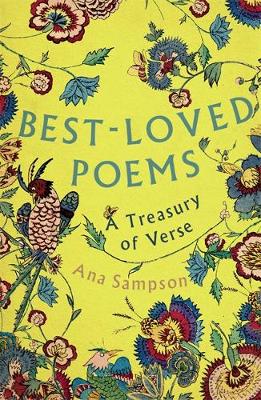
In this special guest post, Ana Sampson offers some fascinating facts about classic poets

Matthew Arnold struggled a bit with the ageing process

At Oxford University, Arnold made a name for himself as something of a dandy. It was only when he fell in love, and needed to prove that he had prospects, that he finally settled into the position of Schools Inspector, rattling around provincial Victorian Britain on the newborn railway network. Most of his poetry was written during his younger years – he once said that after his thirtieth birthday he felt ‘three parts iced over’. His most famous poem, ‘Dover Beach’, was begun during his honeymoon in 1851, but was not published until sixteen years later.

There was a sad story behind Henry Wadsworth Longfellow’s beard

Longfellow, best remembered now for The Song of Hiawatha, numbered among New England’s ‘Fireside Poets’, so called because their…

View original post 1,013 more words

An Artists Tribulation

I agree with the author of this post, particularly with their statement that, “You must search for approval foremost from yourself. If you are never happy with your own work, you will never be satisfied with the words from others.
Approval comes from within. It always has”.

Kyle Hughes's avatarKyle Hughes

Perseverance, the word that is great in concept but difficult in action. 

In pursuit of your art, the necessity to not give up but in fact prevail is paramount. If one gives up, their work will not reach the audience that it deserves and thus, the spark will shudder and finally disappear. An artist must work continuously. Each day is another stepping stone to the day in which their work is recognised and appraised.

It is hard, however, to keep the necessary pressure upon yourself and your work each day. It is critical however that you do this. Yes, you are able to have rest days and time off, but it is your future you’re working towards and thus, it must be nurtured and respected.

An artist works long hours, tirelessly trying to improve their creations. You, an artist, must do similar. No individuals work is perfect and flawless. There…

View original post 57 more words

Myth Dispelled: Youngsters Do Read!

Nicholas C. Rossis's avatarNicholas C. Rossis

New York Public Library | From the blog of Nicholas C. Rossis, author of science fiction, the Pearseus epic fantasy series and children's books New York Public Library

I have written before about the reality behind the myth that youngsters no longer read. Now, a Pew Research Center survey has the surprising answer to the question, which adult generation is more likely to have visited a public library in the past year: it’s the Millennials. Yes, the same Millennials widely accused of not reading!

A new analysis of Pew Research Center survey data from fall 2016 finds that 53% of Millennials (those ages 18 to 35 at the time) say they used a library or bookmobile in the previous 12 months. That compares with 45% of Gen Xers, 43% of Baby Boomers and 36% of those in the Silent Generation (it is worth noting that the question wording specifically focused on the use of public libraries, not on-campus academic libraries),

All told, 46% of adults ages 18 and older say they…

View original post 226 more words

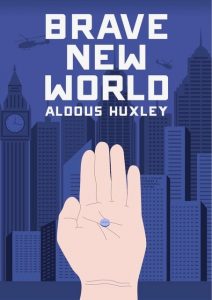
What Happened to Us? Are we in a Brave New World yet?

InterestingLiterature's avatarInteresting Literature

In this special guest post, Lyubov Dali offers an analysis of Zamyatin’s We and Huxley’s Brave New World in light of their striking dystopian visions

What is freedom to you? Is it an ability to choose what degree to pursue, where to live, what to have for dinner, or is it that hip Pharrell tune? Would limiting these freedoms make you unhappy? More importantly, are you likely to ever be persuaded to volunteer your freedom, aspirations, identity to be sacrificed for the greater social good?  Now before you dismiss us as lunatics, you might be surprised to learn that there were literally hundreds of thousands (if not millions) of people who not so long ago willingly sacrificed their freedoms for the promise of a better society. Can it happen to us?

Brace yourself to hear not one, but two such stories: one of a society whose existence was shaped by…

View original post 1,394 more words

Competition to win a signed copy of “My Old Clock I Wind” by K Morris

The competition to win a signed copy of my latest collection of poetry, “My Old Clock I Wind” remains open until Friday 29 September 2017. To enter please read below.

K Morris Poet's avatarK Morris - Poet

I am giving away 1 free, signed copy of my collection of poetry, “My Old Clock I Wind”.

In order to be in with a chance of winning, please answer the following question, which novel begins as follows ”1801—-I have just returned from a visit to my landlord—the solitary neighbour that I shall be troubled with”.

The Rules

1. Please email your answers to me at newauthoronline (at) gmail dot com.
2. Please put “Competition” in the subject line of your message.
3. Please do not leave your answer in the comments below, as everyone will be able to read it!
4. The first person to email me with the correct answer wins a signed copy of “My Old Clock I Wind”.
5. The winner will be informed by email.
6. You may enter irrespective of your country of residence.

The book

To read reviews of “My Old…

View original post 10 more words

How to Begin to Write Poetry

This is a good post. I agree with many of the points made here. I do not, however adhere to the author’s view that one should confine oneself to a single image per line. In poetry based largely upon the utilisation of rhyme this is not always possible. Also, if a poet is writing about inner turmoil or about random thoughts (a stream of consciousness composition), the one image per line rule is not, in my view applicable.

Submitting Your Short Fiction and Poetry: 5 FAQs from a Magazine Editor…

Chris The Story Reading Ape's avatarChris The Story Reading Ape's Blog

by Elise Holland  in Writer’s Digest Online:

For writers of short form literature, submitting your work can mean a variety of positive things.

This step is a powerful signal to yourself that you take your craft seriously enough to put your work out into the world.

And having your work published in a genre or literary magazine can serve to build your resume and grow your writing community.

But so many writers, emerging or established, have lingering questions about the process.

As editor of 2 Elizabeths, here are five of the most frequent questions I’m asked:

5 FAQs: Submitting short Fiction and Poetry

View original post

Poem: Glossed Over

M.P. Powers's avatarSketches from Berlin (& Parts Beyond)

IMG_4219

Here’s a poem I left for dead and forgot about a long time ago but just resuscitated. The photo, by the way, has nothing in particular to do with the poem but someone told me you have to accompany your blogs with photos or no one will bother reading them.

Glossed Over

Everything about him, from the tall tuft
of gelled hair standing on his head, to his sleepy dignity
of expression, to the way his skinny jeans hug
his paltry little legs – everything inspires hatred,
and yet it worked. He seized the prize
we all wanted: an Italian beauty in a toupe studded
shimmering one shoulder mini.
Tonight they will leave early together, crawl
into some silky bed somewhere. There will be kissing,
caressing, great pillars of flame will sing.
While I sit here with a Kiwi, an Iranian-Englishman
and a Bulgarian-Swede, talking about manly things.
Football, corruption…

View original post 57 more words

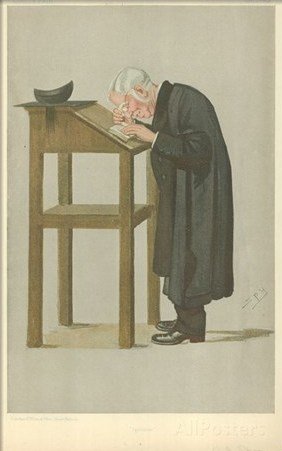
Reverend Spooner, Father of the Spoonerism

InterestingLiterature's avatarInteresting Literature

In this week’s Dispatches from the Secret Library, Dr Oliver Tearle delves into the life of the man immortalised by the spoonerism

Archibald Spooner (1844-1930) was a physically striking man. An albino with pink skin and white hair, he became affectionately known as the Child by students at New College, the Oxford college of which Spooner became warden in 1903. (His wife Frances became known as the Madonna, hence their collective nickname.) By all accounts, Spooner was a kindly man who insisted, in the face of indignant opposition, that the college’s war memorial should list the names of the German dead alongside the college members who had given their lives in the Great War.

But this has all been lost from the popular consciousness – if it ever resided there – and Spooner’s name and legacy have firmly centred on the ‘spoonerism’ – a word attested from The Globe

View original post 590 more words